
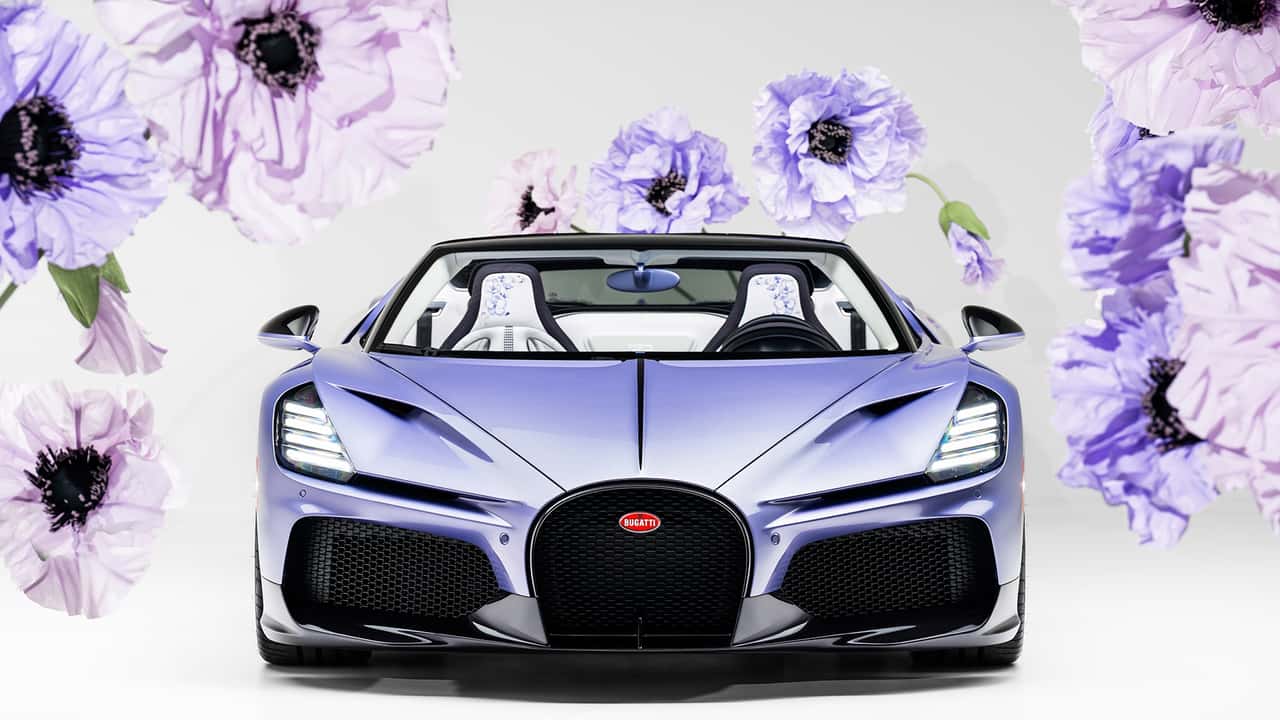


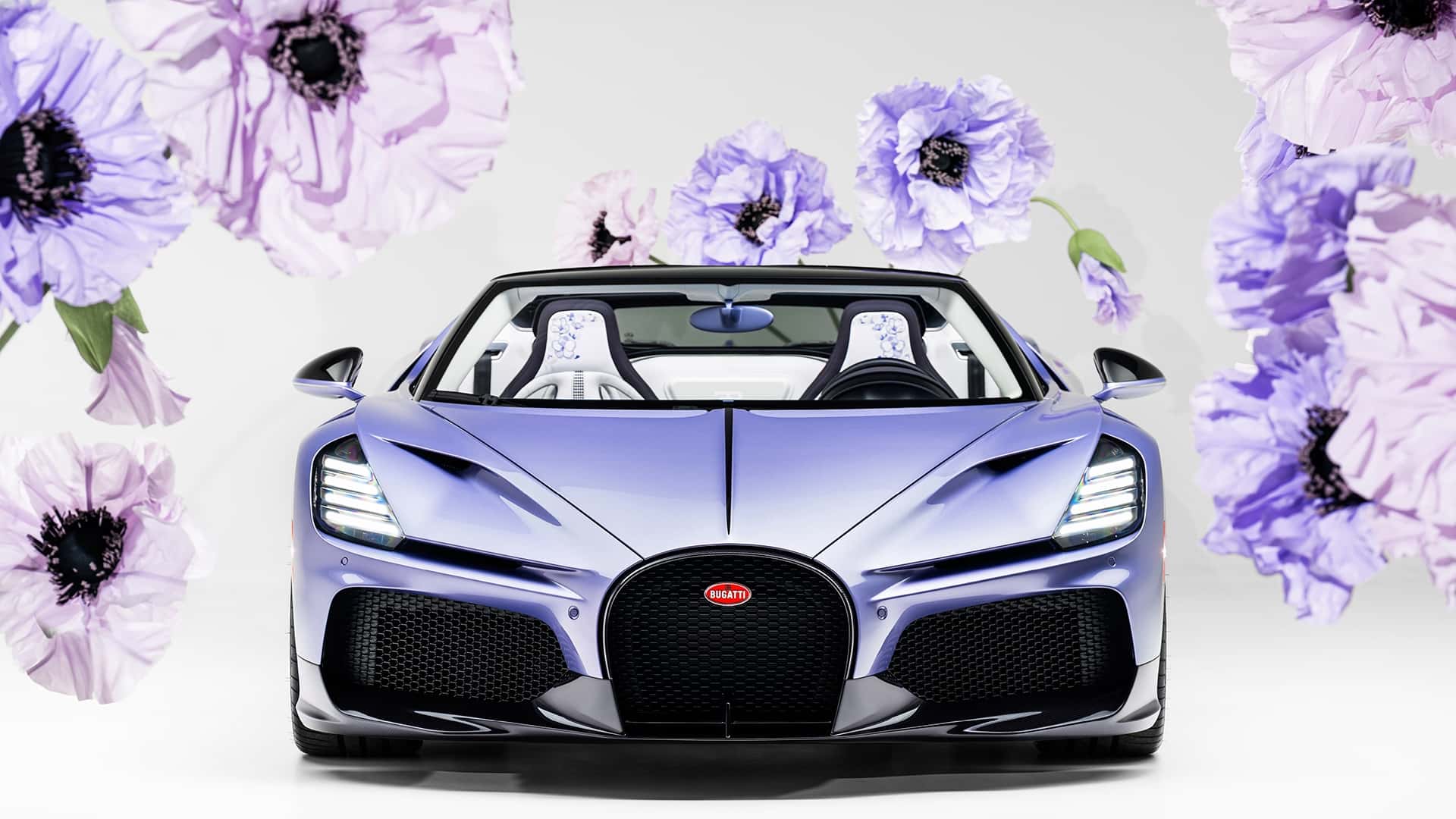
The last open-top Bugatti to carry the W16 engine rolled out of the Sur Mesure program not in menacing black or racing silver but in custom lavender paint, hand-painted irises, and an embroidered cabin dedicated to someone named Caroline — the owner’s daughter.
This is the W16 Mistral “Caroline,” officially revealed March 27, 2026. It might be the strangest, most beautiful sendoff a legendary powertrain has ever received.
Bugatti’s Sur Mesure bespoke division has been cranking out personalized builds for years, but this one-off roadster bends the formula. Where most hypercar commissions chase aggression — darker, louder, meaner — this one leans into lavender fields, Parisian gardens, and floral embroidery stitched with thousands of passes. The tension between a 1,578-horsepower quad-turbo W16 and a hand-painted bouquet on the rear wing is almost absurd. Almost.
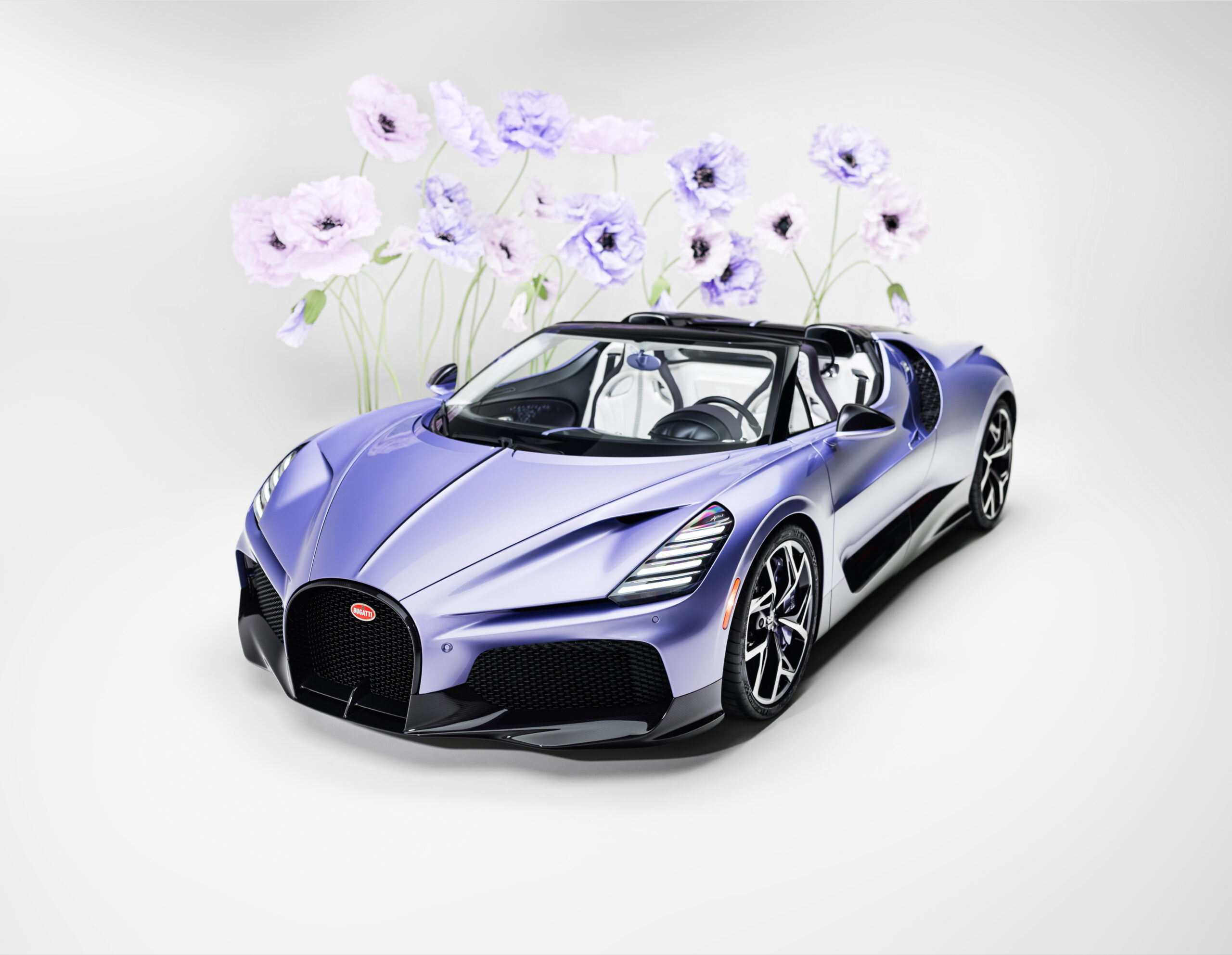
The exterior color alone required months of development. Bugatti’s Color and Material Finish team, working between Molsheim and the Berlin Design Studio, went through round after round of samples before landing on a bespoke shade that shifts between bluish violet and warmer tones depending on ambient light. Below the beltline, exposed carbon fiber panels are lacquered in what Bugatti calls “Violet Carbon,” giving the lower body a darker, structural counterpoint to the ethereal paint above.
Then there’s the rear wing. When deployed as an air brake at speed, the retractable element reveals a hand-painted composition of lilac and iris gradients, applied through successive masking stages with millimeter precision. At the center of it all sits the name “Caroline.” This is not a decal — it’s layers of paint, built up to create a three-dimensional effect visible only when the aero element is raised. A hidden dedication, revealed by velocity.
The cabin follows the same logic. White and midnight leather, purple accents, and carbon fiber form the structure, but the details tell the story. Floral motifs are embroidered into the seats using layered stitching techniques that add physical depth. The headrests carry mirrored hand-stitched compositions, and door panel petals appear to drift as though caught in wind.
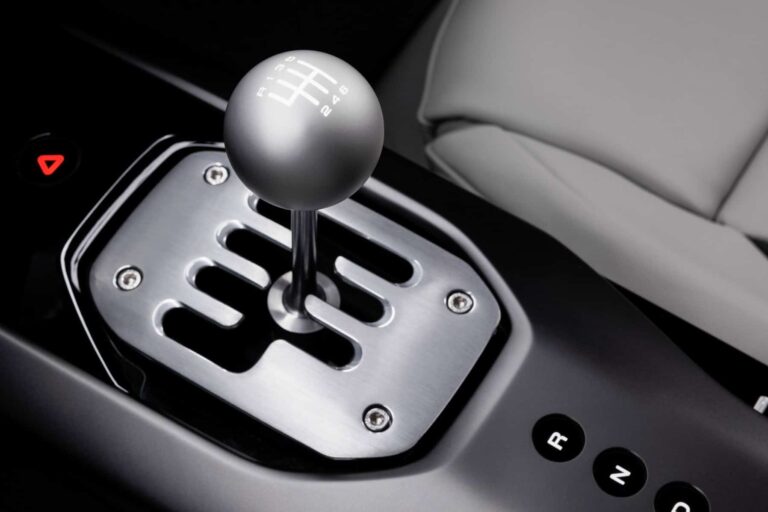
The gear selector houses Rembrandt Bugatti’s iconic “Dancing Elephant” figurine behind tinted glass matched to the car’s color palette. It’s a quiet bridge between the brand’s artistic heritage and this deeply personal commission.
It would be easy to dismiss this as a billionaire’s vanity project. That would miss the point. The W16 Mistral is the final roadster expression of an engine architecture that defined Bugatti for two decades, from the Veyron through the Chiron and every derivative in between.
The 8.0-liter quad-turbo W16 is irreplaceable — nothing like it will be built again. Bugatti’s next chapter belongs to the Tourbillon and its hybrid V16, a different philosophy entirely.
So the question becomes: how do you close the book on something like that? Bugatti’s answer, at least for this particular owner, wasn’t a track-day weapon or a top-speed trophy. It was a rolling tribute to a daughter, executed with the kind of obsessive craft that only makes sense when money is no longer the constraint and meaning is.
The W16 deserved a dramatic exit. Getting one draped in hand-painted flowers, named after someone’s child, and finished in a color that didn’t exist until Bugatti invented it — that’s not a whimper. That’s a curtain call delivered in the most Molsheim way possible: quietly, exquisitely, and with the kind of confidence that doesn’t need to shout.
The era is over. Caroline is the proof.


Share this Story