
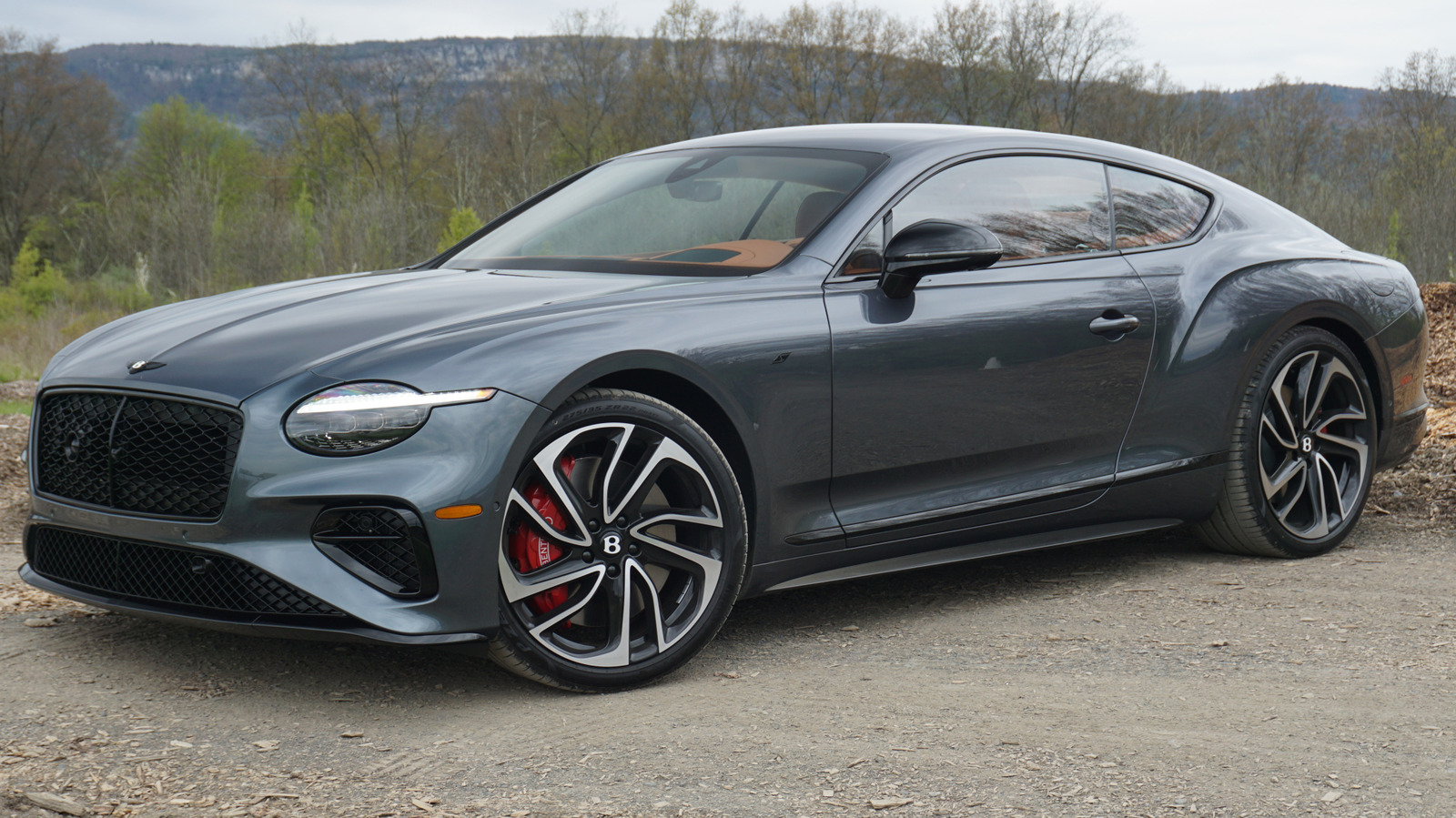


Bentley has found another gap in its Continental GT lineup to fill, and this time it costs around $300,000. The 2026 Continental GT S takes the base car’s 671-horsepower plug-in hybrid V8 and bolts on the chassis hardware and tuning from the 771-hp GT Speed. What you get is a handling special for buyers who don’t want to write a check approaching $450,000.
The formula is deceptively simple. Rip out the base car’s suspension calibration, slot in the Speed’s 48-volt Performance Active Chassis, and let the software do the rest. That means active anti-roll bars capable of applying 1,000 pound-feet of pressure per axle, rear-axle steering that turns the back wheels up to 7.2 degrees opposite the fronts at low speed, and torque vectoring through an electronically controlled limited-slip differential. Ride height drops 10 millimeters compared to the standard GT.
The powertrain stays untouched. A twin-turbocharged 4.0-liter V8 paired with an electric motor produces 671 hp and 686 lb-ft of torque, channeled through a Porsche-derived PDK gearbox. A 25.9-kWh battery provides roughly 30 to 40 miles of electric-only range, depending on how hard you lean into the throttle.
With the full hybrid system engaged, 0-60 arrives in 3.3 seconds and top speed is 191 mph. All of this in a coupe that weighs 5,421 pounds.
That mass is the enemy, and the GT S’s chassis is the weapon deployed against it. On the twisting back roads of New York’s Hudson Valley, the active anti-roll system and rear-biased torque split conspire to make the Continental feel hundreds of pounds lighter than it is. In Sport mode, the rear stiffens more than the front, encouraging the nose to bite into corners while the back end rotates if you push.
The all-wheel-drive system defaults to rear-drive in dry conditions, only feeding power forward when grip demands it. The steering is heavy and direct, with genuine on-center feedback, which is a rarity in this weight class. Braking hardware is appropriately absurd: 16.5-inch front rotors clamped by 10-piston calipers, 15-inch rears with four-piston units.
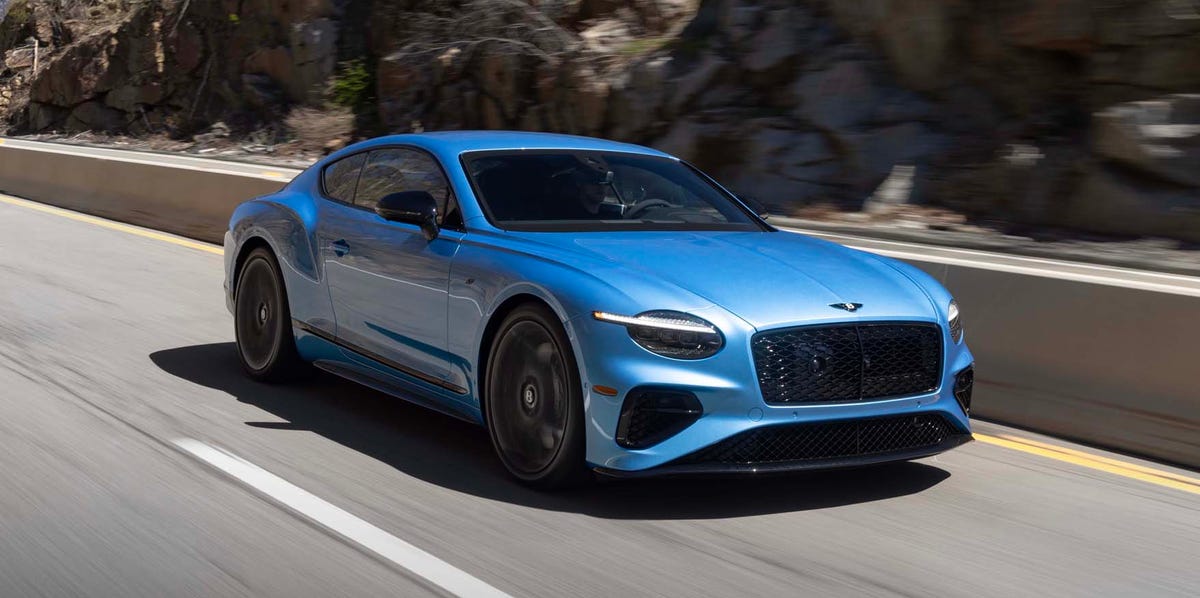
In Comfort mode, the GT S essentially reverts to the serene luxury limousine the base car already is. Massaging seats, a 1,500-watt Bang & Olufsen stereo, the full suite of driver assists, and an interior that still feels fresh despite its eight-year-old architecture. The only real penalty is trunk space, which the battery pack devours.
Pricing starts at $296,150 for the coupe and $325,350 for the convertible, destination included. Those are base numbers. A well-optioned coupe tested in the Hudson Valley came in at $341,990, and a convertible hit $379,550.
With more than 46 million possible build combinations, no two are likely to leave Crewe looking the same. The GT S exists because Bentley believes there are enough customers who want the Speed’s reflexes without the Speed’s price tag or its additional 100 horsepower.
Whether that niche is real or aspirational, it doesn’t much matter. The car itself validates the strategy. It drives like a $450,000 machine with a $300,000 entry fee, and the only thing missing is bragging rights about peak output.
In a lineup that now includes the base GT, GT Azure, GT Mulliner, GT Speed, and GT Supersports, the S slots in as the driver’s choice. It’s the one you buy because you actually plan to use the steering wheel. Bentley keeps slicing this pie thinner, but each piece still tastes remarkably good.

Share this Story