
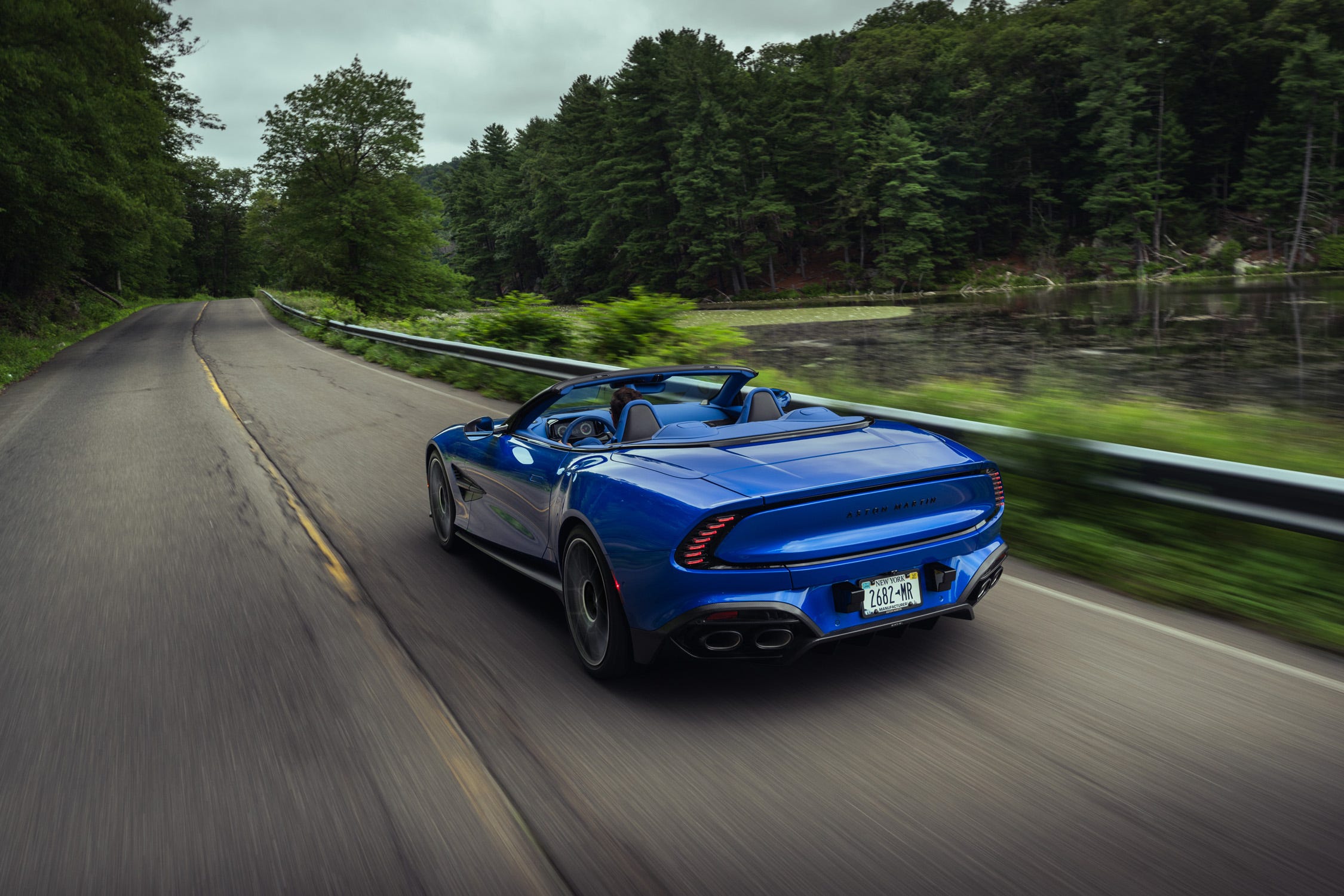


Aston Martin’s first electric car is now not expected before 2033. That date, delivered by CEO Adrian Hallmark at a London media event, represents the fourth delay in a saga that started with a planned 2025 launch.
The original target was 2025. Then previous management floated 2027. Hallmark himself suggested 2030 after taking the reins.
Now the goalposts have moved again, pushed out to a vague window between 2033 and 2035. “I’m not going to give an absolute date, because it’s imprecise,” Hallmark told Autocar. “It could be 2035, it might be 2033, but it’s in that three-year window. It’s not 2031.”
That’s a decade of delay compressed into a single quote.
Hallmark pointed to shifting regulations as the culprit, saying legislation is “changing way faster than any car company can cope with.” He also cited weak demand for high-end EVs, a problem that has plagued luxury and ultra-luxury brands trying to justify the enormous investment required to electrify low-volume platforms.
The logic, stripped bare, is simple. Aston Martin only needs battery-electric vehicles to meet regulatory compliance in certain markets near 2035. Until then, it plans to keep selling V-8 and V-12 powered cars.
“We have a road map to keep the bigger and smaller engines alive and compliant all the way through to the end of that period,” Hallmark said.
So while the rest of the industry has spent billions racing toward electrification, Aston Martin is doing the opposite. It is investing in keeping combustion alive as long as the law allows.
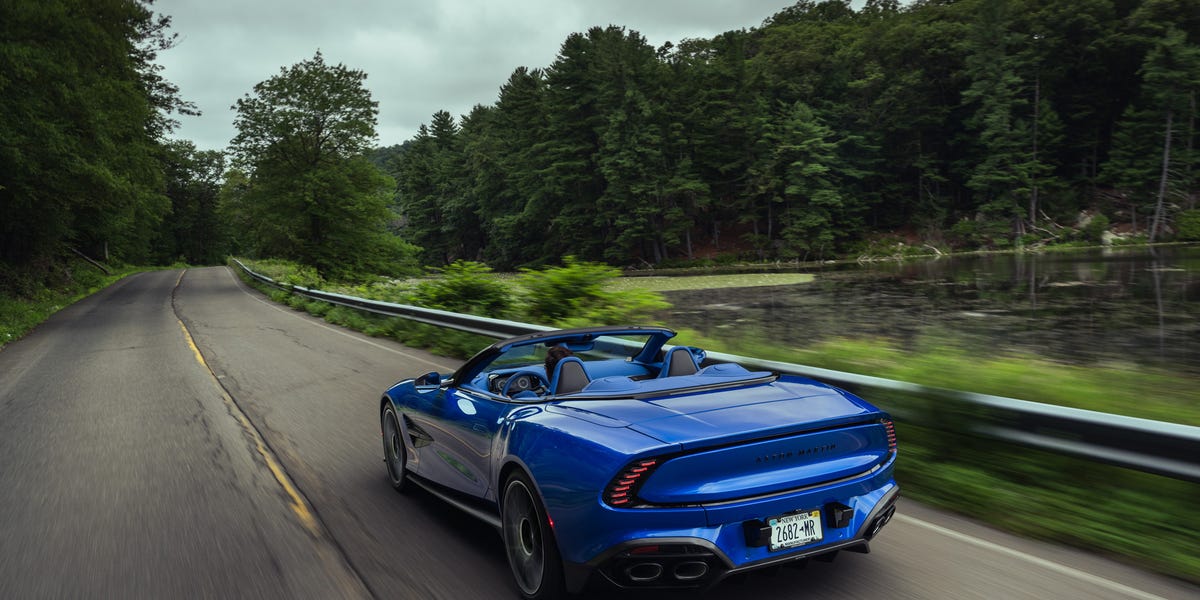
There is a certain honesty in this approach. Aston sells roughly 6,000 cars a year. It cannot afford to build an EV platform from scratch, and its customers are not clamoring for silent torque.
But the repeated postponements reveal something less flattering: a company that has been publicly committing to electrification for years without ever actually committing to it.
Aston has partnerships in place that should, in theory, make an EV feasible. A 2023 deal with Lucid provides access to proven electric powertrain technology. Its long-standing relationship with Mercedes-Benz, which supplies its current engines, is supposed to extend into electrical architecture. The pieces exist. The urgency does not.
Hallmark has also drawn a line against plug-in hybrids, citing weight penalties. He’s open to mild hybridization but has no appetite for the kind of heavy battery packs that would undermine the driving character Aston Martin trades on. That position makes engineering sense for a sports car maker, but it also narrows the compliance pathways available as emissions standards tighten.
The contrast with competitors is stark. Ferrari already sells the 296 GTB plug-in hybrid and has committed to its first full EV. Lamborghini has electrified its entire lineup with plug-in hybrid systems.
Bentley, which shares a parent company with some of the deepest pockets in the industry, is pushing ahead with its own electric plans. Aston Martin, perennially cash-constrained, watches from the sidelines.
And that is the tension at the heart of this story. Aston Martin has survived bankruptcy seven times in its history. It knows how to stay alive. But staying alive and building for the future are not the same thing, and the gap between those two instincts keeps widening.
Hallmark has until somewhere around 2033 to prove the wait was strategic rather than just late. The clock, which started ticking in 2025, is already eight years into its count.
Share this Story