
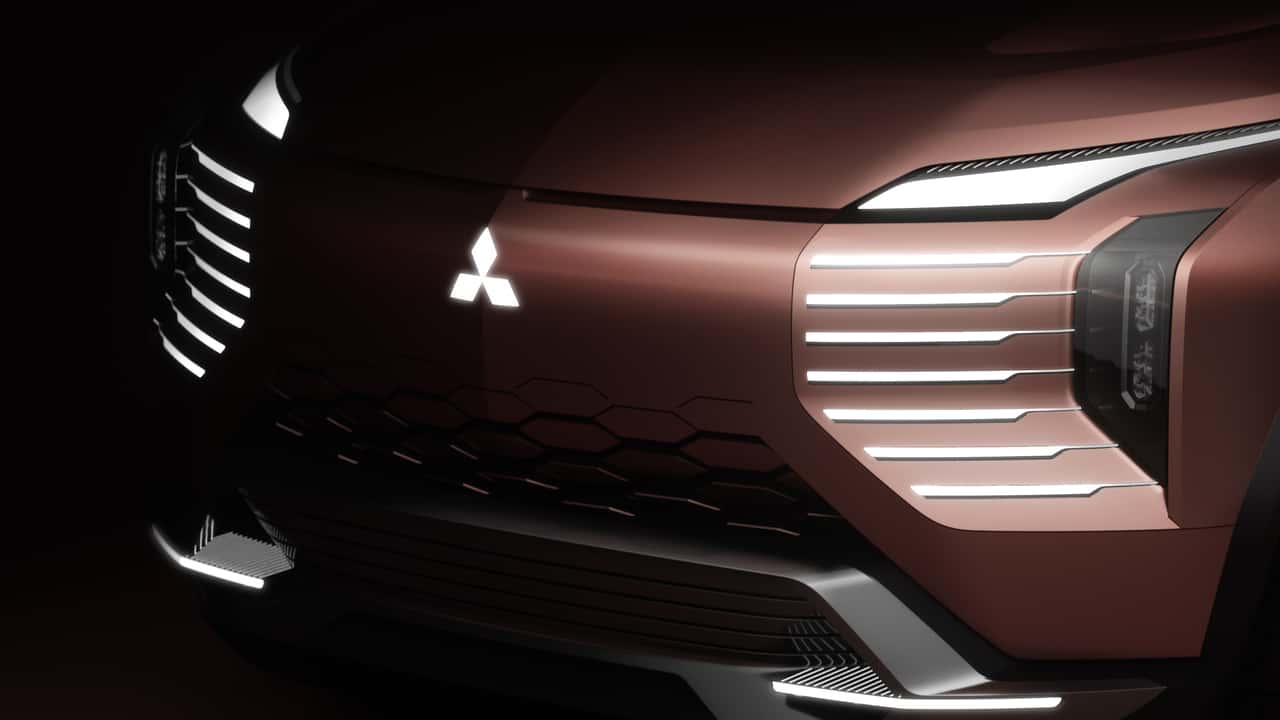


Mitsubishi CEO Takao Kato stood before shareholders on June 18 and said something most automaker bosses would never utter aloud: his company cannot afford to develop its own electric vehicles. Not won’t. Can’t.
“The reality is that EV growth has been slowing down globally,” Kato told shareholders. “For now, our approach is to address this through collaboration.”
That word — collaboration — is doing a lot of heavy lifting. What it actually means is rebadging. The company’s latest model, the Eclipse Sportback, is a Nissan Leaf wearing a different suit. Its Eclipse Cross EV, sold outside the U.S., is a Renault Scenic E-Tech with Mitsubishi diamonds on the grille. Another EV is coming later this year, built by Foxconn in Taiwan, likely destined for Japan and Australia rather than American showrooms.
Kato was blunt about the math. Building a bespoke EV would require “massive investment,” and if sales came in below projections, it would “pose a major management problem.” Translation: it could sink the company.
He’s not wrong to be cautious. Honda, a company nearly four times Mitsubishi’s size by volume, just scrapped its 0 Series EVs right before launch and ate close to $16 billion in restructuring costs. Mitsubishi sold 883,828 vehicles globally in 2025. Honda sold 3,396,057. If Honda can barely stomach that kind of write-down, Mitsubishi wouldn’t survive one.
The irony is thick enough to cut. Mitsubishi was one of the first automakers on Earth to sell an EV. The i-MiEV hit the market in 2009, years before most competitors took electrification seriously. It never got a second generation. None of Mitsubishi’s small Japanese-market EVs ever crossed the Pacific. The company had a head start and did absolutely nothing with it.
Now it survives on borrowed architecture. The Outlander rides on the Nissan Rogue platform. The Outlander PHEV recently got reverse-rebadged by Nissan as the Rogue PHEV. The relationship flows both ways, but the dependency is not symmetrical. Mitsubishi needs Nissan far more than Nissan needs Mitsubishi.
This is what a slow-motion retreat looks like. Mitsubishi isn’t exiting the EV race — it never really entered it. It’s standing at the edge of the track, waiting for someone else to hand it a car it can put its name on.
There’s a pragmatic argument to be made here. Rebadged vehicles keep the brand alive in segments it otherwise couldn’t touch. The Eclipse Sportback adds another affordable EV option in a market starving for them, even if it’s mechanically identical to a car already on sale. Dealers get product, customers get choice, and nobody gets hurt — at least not immediately.
But pragmatism and long-term viability are different things. Every rebadge reinforces a question that hangs over Mitsubishi like a permanent cloud: what, exactly, does this company build that is its own? The Outlander PHEV has genuine fans, and the Triton pickup has a real identity in markets where it’s sold. Beyond that, the cupboard is getting bare.
Kato’s honesty is refreshing in an industry addicted to grandiose EV promises that quietly get walked back. He’s not pretending Mitsubishi will leapfrog Tesla or out-engineer BYD. He’s telling shareholders the company will survive by borrowing what it can’t build.
Whether survival on those terms is sustainable — or just a slower way to disappear — is the question nobody at that shareholder meeting seemed eager to answer.
Share this Story