
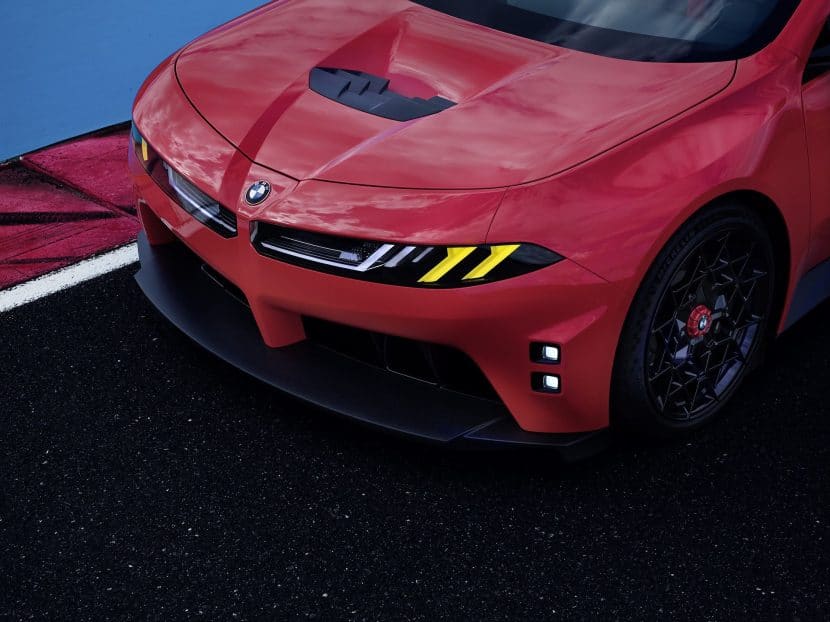


Carbon fiber has been the religion of performance cars for four decades. BMW just committed heresy.
The M Concept Neue Klasse, unveiled at Le Mans, replaces carbon fiber with natural-fiber composites across its front splitter, roof, rear diffuser, hood air outlets, and even its M mirrors. The interior’s four bucket seats use the same material for structural elements. This isn’t concept-car fantasy — BMW has confirmed the production electric M3, internally coded ZA0 and expected in 2027, will carry the technology forward.
Michael Scully, Head of BMW M Design, laid out the reasoning in an interview with BMWBlog. The production process for natural-fiber composites generates roughly 40 percent fewer CO2 emissions than carbon fiber. BMW claims the material delivers “very similar levels of strength and stiffness.
In other words, Munich is betting it can hit the same performance targets while dramatically shrinking its manufacturing footprint. That’s a calculated trade. Telling M buyers their car’s roof is made from flax instead of woven carbon requires either enormous confidence or enormous pressure — probably both.
BMW didn’t stumble into this. Natural-fiber composites were first tested during the 2019 Formula E season, then migrated into the M4 GT4 race car as replacements for carbon-fiber-reinforced plastic components. The company has been co-developing flax-based lightweight parts with Bcomp, a Swiss composites specialist, building a supply chain and engineering knowledge base long before this concept appeared.
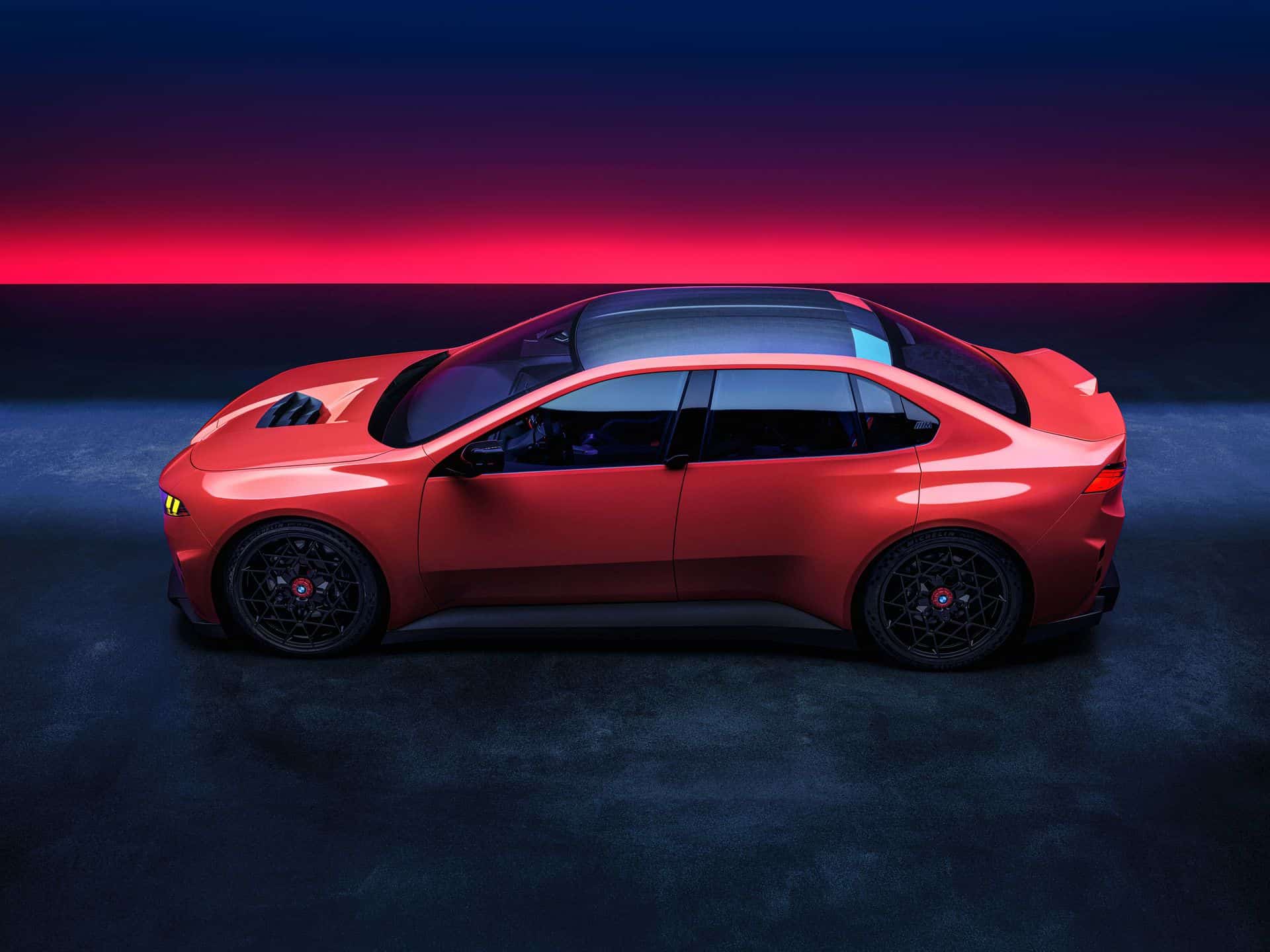
For the M Concept Neue Klasse, BMW designed a proprietary weave pattern and applied a semi-matte finish. Scully explained that a full-gloss treatment would have required additional clear-coat layers, adding weight — the kind of gram-shaving logic that belongs in a motorsport program, not a marketing meeting. The concept even wears M stripes along the rear edge of its natural-fiber roof, though whether that detail survives to production is unclear.
The natural-fiber roof will be standard equipment on the ZA0. Customers who want glass overhead will reportedly be able to option a panoramic roof, though it almost certainly won’t open. Scully also noted that BMW can customize the weave pattern itself, raising the possibility of model-specific designs across the Neue Klasse lineup.
The timing is no accident. BMW is launching its most important electric architecture into a market that increasingly scrutinizes lifecycle emissions, not just tailpipe numbers. A 40 percent reduction in manufacturing emissions for key structural components is the kind of number that matters on a balance sheet and in a sustainability report.
But there’s a tension BMW will have to manage carefully. Carbon fiber carries an aspirational weight that no flax weave can replicate overnight. The glossy black carbon-fiber accent has become visual shorthand for “this car is serious.”
Natural fiber, no matter how strong, looks different. It reads different. M buyers who spend north of six figures expect materials that signal exclusivity, not environmental compromise.
Scully and his team seem aware of this. The semi-matte finish, the custom weave, the M-stripe detailing — these are deliberate moves to build a new aesthetic language around the material, to make it look like a choice rather than a concession.
Whether the market accepts flax as the new carbon will depend entirely on execution. BMW has the engineering receipts — years of motorsport validation, comparable strength data, a proven supplier relationship. The question is whether the person writing a check for an electric M3 sees natural fiber as the future of performance or the dilution of it.
BMW is gambling they’ll see the future. Given how long Munich has been preparing this move, it’s not a blind bet.
Share this Story