
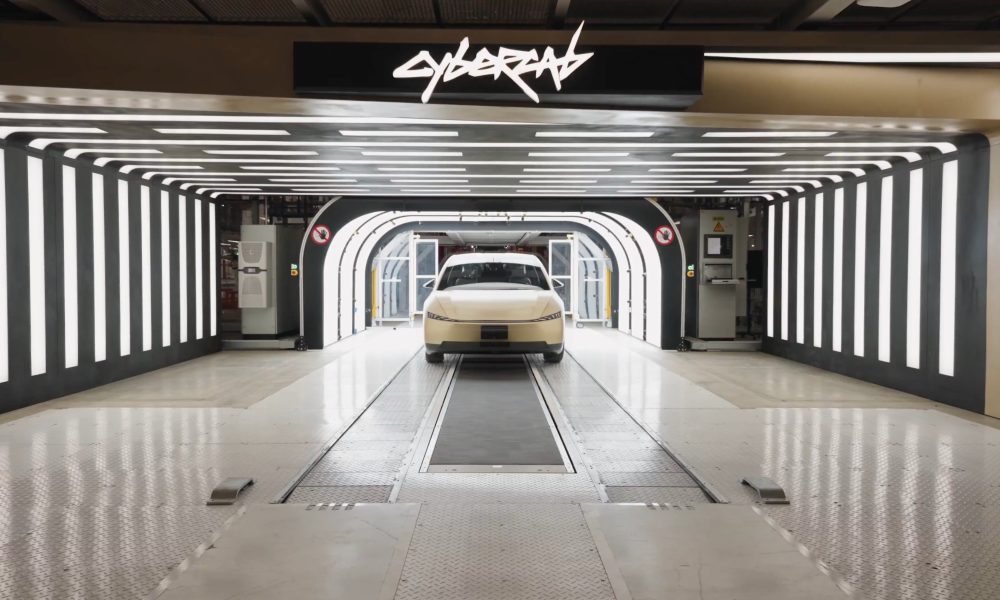


Tesla can legally run driverless commercial vehicles in Texas as of May 28, and Cybercabs are already rolling out of Gigafactory Texas under their own power. Two events landing on the same day tell a story the company has been trying to write for years.
Senate Bill 2807, passed by the 89th Texas Legislature and signed into law back in September 2025, took effect Thursday. It establishes a statewide framework for autonomous vehicle operations. Critically, it allows companies to self-certify their vehicles and technology rather than wait for a government agency to vet every system and sign off.
That is the detail that matters. Self-certification means Tesla decides when its hardware and software are ready. No months-long regulatory queue, no back-and-forth with a state DMV evaluator parsing sensor data.
The company must comply with Texas traffic laws, carry proper insurance, maintain registration, log onboard activity, and handle system failures safely. But the green light to deploy commercially is, functionally, Tesla’s to give itself.
Hours after the law went live, Elon Musk posted a video of Cybercab units driving themselves off the Giga Texas property. Mass production of the purpose-built robotaxi began in April. The vehicles now exist in physical form, on public roads, in a state that just cleared the legal runway for them.
Texas is not California. It is not San Francisco, where Waymo has been operating paid rides since 2024 and Cruise flamed out spectacularly. Texas has long positioned itself as the deregulatory counterweight, a place where companies test, iterate, and scale with less friction.
The self-certification model will draw scrutiny. Critics will argue that letting a manufacturer grade its own homework on safety is reckless, particularly for a system that has never operated commercially without a human behind the wheel. Tesla’s Full Self-Driving software has improved dramatically but still carries the supervised label on consumer vehicles.
The Cybercab, with no steering wheel and no pedals, demands a fundamentally different level of confidence.
But Tesla now has what no amount of demo rides or investor presentations could deliver: legal standing to operate. The company does not need a pilot program or a special permit. It needs to meet the statutory checklist and certify compliance, which is a lower bar than what Waymo navigated in California or what Cruise attempted before its implosion in late 2023.
The timing is conspicuous for other reasons. Tesla is deep into a period of corporate complexity. A potential merger with SpaceX is being discussed internally and externally, with Wedbush placing 80 to 90 percent odds on a deal by early 2027.
SpaceX is days from a Wall Street roadshow for what could be the largest IPO in history. Musk’s attention is fractured across rockets, satellites, military contracts, AI, and now a robotaxi launch.
Yet the Cybercab rolling out of the factory on its own power is not vaporware. It is not a render. It is a vehicle driving on asphalt in Austin, in a state that just told Tesla it can start charging passengers whenever it is ready.
The gap between “authorized to operate” and “operating at scale” is still enormous. Fleet logistics, insurance actuarial models, customer trust, edge-case software performance in Houston traffic at rush hour — none of that is solved by a bill signing. Waymo spent years grinding through those problems with billions from Alphabet behind it.
Tesla has the law. It has the factory. It has the vehicle. What it has not yet proven is that the Cybercab can do the job safely, consistently, and profitably without a human in the loop. Texas just made it possible to find out.
Share this Story