
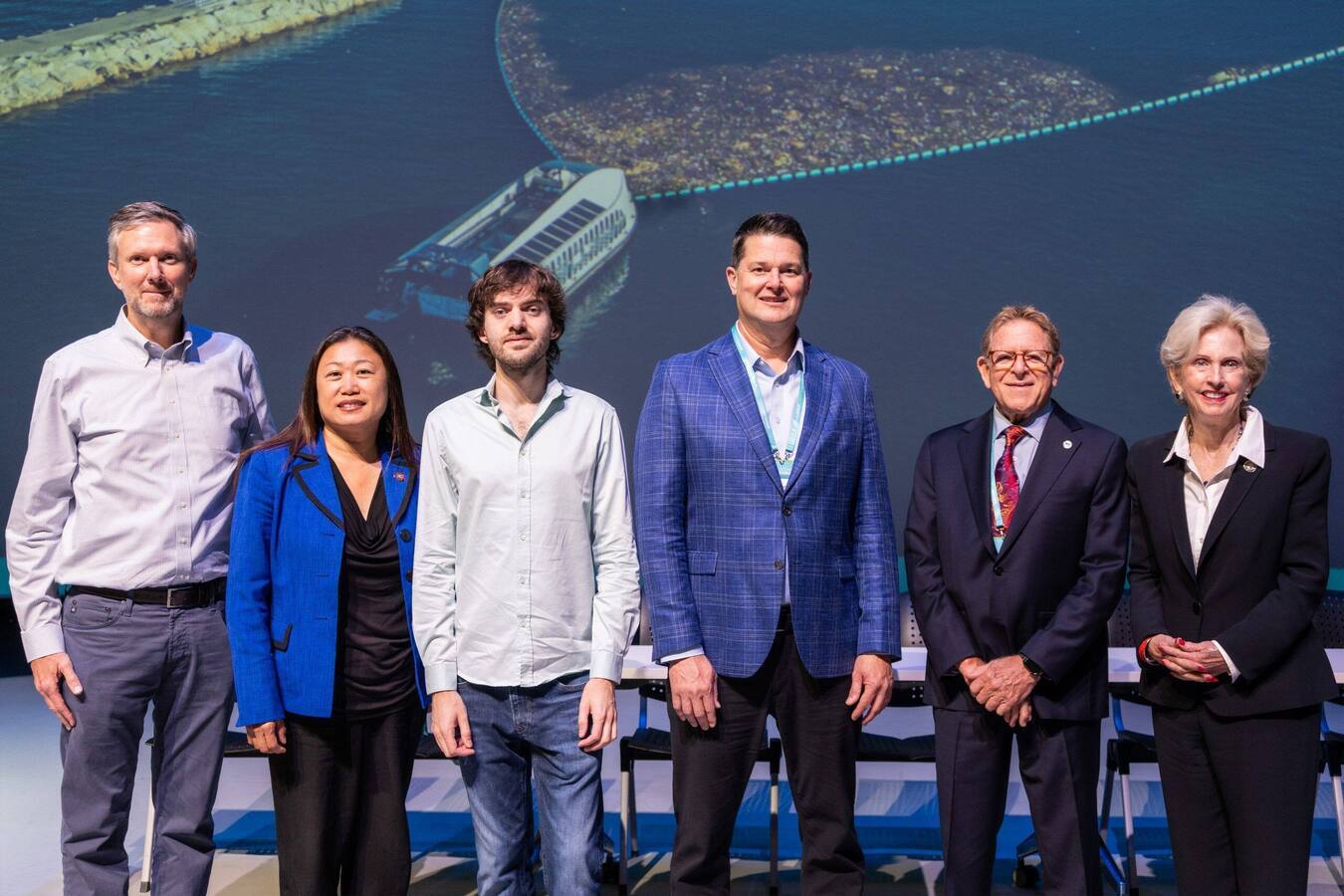


Between 380 and 570 tonnes of plastic pour from Los Angeles’ rivers into the Pacific Ocean every year. That’s not some abstract global estimate — it’s the measured output of three waterways cutting through one of the wealthiest metro areas on Earth.
Kia and The Ocean Cleanup just announced plans to expand their river interception network across Greater Los Angeles, adding new deployments on the LA River and San Gabriel River to join an existing unit already working Ballona Creek. The goal is to have all three systems operational before the LA28 Olympic Games.
The existing installation, Interceptor 007, has been pulling trash from Ballona Creek since receiving permanent operating status in 2024. Its tally so far: 386,945 pounds of garbage that would otherwise have washed onto Southern California beaches or drifted into the Pacific food chain.
Two new Interceptor units will now cover the remaining major waterways. Both deployments are backed by independent feasibility studies commissioned by the cities of Long Beach and Seal Beach, examining hydraulics, trash volume, technology options, and permitting. Los Angeles County Supervisor Janice Hahn and Long Beach Mayor Rex Richardson have signed on.
The partnership between Kia and The Ocean Cleanup dates to 2022. It’s part of Kia’s broader sustainability positioning, though the automaker is notably quiet about what, exactly, its financial commitment looks like. The company frames it as “turning intention into impact,” which is corporate-speak worth scrutinizing — but the hardware in the water is real and the trash tonnage is measurable. That counts for something.
The Ocean Cleanup’s larger play here is its 30 Cities Program, an initiative targeting the world’s most polluting urban rivers. The nonprofit’s research found that just 1,000 of the planet’s three million rivers account for roughly 80 percent of all ocean plastic emissions. Los Angeles made the list. For a city about to host the Olympics, that’s not a great look.
To map LA’s specific pollution patterns, The Ocean Cleanup deployed drones, AI-enhanced remote-sensing cameras, and GPS drifters in what it calls a “Smart Rivers Survey.” The data shaped where the new Interceptors will sit and how they’ll operate. This isn’t guesswork — it’s engineered interception based on flow modeling and observed trash density.
California State Assembly member Diane Dixon put it bluntly: “There was no government mandate to clean up the rivers.” She’s right. This project exists because a nonprofit, an automaker, and a handful of local politicians decided the problem was worth solving without waiting for Sacramento or Washington to act.
That’s the tension at the heart of this story. The third-largest metro area in the United States has been flushing hundreds of tonnes of plastic into the ocean annually, and the solution isn’t coming from regulation. It’s coming from a Dutch nonprofit founded by a teenager in 2013, now backed by a South Korean car company.
The Ocean Cleanup has collected over 110 million pounds of trash from waterways worldwide as of March 2026. Its team numbers roughly 200 people.
Three Interceptors covering three rivers won’t solve LA’s plastic problem entirely. The trash has to come from somewhere before it reaches the water, and upstream behavior — packaging, waste management, consumer habits — remains largely unchanged. But interception at the river mouth is triage, and triage saves ecosystems.
The Olympics arrive in 2028. The cameras will be rolling. Whether LA’s rivers run cleaner by then depends on whether the hardware performs as promised and whether local governments keep writing the checks after the global spotlight fades. History says that’s the harder part.

Share this Story