
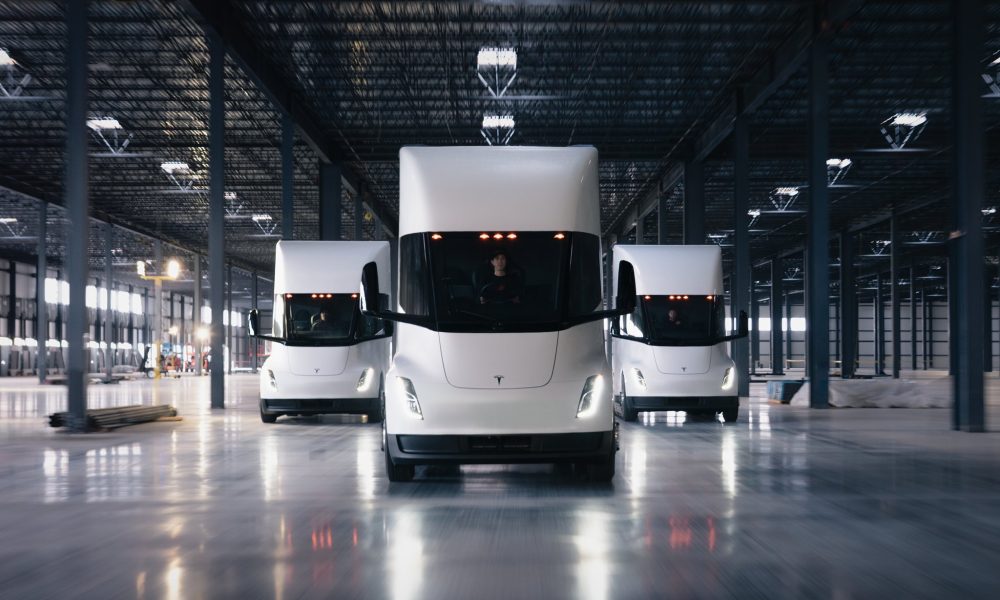


An 822-kilowatt-hour battery pack. That’s the confirmed capacity inside the Long Range Tesla Semi, according to a California Air Resources Board certification filing published in April 2026. The Standard Range variant carries 548 kWh.
Both numbers are now public record, pulled from the kind of regulatory document that doesn’t lie. CARB certifies zero-emission powertrains before they can legally operate in the state. When a manufacturer submits for certification, the resulting executive order becomes a public document.
Tesla didn’t announce these specs voluntarily. Sacramento did it for them.
Both Semi variants use NCMA lithium-ion chemistry built around Tesla’s 4680 cells, manufactured at the same Sparks, Nevada complex where the trucks are assembled. The Long Range and Standard Range share identical motor hardware: 800 kW peak output, 525 kW continuous. The only differentiator is the battery.
Cross-reference Tesla’s published efficiency figure of roughly 1.7 kWh per mile under full load, and the math checks out. The 822 kWh pack delivers approximately 480 miles of real-world range, close enough to the advertised 500-mile figure. The 548 kWh pack lands around 320 miles, tracking Tesla’s 325-mile claim.
Both at a fully loaded 82,000-pound gross combination weight. Both supporting charging speeds up to 1.2 MW through Tesla’s proprietary Megacharger network.
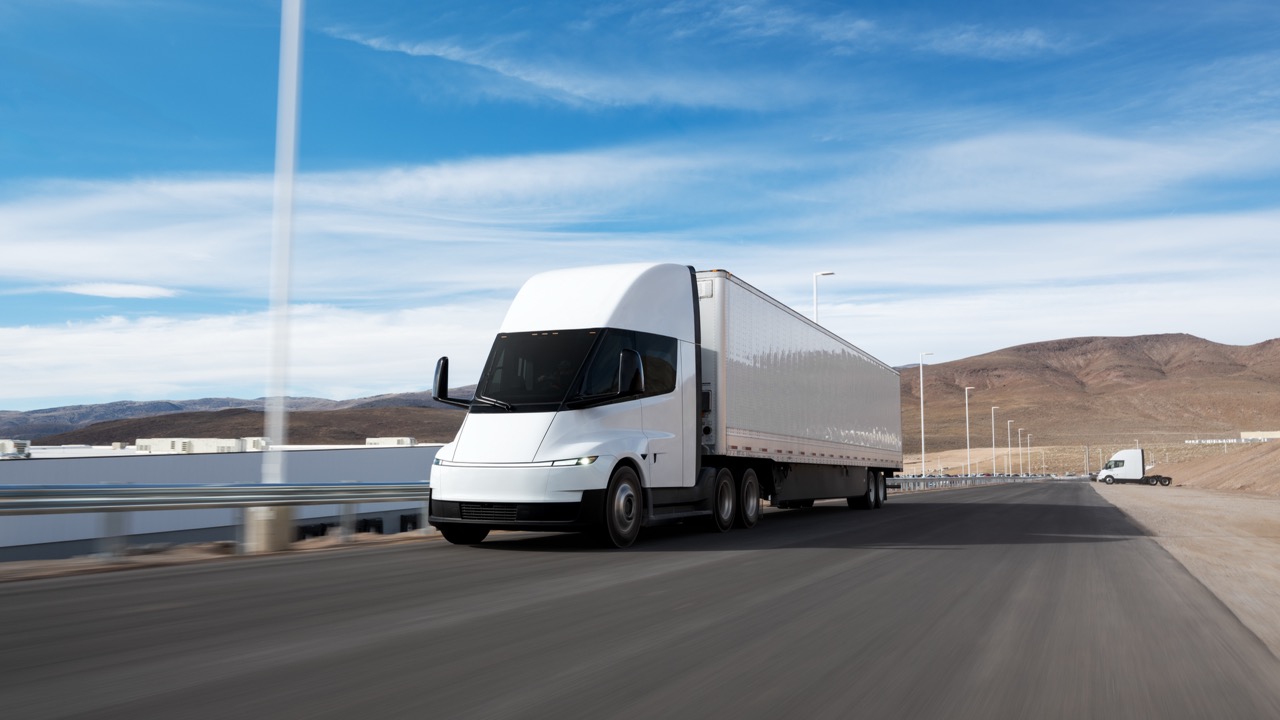
That 1.7 kWh per mile figure is the one that should keep diesel fleet operators up at night. A Class 8 diesel truck averages roughly 6 miles per gallon. At $4 per gallon, that’s about 67 cents per mile in fuel alone.
The Tesla Semi, even at commercial electricity rates, runs somewhere between 17 and 25 cents per mile depending on the market. The fuel cost advantage isn’t marginal. It’s structural.
The timing of this certification lines up with Tesla’s manufacturing push. On April 29, Semi Programme Director Dan Priestley confirmed on X that high-volume production is ramping at Tesla’s dedicated 1.7-million-square-foot facility in Nevada. The 4680 cells feeding the Semi’s battery packs are produced under the same roof, removing the supply chain fragility that stalled this program for years.
Tesla’s stated ambition is 50,000 trucks per year from that factory. That would represent roughly 20 percent of the entire North American Class 8 market. An audacious target, but the order book suggests real demand exists.
Just days ago, Tesla secured a 370-unit order worth approximately $100 million, with the Long Range model estimated around $290,000 and the Standard Range at $260,000.
For context, a new diesel Class 8 tractor runs $150,000 to $180,000. The Tesla Semi costs significantly more upfront. But a long-haul truck burning diesel at today’s prices racks up fuel bills that can exceed $70,000 a year.
The Semi’s operating cost advantage narrows that purchase price gap faster than most fleet accountants would be comfortable admitting.
None of this matters if the truck doesn’t perform in real freight corridors, of course. Tesla ran Semi prototypes with PepsiCo starting in late 2022, accumulating hundreds of thousands of loaded miles across California routes. Those weren’t press stunts — they were shakedowns.
The CARB filing suggests the production truck survived the scrutiny. The diesel freight industry has had a comfortable century. What just landed on CARB’s public docket is the most detailed technical evidence yet that the comfort is running out.
Not because of mandates or subsidies, but because the math no longer favors the incumbent.



Share this Story