
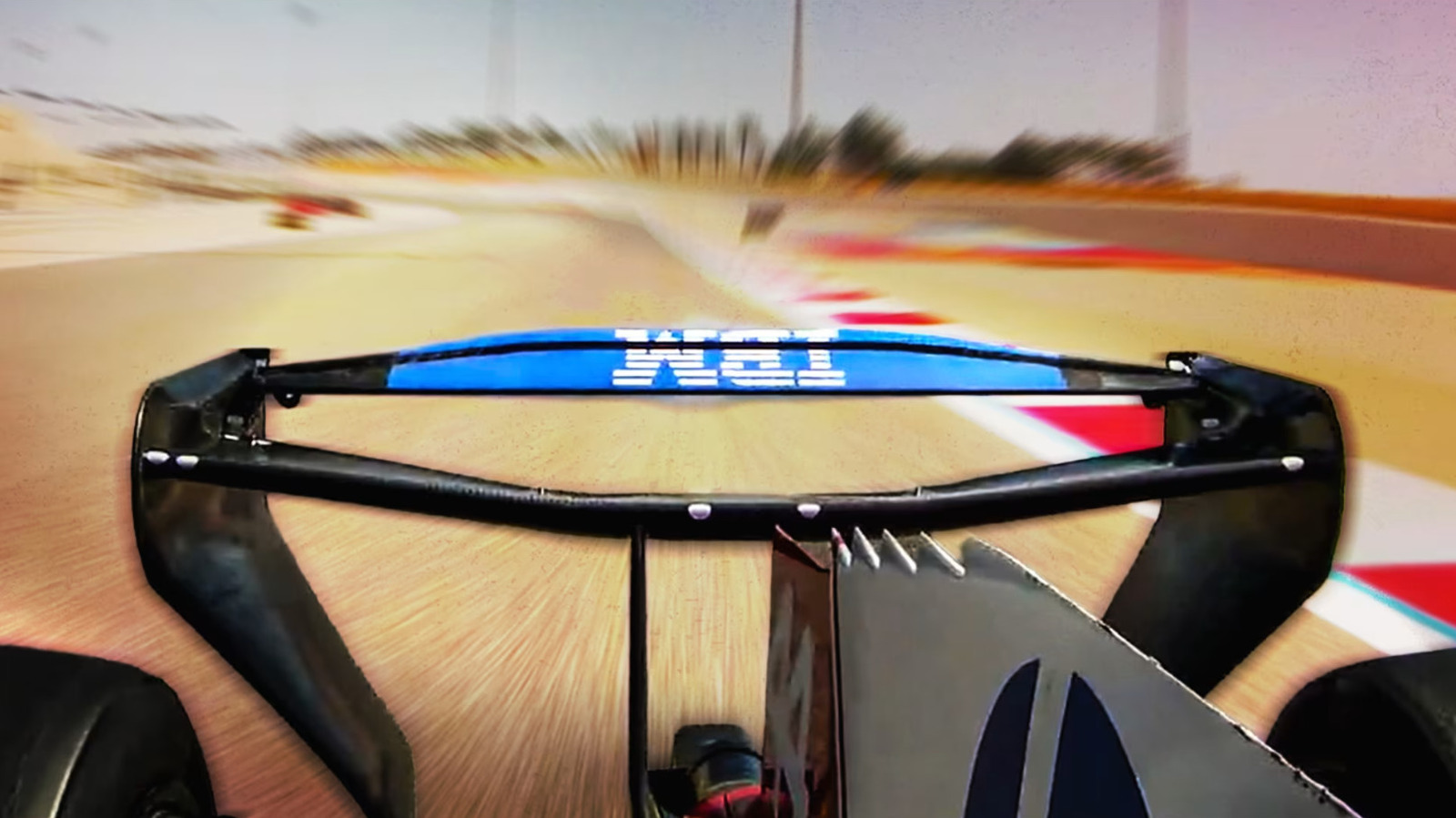


Ferrari is flipping its rear wing upside down at 200 mph, and the rest of the Formula 1 paddock is losing sleep over it.
The SF-26 debuted a radical rear wing concept during pre-season testing in Bahrain that nobody else in the field has attempted. When the car enters the new regulation’s Straight Mode, replacing last year’s DRS, the upper wing element doesn’t simply crack open like every other team’s. It rotates a full 180 degrees, going completely inverted, and the paddock has already given it a name: the Macarena wing.
Ferrari ran it again during practice at the Chinese Grand Prix this weekend but pulled it before the race. Team boss Fred Vasseur, asked by Canal+ why it disappeared, was characteristically dry. “Well, we removed it,” he joked, before explaining the team needs more FP1 sessions to prove reliability. He confirmed it returns at the Japanese Grand Prix next week.
The physics are elegant. In Corner Mode, the wing looks conventional — two stacked elements generating downforce. Flip to Straight Mode, and the upper element rotates to become aerodynamically invisible, stalling airflow and shedding both downforce and drag beyond what a conventional gap-opening system can achieve.
There’s a bonus on the way back in: as the wing flips to Corner Mode under heavy braking, it briefly acts as an air brake, scrubbing speed before the turn-in.
Sir Lewis Hamilton let slip that the wing arrived ahead of schedule. “I think we were supposed to introduce it for the fourth or fifth race of the year,” he said Friday. “The team worked hard to get it here, but I think it’s a bit premature. We’ve left it out, but the car is still competitive.”
Competitive, yes. But not dominant. Mercedes took a comfortable 1-2 in Australia’s season opener, and Ferrari is chasing. The SF-26 showed blistering starts off the grid and nearly matched Mercedes on top speed without the Macarena wing even fitted. A couple extra miles per hour in straight-line trim could close that gap entirely.
The engineering tradeoffs are real, though. Rotating a wing element 180 degrees demands a beefier, heavier actuator than simply hinging it open 15 degrees. On cars already scraping against minimum weight limits, ounces mounted high on the chassis wreck the center of gravity. The mechanism also takes longer to cycle, meaning Ferrari sacrifices a sliver of time in transition that simpler systems don’t.
And reliability remains the open question Vasseur keeps dancing around. A conventional actuator failing is a nuisance. A wing that’s supposed to flip completely and gets stuck perpendicular to 200-mph airflow is a catastrophe.
Red Bull is still a wild card. Max Verstappen crashed out of qualifying in Australia, and Isack Hadjar’s engine detonated during the race. Nobody got a clean read on their true pace, and the championship picture is far from settled after one round.
China’s layout, with its long straights and fewer slow-speed corners, should theoretically favor exactly the kind of drag reduction Ferrari is chasing. That the team chose not to race the wing here suggests the reliability concerns are more than cosmetic. You don’t shelve a potential advantage at a track tailor-made for it unless you genuinely don’t trust the hardware.
Every other team is now reverse-engineering what Ferrari knows. The concept isn’t protected by regulation, and anyone can attempt a similar mechanism. But designing, manufacturing, and validating a 180-degree rotating wing assembly mid-season is months of work, not weeks.
Ferrari has a head start measured in wind tunnel hours and structural testing that competitors can’t shortcut.
If the Macarena wing works when it returns in Japan, Ferrari won’t just have a clever trick. It’ll have forced nine other teams to choose between copying an unproven concept or conceding a straight-line advantage for the rest of the season. That’s the kind of engineering chess move that wins constructors’ championships — or becomes a cautionary tale about overcomplication. Ferrari’s history is littered with both outcomes.


Share this Story