



A blood-red coupe concept sits in a Tokyo showroom window that, until recently, wore a Lexus badge on its facade. That single image tells you everything about where Toyota’s priorities are heading.
The Century Studio, as Toyota calls it, has opened inside what was formerly the Aoyama Lexus dealership along National Route 246 in one of Tokyo’s wealthiest neighborhoods. The Lexus logo has been stripped from the building’s exterior. Ambient lighting and warm wood have replaced the sterile white gallery that once showcased Lexus vehicles.
A large indigo shippo-tsunagi banner now hangs inside, signaling Japanese craftsmanship and a very different clientele. Akio Toyoda himself was among the first visitors, teasing photos on Instagram complete with GPS coordinates, as if daring the ultra-wealthy to come find it.
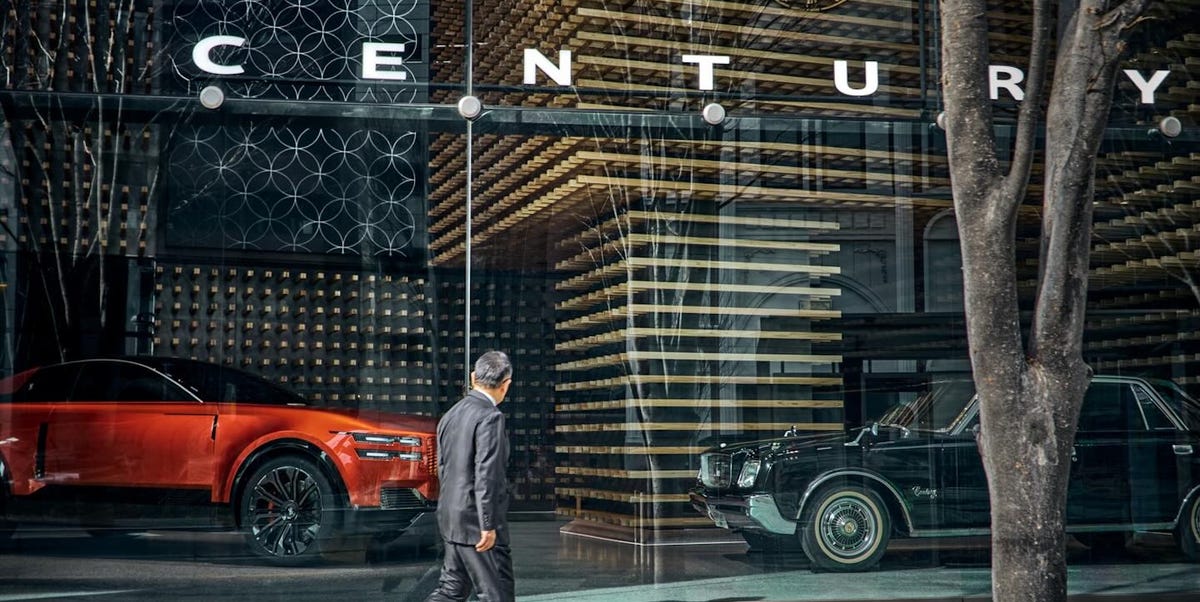
The showroom’s window display is a study in contradictions. A pristine 1967 Century sedan, the kind of car that whispered power through wool upholstery and glacial design evolution, sits across from the Century Coupe concept. The Coupe is rumored to pack a hybrid twin-turbocharged V-12 and enough visual aggression to make a Bentley Continental blush.
For six decades, the Century was the anti-statement car. The first generation ran 30 years with barely a cosmetic change. The second, powered by Japan’s only production V-12, lasted 20 years looking essentially the same.
Chauffeurs wore white gloves. Passengers wore plain, well-cut suits. The whole point was that you didn’t need to prove anything.
Now Toyota wants Century to fight Bentley, Mercedes-Maybach, and Rolls-Royce. That’s not an evolution. That’s an identity transplant.
Two Century models already sell in Japan and China — a limousine preserving the old-guard ethos and an SUV that functions more like an opulent minivan. The Coupe concept is the flag planted in new territory, aimed squarely at conspicuous wealth rather than the quiet kind.
Toyota consolidated its sprawling Japanese dealer network into just two channels — Toyota and Lexus — back in 2020. Now the company is expanding again with distinct retail experiences for Toyota, Lexus, Gazoo Racing, and Century. That’s four brand identities to manage in a domestic market that isn’t exactly growing.
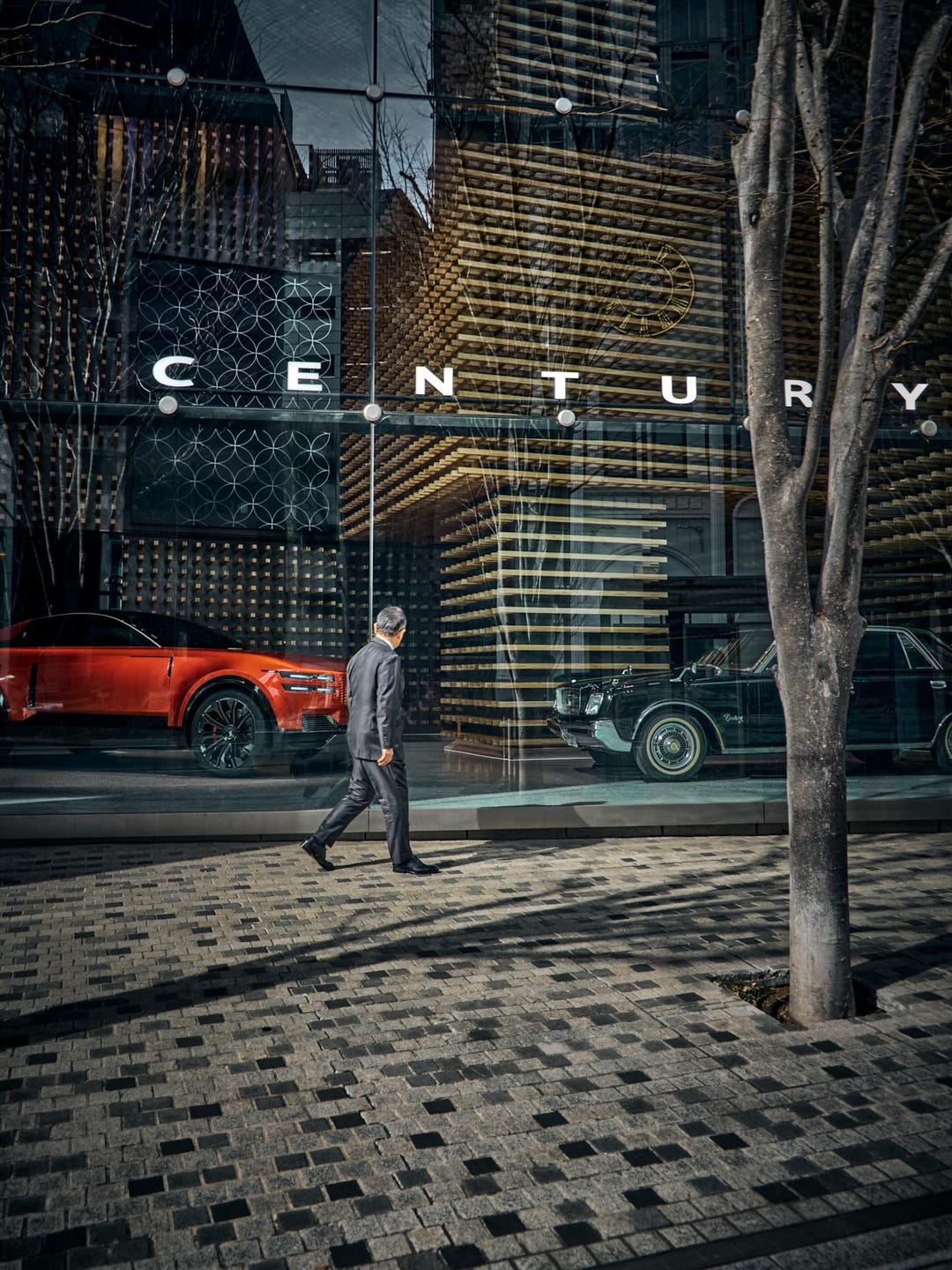
The Aoyama location makes strategic sense. The district skews young and affluent, exactly the demographic Toyota needs if Century is going to be anything more than a nostalgia play for aging executives. But courting young money with a nameplate built on old money restraint is a tightrope walk.
As one Japanese car enthusiast noted online, Toyota has completely abandoned the traditional Century buyer — conservative older wealth — to chase flashy new spenders. The question is whether those spenders, who could already buy a Porsche or a Range Rover, will care about a name they associate with their grandfather’s chauffeur.
For now, Toyota’s plans for Century appear limited to Japan, China, and possibly wealthy Middle Eastern markets. North America and Europe aren’t in the conversation. That’s probably wise — Century carries immense cultural weight in Japan, but elsewhere it carries none.
Stripping the Lexus badge off a prime Tokyo storefront to hang a Century banner is a bold bet from a company not historically known for bold bets. Toyota is telling its own premium brand to move aside. Whether Century can justify that promotion with actual sales — at price points that compete with Crewe and Stuttgart — remains the only question that matters.
The showroom is gorgeous. The concept is striking. But a window display isn’t a business case.


Share this Story