
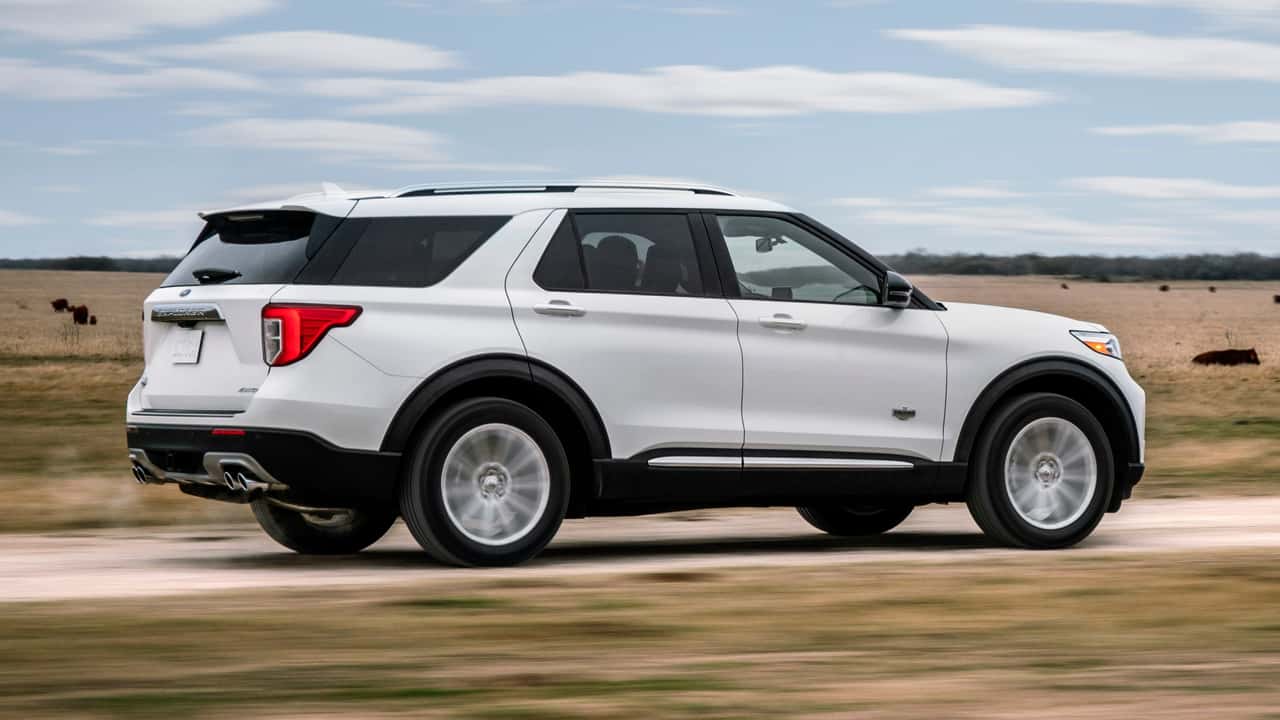


Ford is pulling back nearly 605,000 vehicles in the U.S. because the windshield wiper motors can fail without warning, leaving drivers staring through rain, snow, or road spray with no way to clear it. The National Highway Traffic Safety Administration disclosed the recall on Thursday.
The affected vehicles are 2020-2022 model year Ford Explorers, Ford Escapes, Lincoln Aviators, and Lincoln Corsairs — four of the most popular crossovers and SUVs the company sold during that production window. That’s not a niche problem. That’s a fleet-sized chunk of Ford’s bread-and-butter lineup sitting in driveways across the country with a potentially dangerous defect.
A wiper motor failure sounds mundane until you’re doing 70 on an interstate in a downpour and the blades go dead. Reduced visibility is NHTSA’s clinical language for a scenario that can turn fatal in seconds. The agency flagged the increased crash risk directly.
Ford dealers will inspect and replace the front wiper motors as necessary, free of charge. Owners should expect notification by mail, though the company has not yet publicly detailed the timeline for parts availability — always the bottleneck that separates a recall announcement from an actual fix.
This isn’t Ford’s only headache this week. NHTSA simultaneously disclosed a second, smaller recall covering 11,431 vehicles with a driveshaft friction weld that can fail. That defect causes rear driveshaft separation and a sudden, complete loss of drive power.
The agency did not specify which models are involved in the driveshaft action, but a weld failure at highway speed is the kind of catastrophic mechanical breakdown that defined recall nightmares a generation ago.
Two recalls dropping on the same day is never a great look, but Ford is no stranger to large-scale campaigns. The company has been one of the most frequent visitors to NHTSA’s recall database in recent years, a consequence of both its massive sales volume and an aging parts supply chain strained by pandemic-era production compromises. Vehicles built between 2020 and 2022 were assembled during the most chaotic period the auto industry has faced in decades — semiconductor shortages, supplier disruptions, workforce instability.
The quality bills from that era keep arriving.
The wiper motor issue also lands at an awkward moment for Ford. The automaker is fighting to protect margins on its traditional internal combustion business, which CEO Jim Farley has repeatedly called the financial engine that funds Ford’s electric vehicle transition. Every recall on a gas-powered Explorer or Escape is a warranty cost that eats directly into the profit column Ford is counting on to subsidize its money-losing EV division.
For owners, the immediate concern is simple: check whether your VIN is included and get to a dealer. NHTSA’s recall lookup tool at nhtsa.gov is the fastest route. Don’t wait for the letter.
Wiper failures tend to announce themselves at the worst possible time.
Ford has not disclosed how many complaints, crashes, or injuries prompted the investigation that led to this action. That information typically surfaces in the full recall documents NHTSA publishes in the weeks following the initial announcement. The gap between what we know now and what those documents will reveal is worth watching.
Six hundred thousand vehicles is a big number. Two simultaneous recalls is a pattern. And the production years involved suggest the pandemic’s quality hangover is far from over.

Share this Story