
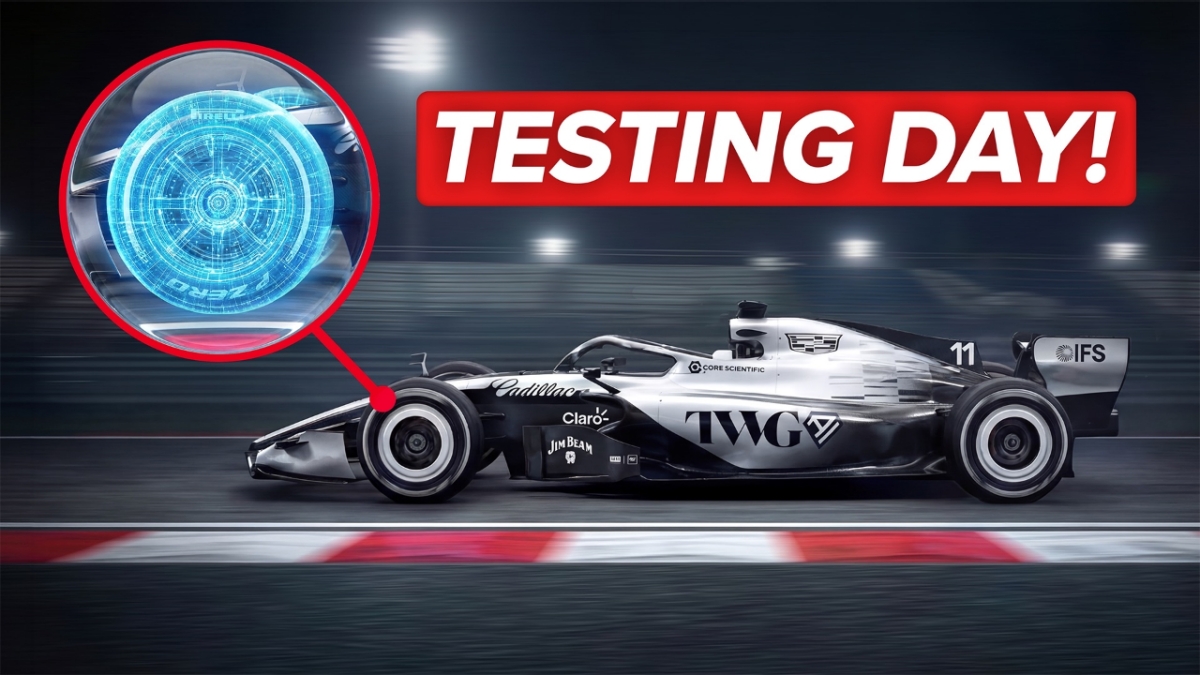


The Cadillac Formula 1 Team hit a major milestone in its pre-season preparations, traveling to Pirelli’s tire testing facility in Milan, Italy, to put two years of virtual development work up against real-world results. The visit forms the backbone of Episode 7 of the team’s “What Makes Fast” docuseries, shining a light on a part of Formula 1 that rarely gets its due: tires.
Despite their deceptively ordinary appearance, F1 tires are among the most technically sophisticated components in motorsport. They handle braking forces, translate aerodynamic performance into cornering speed, and deliver engine power to the asphalt. They are, in short, the only thing connecting the car to the circuit.
Leading the charge at the Milan facility was Heather Bobbitt, Tire Science R&D Leader for GM Motorsports. Her team arrived carrying months of intensive simulation work, finally getting the chance to measure that data against Pirelli’s physical test rigs for the first time.
The pressure was palpable. Pirelli Motorsport Director Mario Isola put it plainly: “It’s a high-pressure day, because in eight hours, you have to concentrate on what you need the most.” Each F1 team gets just that single eight-hour window to confirm — or completely upend — months of computational work.
For Bobbitt, the uncertainty heading into the session was equal parts exciting and nerve-racking. “Are we actually going to be able to correlate our model?” she said ahead of the test. “Are we going to say, ‘Yep, we were in the ballpark, we’re in the window,’ or we may learn that we were way off.”
That kind of honest self-assessment speaks to the real challenge facing Cadillac as a new constructor. Unlike established teams with years of accumulated tire knowledge and race data, the Cadillac squad is building its understanding largely from scratch. Simulation tools and technical collaboration are doing a lot of heavy lifting to close that gap.
The Milan test is far more than a box to check on a development timeline. It’s a first honest conversation between digital projections and physical reality, and getting tire modeling right is foundational. Errors in that area cascade into wrong suspension setups, flawed aerodynamic strategies, and slower lap times when it actually matters.
With the 2026 Formula 1 season closing in, the Cadillac team’s journey from concept to competitive racing machine is entering its most consequential phase. Every validated data point and every corrected simulation brings the American-backed squad one step closer to its grid debut. The rubber, as they say, is very nearly meeting the road.

Share this Story