
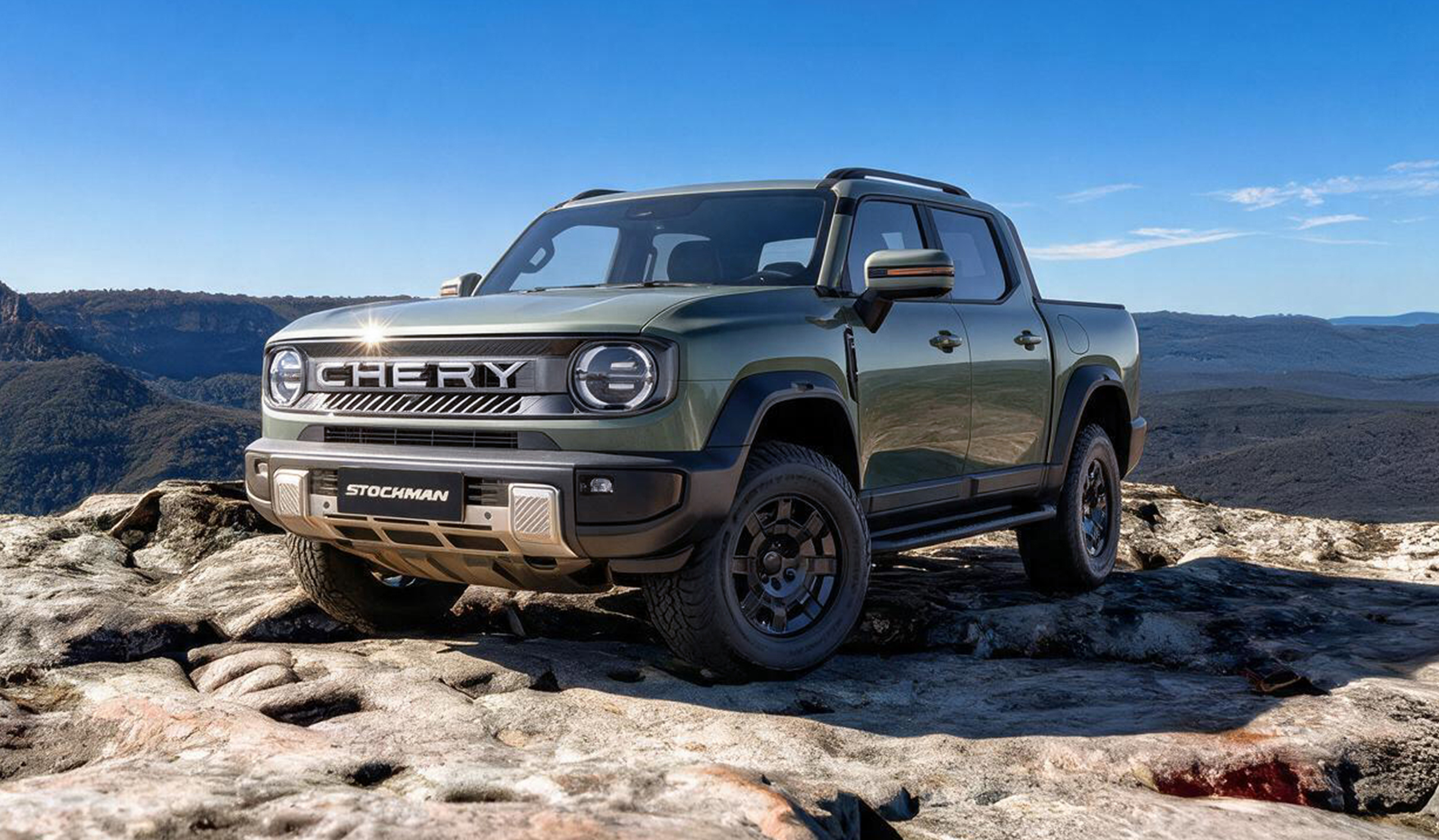


Chery just dropped the full spec sheet on its Stockman pickup, and the numbers read like a direct challenge to BYD’s Shark 6. A 2.5-liter turbo-diesel four-cylinder paired with an electric motor and a 34 kWh lithium-iron-phosphate battery produces 469 hp and 590 lb-ft of torque. Customer deliveries are slated for early next year.
That torque figure is the headline. The BYD Shark 6 Performance matches the Stockman on horsepower at 469, but Chery’s truck puts out 74 lb-ft more twist. In the world of pickups, where towing and hauling define daily usefulness, that gap matters more than any drag strip bragging rights.
Towing capacity lands at 7,705 lbs, which puts the Stockman right on par with the Shark 6 Performance, Toyota Hilux, Ford Ranger, Isuzu D-Max, Kia Tasman, and Mazda BT-50. Chery clearly studied the competitive landscape and built to match, not exceed. Hitting that number was table stakes.
The real differentiator is the drivetrain philosophy. Where BYD launched the Shark 6 with a gasoline-electric plug-in hybrid, Chery is leading with diesel. That’s a deliberate play for the Australian and Southeast Asian markets, where diesel still carries a near-religious following among tradespeople and rural buyers.
A plug-in gasoline hybrid version will follow later, but the diesel gets first billing. Front, center, and rear locking differentials come standard, and all-terrain tires ship from the factory. The front gets double-wishbone independent suspension while the rear rides on leaf springs, a setup that prioritizes load-carrying durability over ride comfort.
It’s a traditional pickup formula, and the customers Chery is chasing will recognize it immediately. The gasoline PHEV variant, when it arrives, will swap those rear leaf springs for independent rear suspension. That split suggests Chery sees two distinct buyers: the diesel crowd who wants a work truck and the gasoline hybrid crowd who wants a lifestyle vehicle that occasionally hauls a boat.
Electric-only range hits 60 miles, enough to handle a daily commute or city errands without burning a drop of fuel. That number sits comfortably in the sweet spot for plug-in hybrids, where most owners can run electric on weekdays and lean on the combustion engine for weekend trips or heavy loads.
Inside, Chery is loading up with a 15.6-inch infotainment screen, a 10.25-inch digital instrument cluster, a 14-speaker audio system, and a full suite of driver-assistance systems. The spec list reads like a luxury SUV, not a work truck. That’s the new normal in this segment, where Chinese brands are forcing legacy players to match equipment levels that would have been unthinkable in a mid-size pickup five years ago.
Pricing hasn’t been confirmed, but the Shark 6 Performance starts at $62,900 in Australia. Chery will almost certainly aim to undercut or match that number. Coming in higher would be a strategic mistake for a brand still building its reputation in the pickup space.
The Australian pickup market, once dominated by Toyota, Ford, and Isuzu, now has BYD, GWM, Kia, and Chery all fighting for the same customers with electrified powertrains and aggressive pricing. The Stockman started life as a concept called the KP31 back in February. Eight months later, it has a name, a full spec sheet, and a delivery timeline.
Chery is moving fast, and the incumbents are running out of room to dismiss what’s coming.

Share this Story