
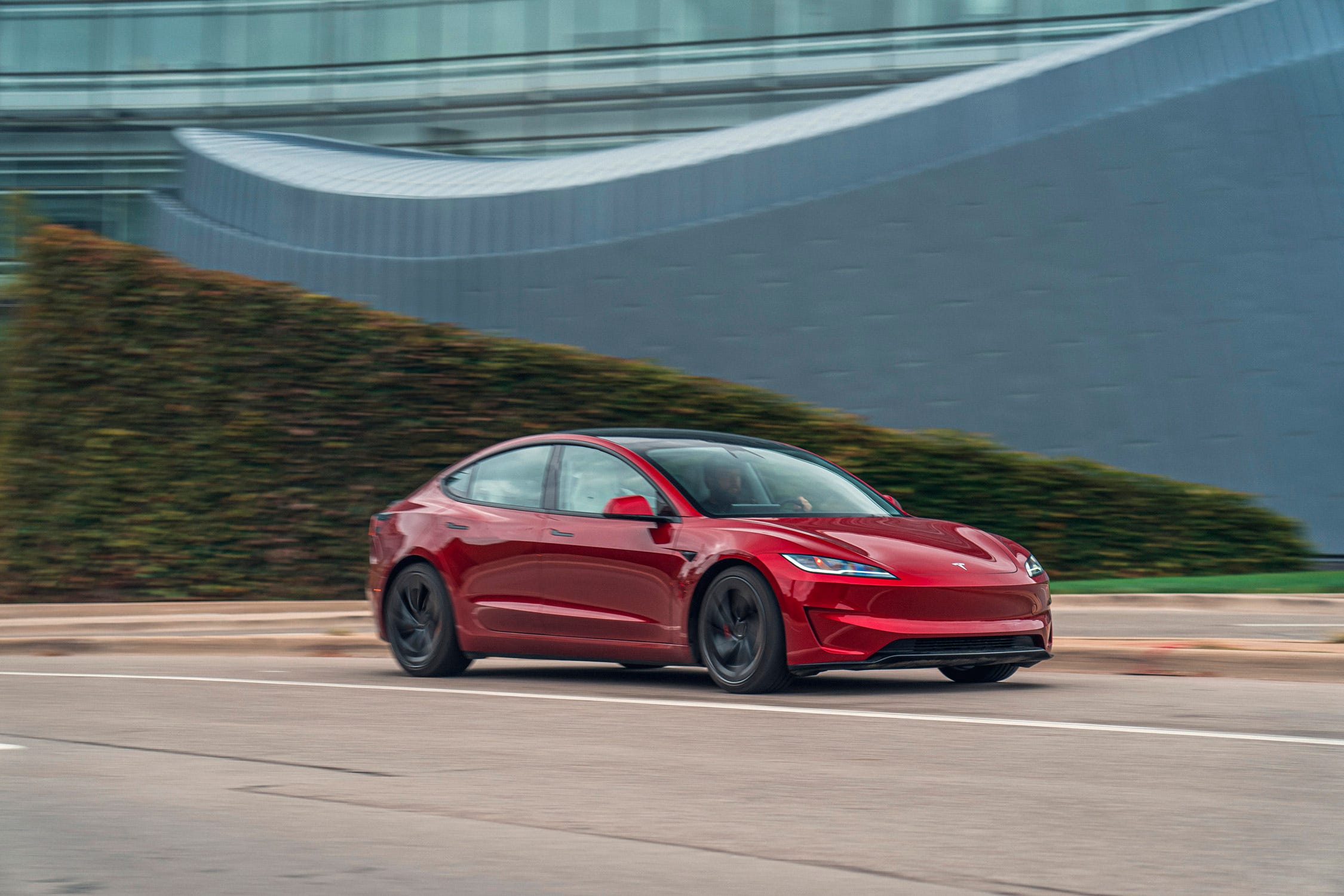


Tesla quietly dropped a bundle of updates on the Model 3 yesterday, adding horsepower, shaving acceleration times, and swapping in a bigger screen. None of it costs a penny more. The base car still starts at $38,630.
The most curious change sits in the Model 3 Premium AWD. Tesla now claims it hits 60 mph in 3.8 seconds, a full four tenths quicker than before. But the company offered zero explanation for the improvement.
No mention of added horsepower. No revised motor specs. No new battery chemistry. Just a faster number on the website and a shrug.
Range stays at 346 miles, which suggests Tesla found the extra speed through software calibration or revised power delivery rather than any hardware swap. That’s become a pattern for a company that treats its cars more like smartphones than traditional automobiles.
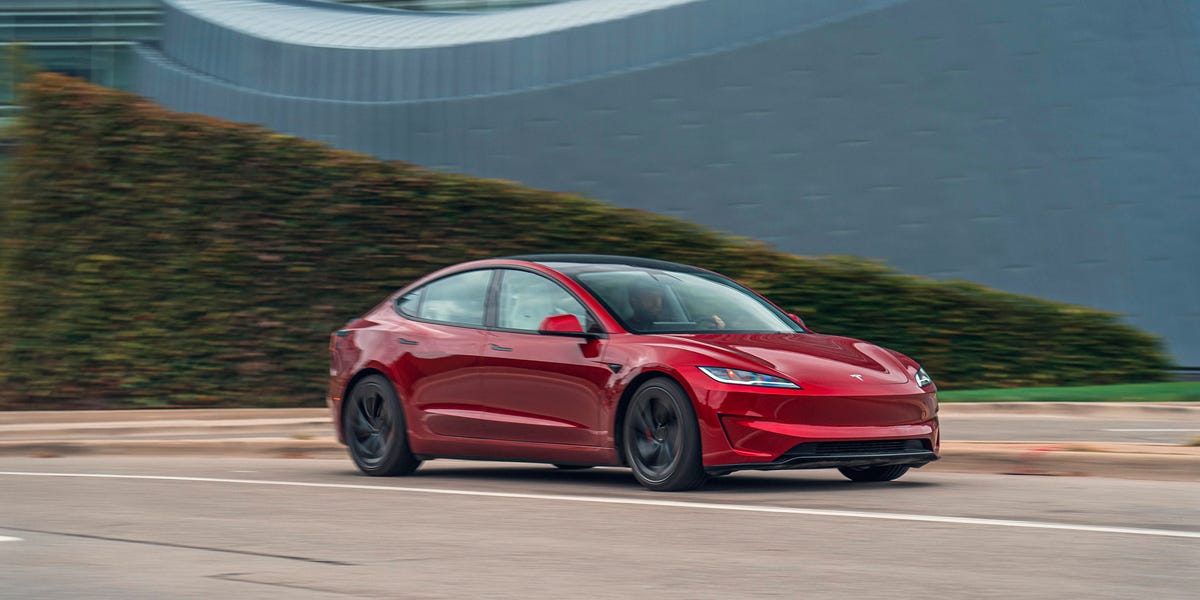
The Model 3 Performance gets a more straightforward bump: 528 horsepower, up 18 from the 510 it launched with in 2024. Range climbs from 309 to 316 miles. Tesla also threw in a black headliner, a detail that matters more than it should in a cabin that’s otherwise spartan by luxury sedan standards.
Here’s the odd part. Despite gaining 18 horsepower, the Performance’s claimed zero-to-60 time stays locked at 2.9 seconds. Either the original 510-hp car was already traction-limited off the line, or Tesla is being conservative with the number.
Either way, the extra power should show up at higher speeds, where grip is less of a bottleneck.
Every Model 3 variant now gets a 16-inch touchscreen, replacing the 15.4-inch unit. Tesla says it has higher pixel density, and it’s almost certainly the same panel already installed in the refreshed Model Y. In a car where the screen is the entire dashboard, the upgrade isn’t trivial.
Tesla does this instead of following traditional model-year cycles. Updates arrive when they’re ready, no fanfare, no press conference, just a revised configurator page and a post on X. It keeps competitors off balance, but it also means buyers never quite know if they’re getting the latest version until after they order.
One feature conspicuously absent from the North American updates: vehicle-to-load capability. Tesla added the function in China, Australia, New Zealand, and South Korea, allowing owners to power external devices from the car’s battery. The company gave no reason for skipping the U.S. market, where bidirectional charging has become a selling point for the Ford F-150 Lightning, Hyundai Ioniq 5, and a growing list of rivals.
Pricing holds steady across the lineup. The Premium AWD sits at $49,130, and the Performance costs $56,630. In a market where most automakers are tacking on charges for every mid-cycle improvement, Tesla’s decision to absorb the upgrades is calculated.
Model 3 sales in the U.S. have been under pressure from fresher competitors, and holding the line on price while adding content is a defense play.
The missing V2L feature in North America feels like an unforced error. Competitors are building entire marketing campaigns around the ability to run a job site or power a home during an outage from an EV’s battery pack. Tesla has the hardware architecture to do it, and the question of why it hasn’t flipped the switch domestically is one the company apparently doesn’t feel compelled to answer.
Share this Story