
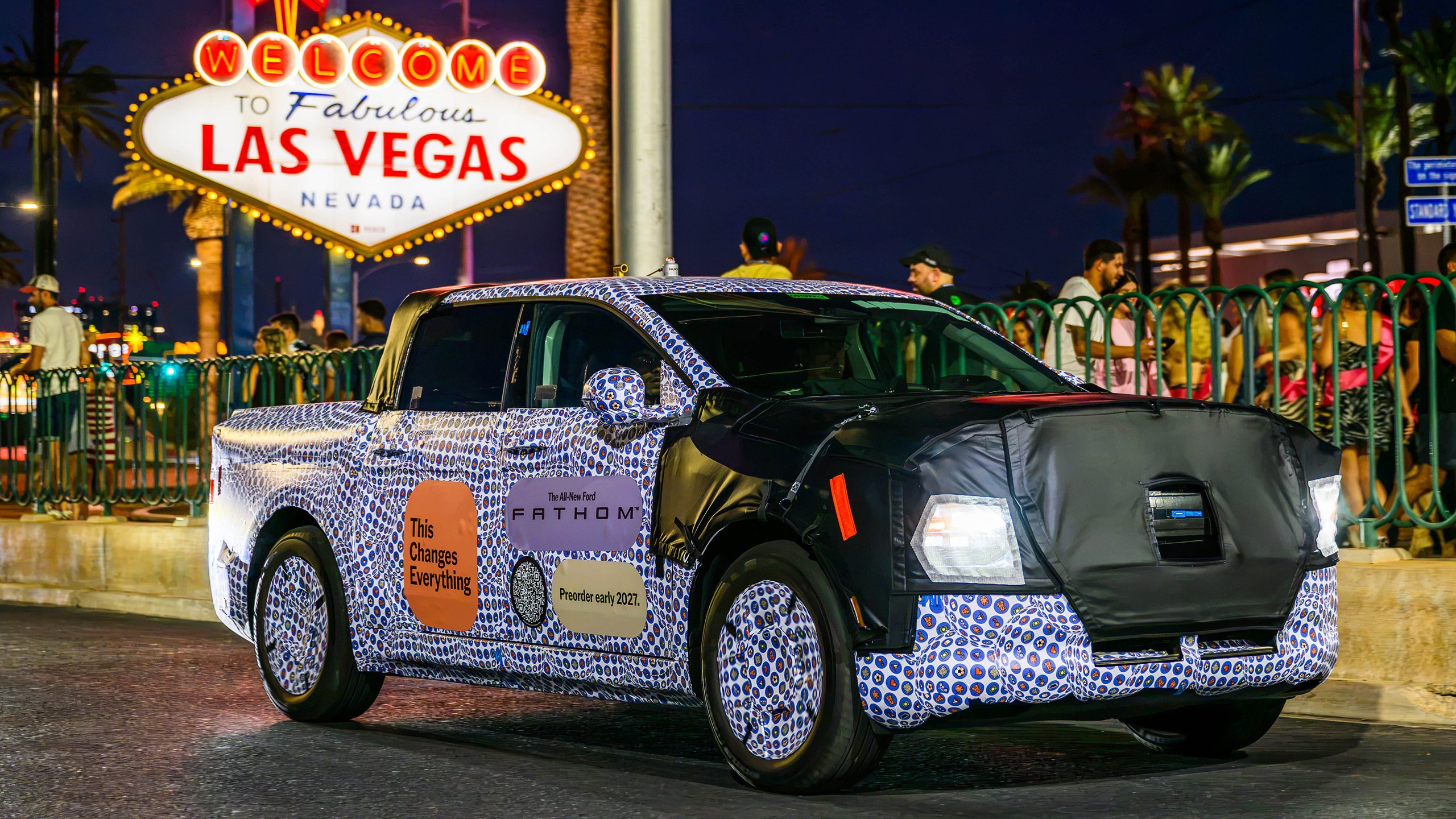


Ford wants to sell 100,000 Fathom electric trucks in the model’s first year on the market. That number would triple the best single-year performance the F-150 Lightning ever posted, and match what that truck needed a full five years to accumulate.
The Wall Street Journal report lays bare the ambition, and the risk, baked into Ford’s next EV bet. The Lightning topped out at roughly 33,000 units in its best year and crawled to a cumulative 105,000 over five years of production. Now Ford is banking on hitting that same total in 12 months with a truck most Americans haven’t heard of yet.
The math Ford is counting on starts with price. The Fathom will open at $30,000, well below anything the Lightning ever offered. At its cheapest, the Lightning still hovered near $50,000 before options, a figure that kept it firmly in the territory of buyers who wanted an EV truck on principle rather than on budget.
A $30,000 starting price changes the customer entirely. It pulls in first-time EV buyers, fleet operators, and the massive chunk of the American truck market that views $40,000 as a ceiling, not a floor. Ford clearly studied the Lightning’s sluggish adoption and diagnosed price as the primary barrier.
But there is a catch the sticker price cannot paper over. The Lightning launched into a market sweetened by a $7,500 federal EV tax credit. That rebate dropped the cost of entry and gave early adopters a tangible reason to sign. It no longer exists, and the Fathom’s $30,000 price is the real, unsubsidized number.
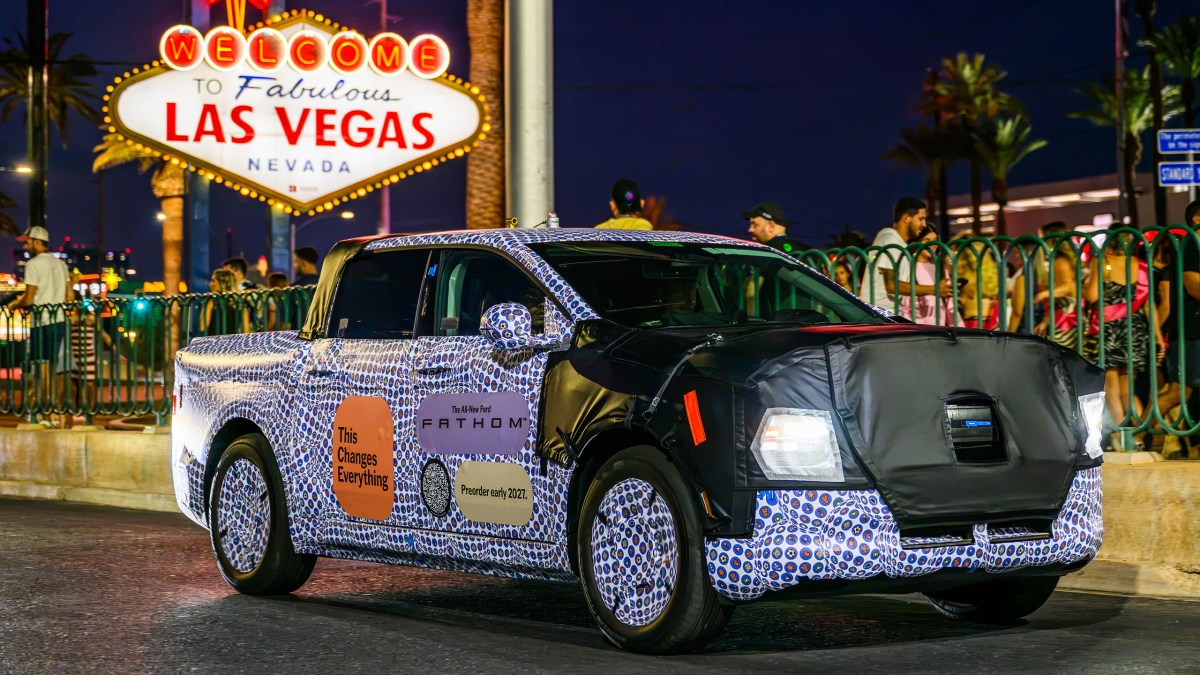
Ford also has to contend with a market that has matured since the Lightning’s debut. Competition from GM, Ram, Rivian, and a growing roster of Chinese-designed platforms means the Fathom won’t enjoy the novelty factor the Lightning once had. Loyalty in the EV truck segment has proven thin.
Production capacity is the other open question. Ford struggled with battery supply constraints and manufacturing hiccups throughout the Lightning’s life, repeatedly adjusting output targets downward. Selling 100,000 trucks requires building 100,000 trucks, and Ford’s track record on EV production consistency does not inspire blind confidence.
The Fathom name itself signals Ford’s desire to break from Lightning’s baggage. This is not a variant of the F-150. It is a clean-sheet identity meant to stand on its own, untethered from the expectations and disappointments that followed the Lightning through half a decade of modest volumes.
Whether Ford can actually deliver on this target depends on execution at a scale the company has never demonstrated in the EV space. The price is right and the intent is clear. But intent and 100,000 signed buyer’s orders are separated by factory floors, supply chains, dealer networks, and a public that has grown skeptical of automaker promises on electrification timelines.
Ford’s EV division lost $5.1 billion last year. The Fathom isn’t just a product launch. It is the answer Ford has to give to investors who have been waiting patiently, and some not so patiently, for the electric side of the business to start pulling its weight.


Share this Story