
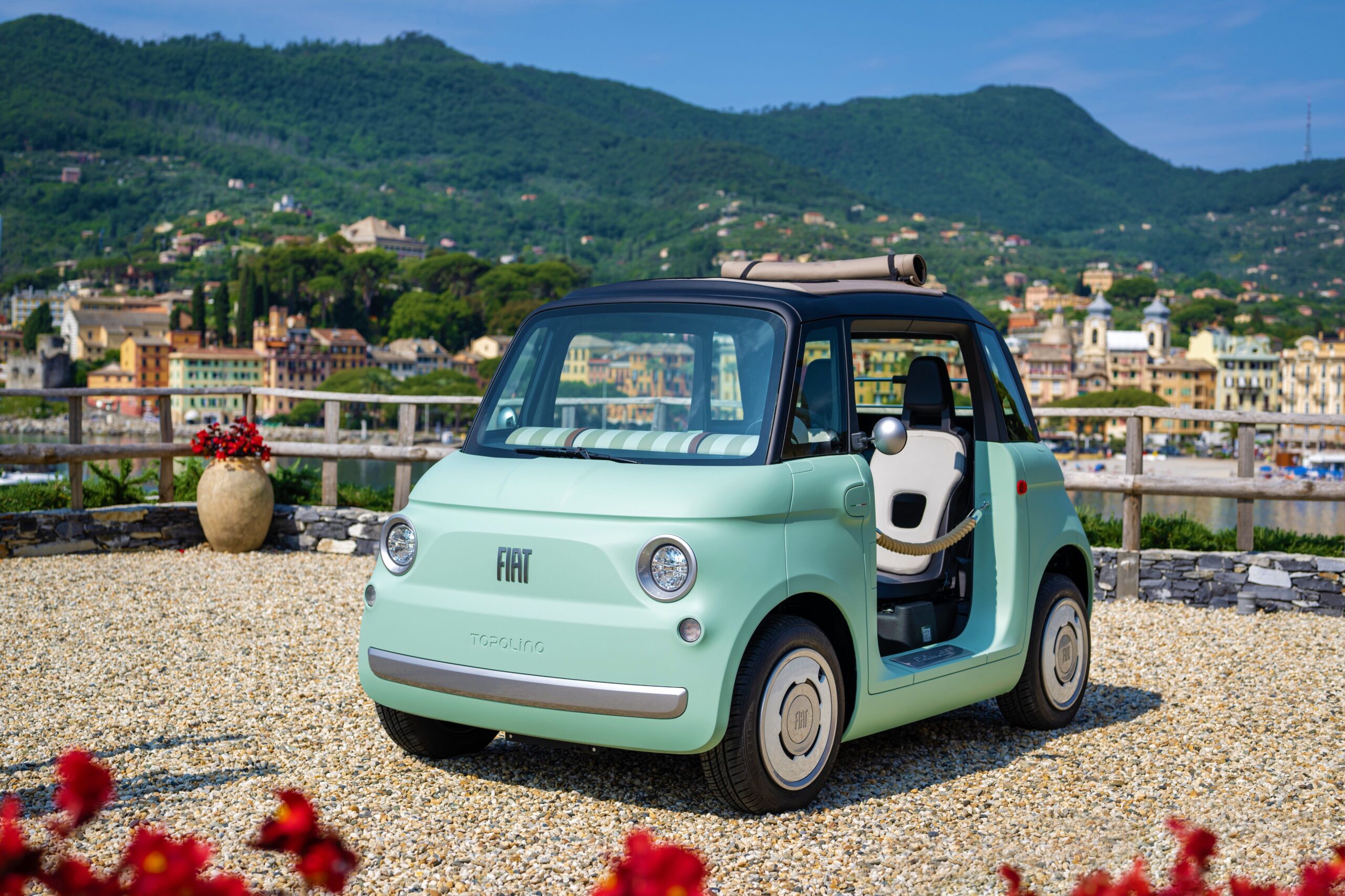


Fiat is bringing a vehicle to the United States that tops out at 25 mph, makes 8 horsepower, and doesn’t have a radio. The 2026 Topolino, priced at $14,985, is not a car. Not legally, not practically, not by any reasonable definition Americans have used for the last century.
It’s a quadricycle, a classification that doesn’t even exist in most U.S. state vehicle codes. And Fiat is betting you’ll buy one anyway.
The Topolino has been on sale in Europe since 2023, where quadricycles occupy a real market niche. Teenagers in France and Italy can drive them at 14. Retirees use them for errands in dense city centers where a 46-mile range and a 19-mph base speed aren’t punchlines but practical realities of short-distance urban life.
America is not that place.
The specs read like a parody. The single electric motor drives the front wheels, and the base model is electronically limited to 19 mph. An optional Street Legal Conversion Kit unlocks the full fury of 25 mph.
Charging takes four hours on a standard outlet. There is no infotainment screen, no Bluetooth, no GPS, no audio system of any kind. The interior is unadorned plastic with a single USB-C port.
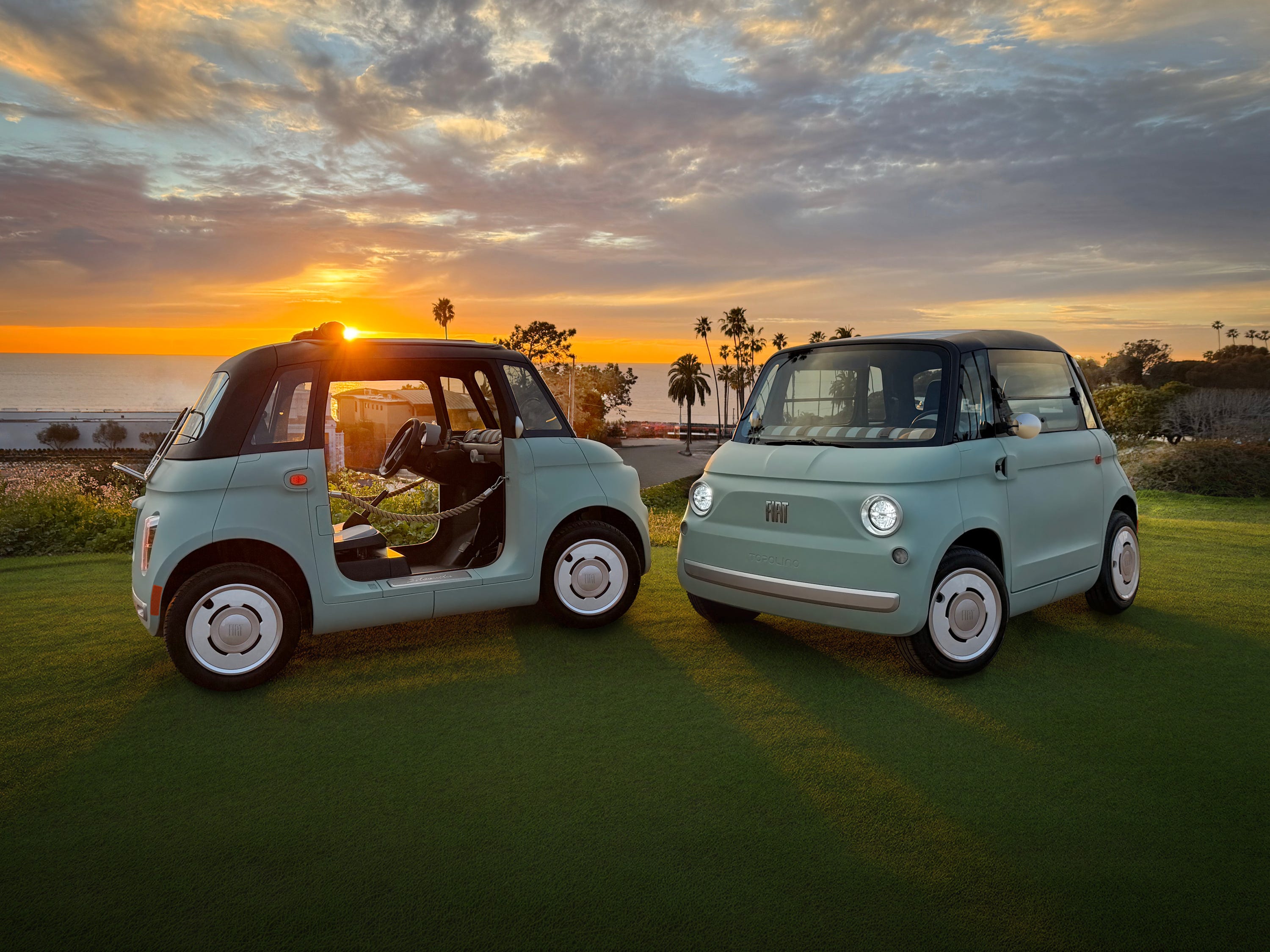
The convertible version, called the Dolce Vita naturally, replaces its doors with decorative rope. One color is available: Verde Vita Mint.
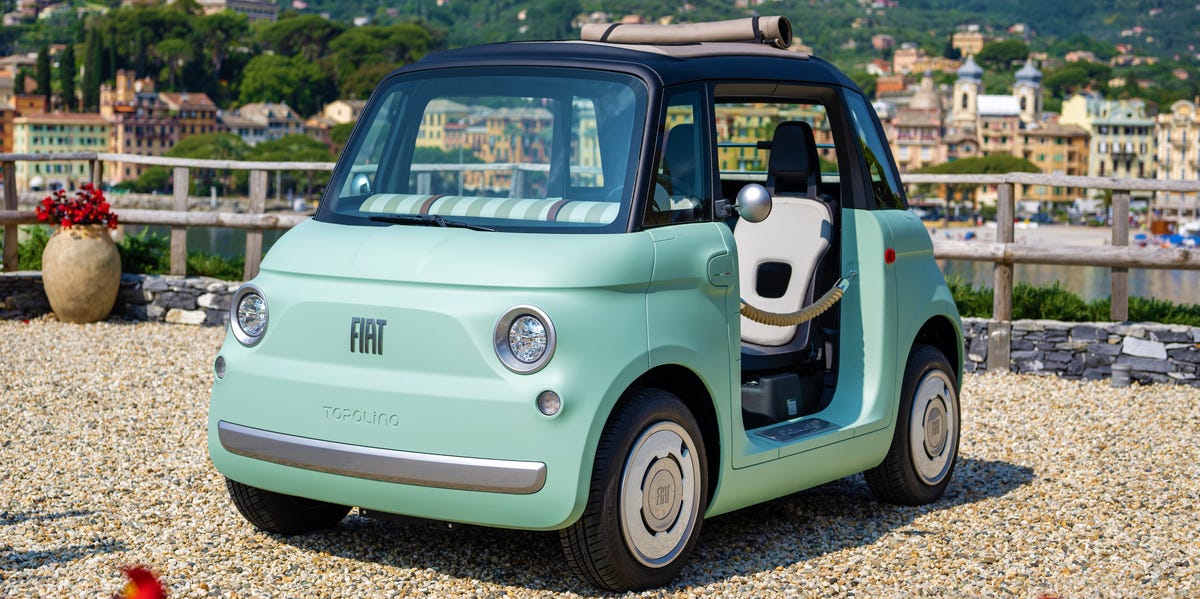
Fiat positions this as a lifestyle object, a Mediterranean daydream on four tiny wheels. The Birkin bag of golf carts, as one description puts it. That framing does a lot of heavy lifting, because stripped of the Italian romance, you’re looking at a neighborhood electric vehicle with less range than most e-bikes and fewer features than a base-model smartphone.
The $14,985 price tag is the hook. In an American EV market where even Fiat’s own 500e starts at $37,695, the Topolino undercuts everything with four wheels and a plug. But the comparison is misleading because the 500e can merge onto a freeway.
The Topolino cannot legally operate on any road with a speed limit above 25 mph in most states. That restricts it to the same gated communities, resort campuses, and retirement villages where souped-up golf carts already reign.
That’s the tension Fiat doesn’t acknowledge. The company hasn’t explained how the Topolino will be registered, titled, or insured across 50 states with wildly different low-speed vehicle regulations. Some states cap LSVs at 25 mph and restrict them to roads with 35-mph limits, while others don’t recognize the category at all.
Fiat’s press materials glide past this regulatory patchwork as if charm alone will sort it out.
There’s a cynical read and a generous one. The cynical version says Stellantis needs to pad its EV sales numbers and compliance credits, and a cheap quadricycle that costs almost nothing to import does exactly that. The generous version says Fiat genuinely sees a gap in beach towns, island communities, and urban cores where parking a real car is insanity.
Both can be true at the same time.
The safety equipment is what you’d expect from something this small and this slow: seatbelts, a backup camera, a pedestrian alert system. No crash-test ratings from NHTSA or IIHS exist. Given the vehicle’s classification, they may never come.
Fiat has not yet allowed journalists behind the wheel. When they do, the drive impressions will be less about acceleration times and handling limits than about answering a simpler question: who is this actually for? The Topolino is adorable, affordable, and almost completely impractical for American life as most people live it.
Whether that’s a fatal flaw or the entire point depends on whether you think transportation needs to be useful, or just needs to make you smile.


Share this Story