
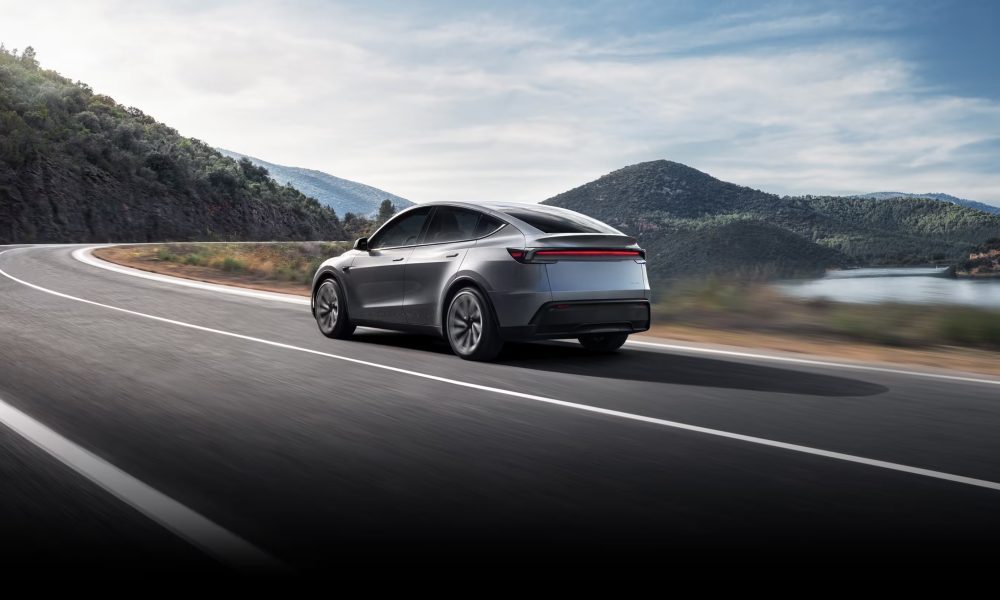


Prague spent the first half of 2026 telling anyone who would listen that it wanted nothing to do with piecemeal approvals for Tesla’s Full Self-Driving system. It wanted a coordinated EU approach. It had concerns about speed-limit compliance, traffic-sign recognition, and driver-attention monitoring.
Then, on September 21, the Czech Ministry of Transport reversed course and recognized the Dutch RDW’s provisional type approval. Czechia becomes the seventh EU member state to clear FSD Supervised for public roads.
Tesla Europe confirmed the news and said rollout “will begin soon,” meaning over-the-air updates should hit eligible vehicles within days.
The about-face did not come cheaply. Czech officials say months of expert review, direct talks with Tesla, and real-world data from the six countries already running the system eventually satisfied their objections. “Safety remains the top priority,” the ministry stated, which is what every government says right before approving something it previously refused to approve.
FSD Supervised remains a Level 2 driver-assistance feature. The driver stays responsible. Only vehicles equipped with Tesla’s AI4 hardware qualify.
None of that has changed since the Netherlands issued the original type approval on April 10. What has changed is the pace.
After the Dutch approval, dominoes fell fast: Lithuania on May 20, Estonia on May 29, Denmark on June 9, Belgium on June 10, Slovenia on September 7, and now Czechia. Seven countries in five months, each one recognizing the same Dutch paperwork.
The combined population of those seven nations is still modest by EU standards. Germany, France, Italy, and Spain remain on the sidelines, all preferring to wait for a bloc-wide decision rather than accept a Dutch stamp.
On October 6, the Technical Committee on Motor Vehicles is scheduled to vote. A qualified majority, meaning at least 15 of the 27 member states representing 65 percent of the EU population, would open every remaining market. Each country that signs on before that vote shifts the political math.
Seven approvals make it harder for skeptics to argue the system hasn’t been vetted on European roads.
For Tesla, the calculus is straightforward. Every new country generates driving data under different road rules, lane markings, speed conventions, and weather. That data feeds the neural network that powers FSD, and the more varied the input, the stronger the argument becomes for wider deployment.
Czech Tesla owners with AI4 hardware get access to the same supervised highway and urban driving available in the other six markets. For them it is a practical upgrade. For Tesla’s regulatory strategy, it is another brick in a wall being built one small country at a time.
Prague’s reversal is telling. A government that openly resisted mutual recognition looked at the accumulating evidence from neighboring countries and decided the risk of saying yes was smaller than the political cost of continuing to say no. That pressure will only grow as October 6 approaches.
The big four, Germany, France, Italy, and Spain, control enough population to block a qualified majority on their own. Whether they hold the line or follow Prague’s lead will determine if FSD Supervised reaches the bulk of the European market this year or stays confined to a handful of smaller states.
Tesla is betting the cascade continues. So far, every approval has made the next one easier.
Share this Story