
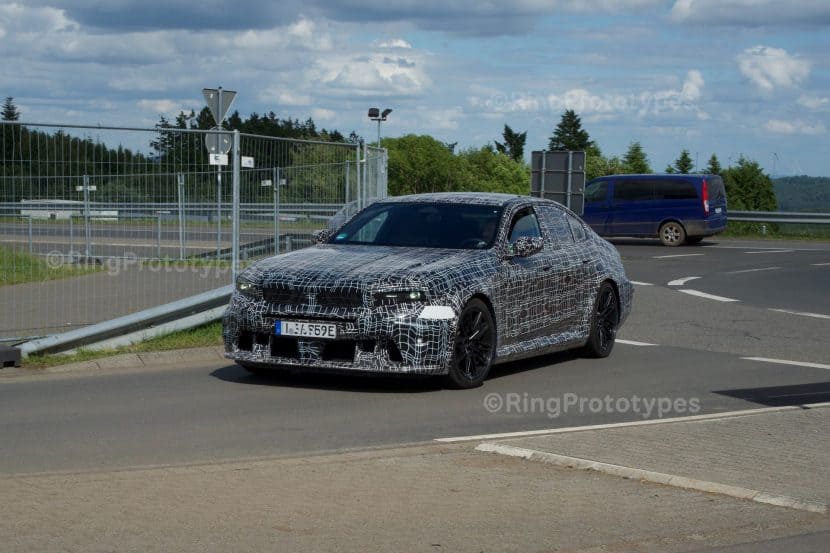


The 2028 BMW M5 is supposed to be a mid-cycle refresh. What’s rolling around the Nürburgring right now looks more like a second launch.
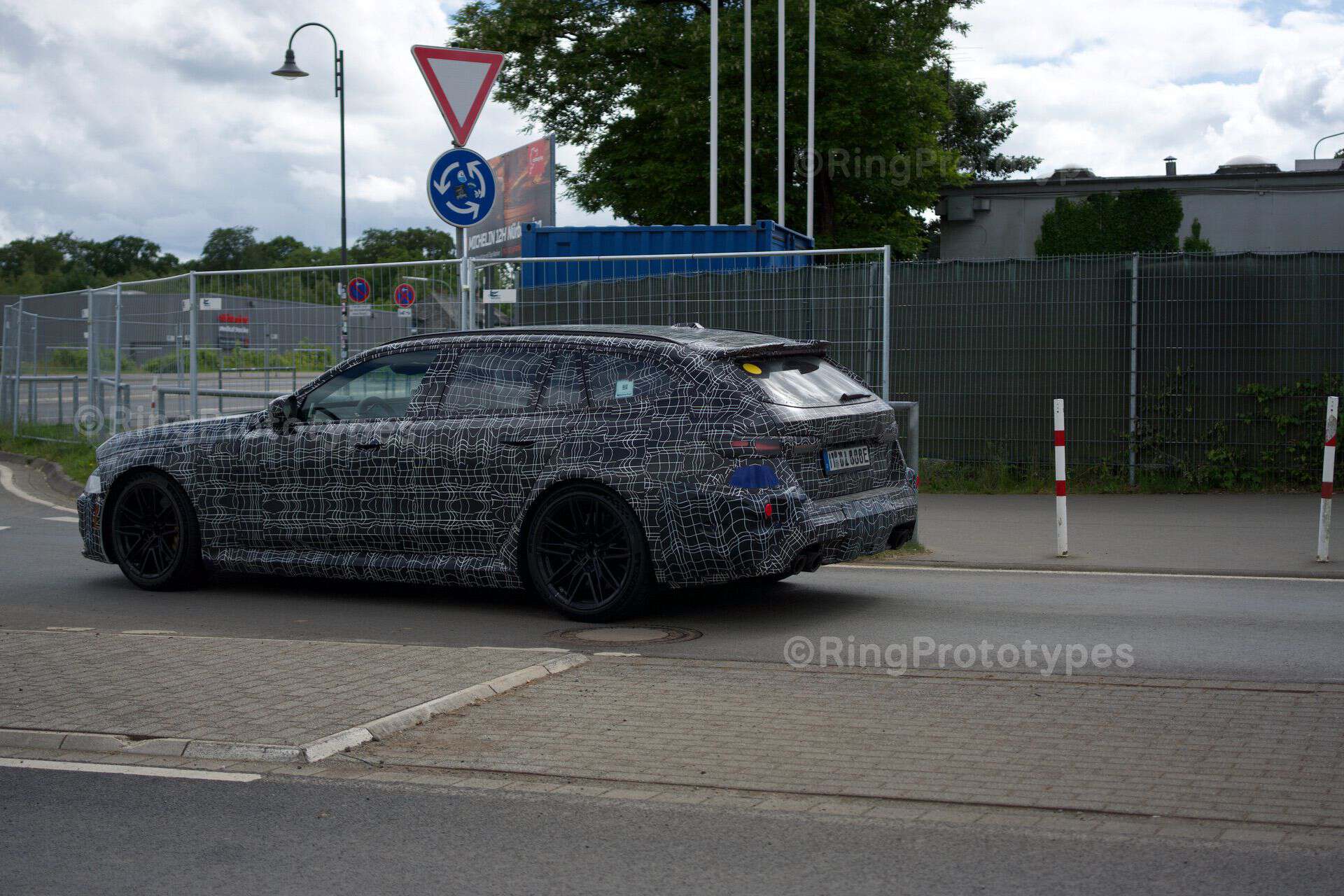
Both the G90 sedan and G99 Touring wagon have been caught in heavy camouflage near the ‘Ring, and the changes visible even under wraps are substantial. New headlight shapes. A kidney grille that appears to have been dialed back. And an interior that throws out the current dashboard entirely in favor of BMW’s new iDrive X architecture, anchored by a 17.9-inch touchscreen.
BMW calls these updates a Life Cycle Impulse. The rest of the industry calls them facelifts. But what BMW is doing to the 5 Series and M5 goes well beyond fresh bumpers and revised tail lamps. This is the same playbook Munich just ran on the 7 Series — a wholesale cosmetic and tech overhaul that resets the car’s identity halfway through its production life.
The front end is getting the Neue Klasse treatment, softening the aggressive design language that defined this generation at launch. The grille looks smaller, though camouflage makes certainty impossible. The headlights are clearly reshaped. Out back, new taillight graphics are visible, but the overall dimensions appear unchanged — retooling the tailgate and rear fenders would be an expensive proposition BMW apparently decided wasn’t worth it.
The cabin is where the real money went. Spy photographers managed to peer inside, confirming a completely redesigned dashboard. The centerpiece is that massive touchscreen, borrowed from the iDrive X system debuting across BMW’s lineup.
A 14.6-inch passenger display, already optional on the new X5, could make the cut here too. Above the dash, BMW’s Panoramic Vision — a pillar-to-pillar windshield projection — replaces the traditional instrument cluster with fixed data tiles in the driver’s sightline and customizable widgets to the right. It’s a dramatic departure from the current M5’s interior, which is barely a year old in customer hands.
Then there’s the powertrain story, which has already been rewritten once without fanfare. European emissions regulations forced BMW to cut 41 horsepower from the twin-turbo 4.4-liter V8, dropping it from 577 hp to 536 hp. The total system output — 717 hp — didn’t change because BMW’s M division quietly upgraded the electric motor to compensate. The V8 plug-in hybrid formula stays, but the balance between combustion and electric has already shifted.
Whether the facelift brings further mechanical changes remains unclear. BMW has been on a CS binge lately, and a Competition Sport variant of the M5 would surprise no one. But even the optimistic timeline puts a potential M5 CS no earlier than 2028, after the standard facelifted model arrives in 2027.
The bigger picture is what BMW is signaling about product cadence. The M5 launched as a 2025 model. By the time this facelift arrives, customers will have had the original car for roughly two years before it looks dated next to its replacement on the showroom floor. That’s an aggressive depreciation curve for buyers who paid north of $120,000.
BMW is clearly prioritizing visual and technological alignment across its lineup over the traditional model lifecycle. Every car needs to look like it belongs to the Neue Klasse era, even if it was born before that era officially started. The 7 Series got this treatment first. The 5 Series and M5 are next. No stragglers allowed.
For the engineers and designers in Munich, it’s a chance to fix what critics didn’t love about the G90’s styling the first time around. For M5 owners who just took delivery, it’s a reminder that in today’s BMW, nothing stays current for long.
Share this Story