
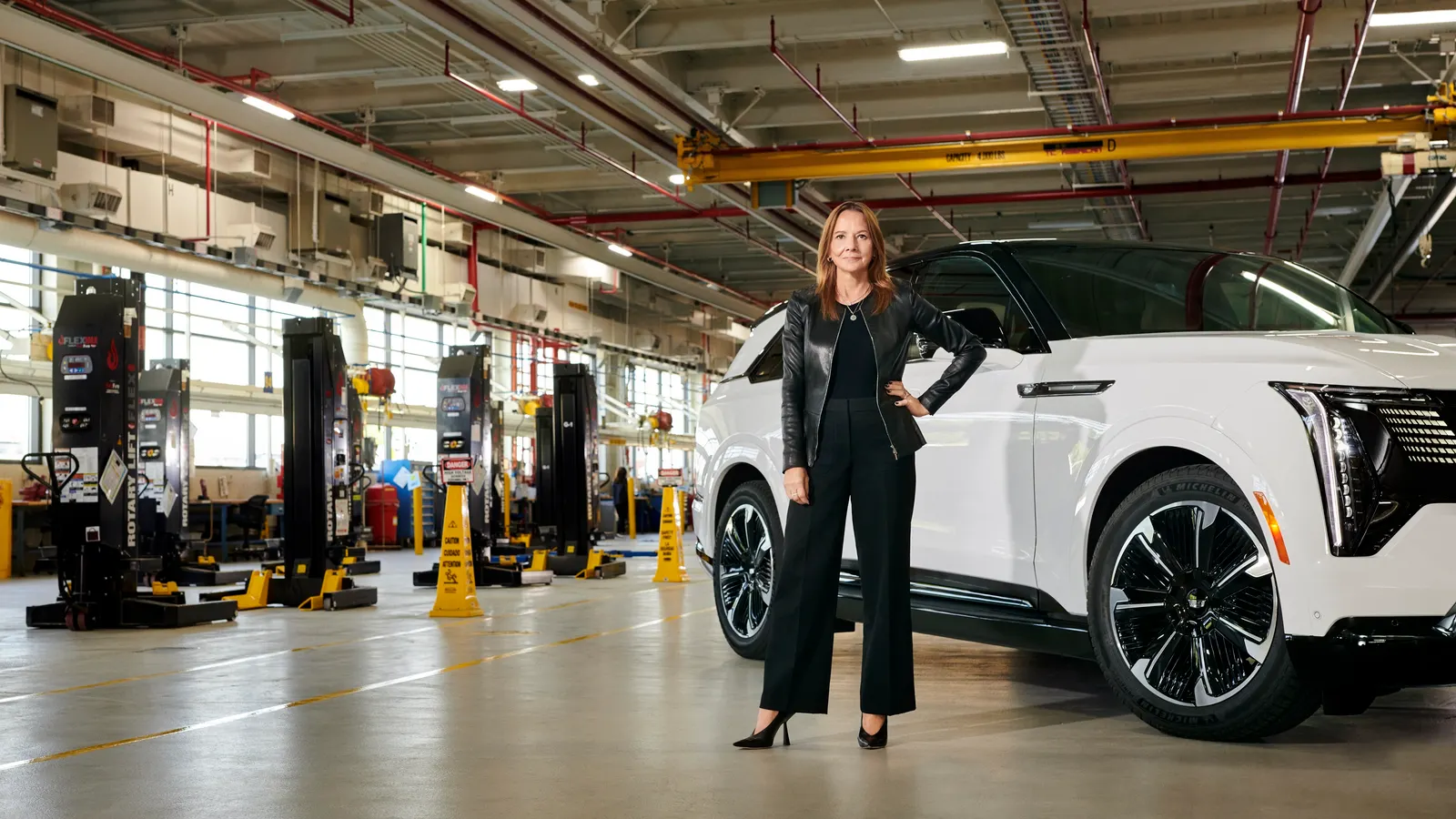


General Motors is already spending $9 billion on American manufacturing this year. Now it wants to pile on another $1 billion to $1.5 billion for 2027, pushing its domestic production capacity to 2 million units. CEO Mary Barra laid out the plan on a July 21 earnings call, framing it as both a shield against tariffs and a bet on long-term growth.
The math is straightforward. Trade policy has made foreign production riskier and more expensive. GM is responding by dragging work back inside U.S. borders at a pace that would have seemed unthinkable five years ago.
The most recent move is a $275 million investment at the Spring Hill Manufacturing Plant in Tennessee, aimed at boosting output of full-size and midsize trucks plus a future Cadillac model. In January, the company announced it would shift production of the Buick Envision from China to the U.S., starting in 2028. Each decision shrinks GM’s exposure to cross-border cost swings by a measurable increment.
But onshoring metal-bending is only half the story. GM is simultaneously locking down its semiconductor and memory supply, a domain that nearly crippled the entire industry during the pandemic-era chip crisis.
This month, GM expanded its relationship with Micron Technology, securing access to low-power double-data-rate memory, NOR flash, and universal flash storage NAND products. The deal deepens integration across GM’s vehicle platforms, which matters because the automaker is building toward a next-generation computing architecture slated for 2028. Memory and processing power are no longer accessories in a modern vehicle. They are the vehicle’s nervous system.
Barra pointed to a parallel long-term supplier relationship with Samsung, noting that both partnerships trace back to 2022. She was careful not to disclose pricing but emphasized jointly developed technology roadmaps. That language signals GM wants co-development agreements, not just purchase orders. The company is trying to guarantee not only supply but also relevance, ensuring its chip partners are engineering future products with GM’s architecture in mind.
The timing is no accident. Moody’s has flagged EV transitions and software-defined vehicles as major stress points for automotive supply chains. Memory demand per vehicle is climbing sharply as automakers push toward centralized computing, over-the-air updates, and advanced driver-assistance systems. Any company that treats chips as a commodity to be sourced on the spot market is playing with fire.
CFO Paul Jacobson acknowledged that commodity and logistics costs remain elevated and are expected to stay that way through the year. His confidence, though, was pinned to the domestic manufacturing push. “The investments we are making to onshore production, launch key vehicles and expand full-size SUV capacity will give us more flexibility and position us to grow revenue, gain market share and improve profitability in 2027,” Jacobson said.
That is a bold claim for a company still navigating an expensive EV ramp while defending its enormously profitable truck and SUV franchise. The $9 billion-plus annual spend on U.S. manufacturing is a staggering commitment. It only works if consumer demand holds and the vehicles coming off these lines actually sell at the volumes GM is projecting.
Two million units of domestic capacity is a number designed to insulate GM from tariff shocks. Whether it insulates the company from a softening consumer is a different question entirely, and one nobody on that earnings call seemed eager to answer.



Share this Story