
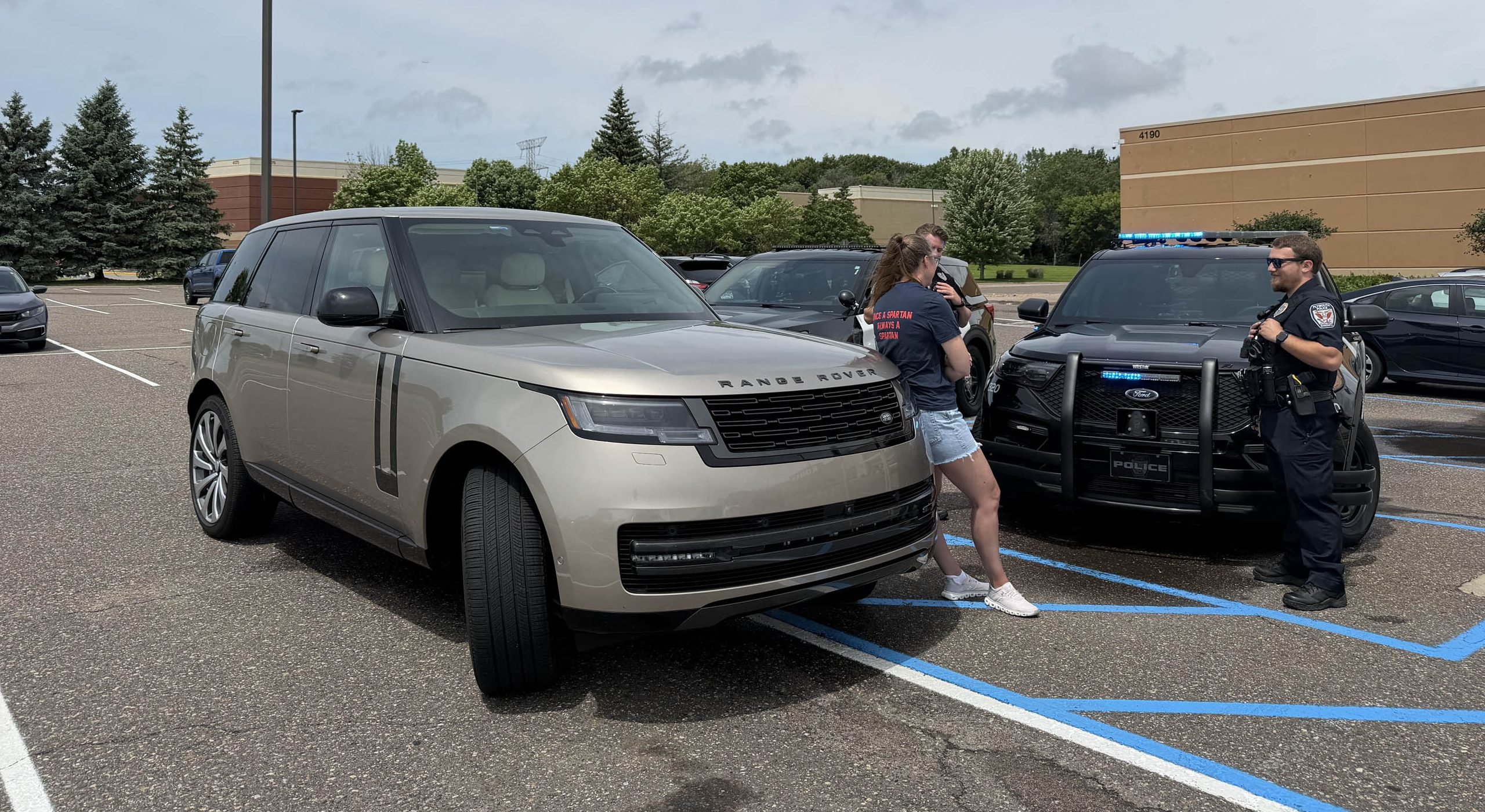


Four police cruisers boxed in Joel Feder and his wife in a Kohl’s parking lot in Plymouth, Minnesota, on a Sunday afternoon. Officers jumped out, hands on holsters, screaming. The crime? Driving a $155,000 Range Rover press car with New Jersey manufacturer plates that a surveillance network had flagged as stolen.
The plates weren’t stolen. The car wasn’t stolen. A clerical error 2,000 miles away had turned an automotive journalist running errands into a target.
The culprit was Flock Safety, the license plate reader company whose cameras are now mounted at intersections across the country through partnerships with local police departments. Flock’s system had been tracking Feder for days as he drove the Range Rover around suburban Minneapolis, alerting officers every time the SUV crossed a camera’s field of view. When a hit finally pinged at the Kohl’s, police scrambled to set up what amounted to a sting operation, complete with a drone overhead.
The root cause was almost comically mundane. A Jaguar Land Rover vehicle with New Jersey plate 34 03 DTM had its plate misplaced during a photo shoot in Los Angeles. JLR reported it lost.
But when the LAPD entered the plate into the system, the small-font “03,” a quirk of New Jersey’s non-standard manufacturer plate format, was dropped. It went in as simply 34 DTM.
Flock’s cameras couldn’t parse that small middle number either. So when Feder’s Range Rover rolled through town bearing plate 34 10 DTM, the system saw only the large characters and matched it to the “stolen” entry. Alert after alert fired off.
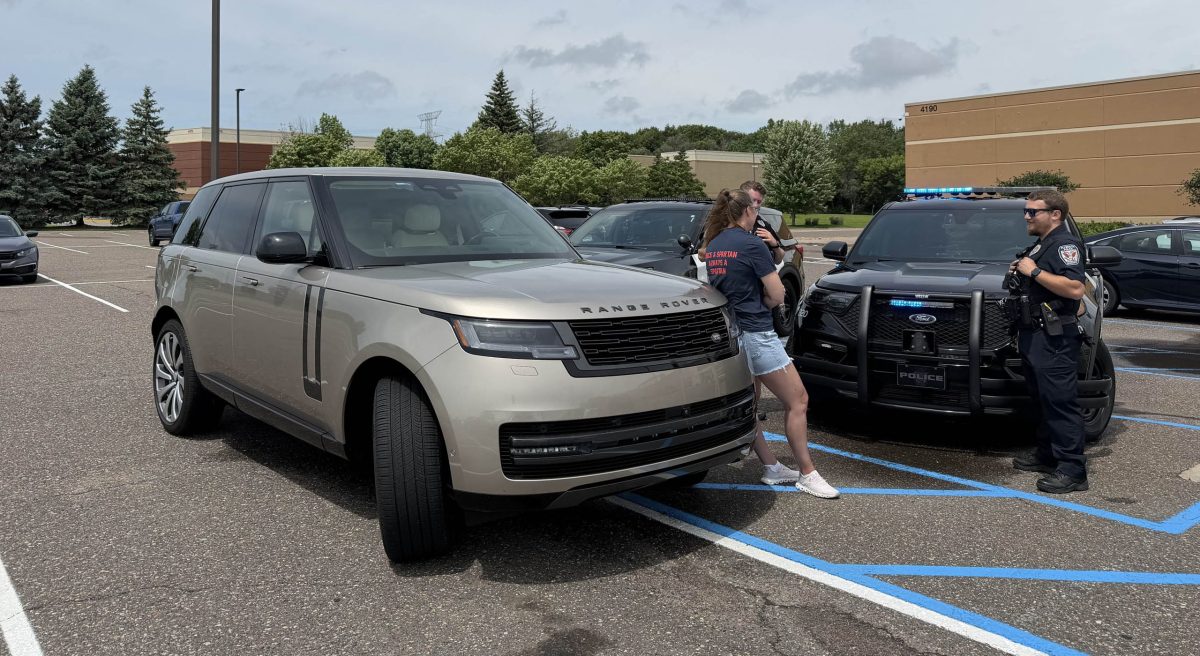
Police tracked the SUV to Feder’s neighborhood but kept losing the trail because he parked in his garage. The Kohl’s run gave them their opening.
It took an hour of tense conversation, a VIN check that came back clean, and a phone call to JLR’s fleet team on a Sunday to untangle it all. Officer Max Ganshyn confirmed the problem and then delivered a chilling footnote: four other JLR vehicles with the same 34 ## DTM plate structure were being tracked around Minnesota that same week. Feder was simply the first one caught.
Every JLR press car in America with that plate format was a potential target anywhere Flock cameras operate.
Ganshyn told Feder to drive straight home and leave the Range Rover in the garage. Cross into the next town and the whole thing would repeat with different cops who didn’t know the backstory. His parting observation landed hard: “You’re lucky we’re in Plymouth. If you were in Minneapolis, they definitely would’ve come at you with guns drawn.”
The police report later revealed the plate was never actually stolen in the first place, just misplaced during a photo shoot and then reported with incomplete information. A lost plate, a truncated data entry, a system that couldn’t read a non-standard font size, and a nationwide camera network with no mechanism to catch the error before guns came out.
Feder, who has reviewed cars for more than 15 years and serves as The Drive’s Director of Content, noted the bitter irony. His outlet had published a viral investigation into Flock’s privacy risks just two weeks earlier. He became a case study in his own reporting.
The fix required the LAPD to correct its original report and update Flock’s database. Until that happened, the system would keep generating false hits on JLR press cars across the country. One typo, amplified by an automated surveillance network that thousands of police departments rely on, with no human review layer between a database entry and an armed response.
Feder and his wife walked away unharmed. Their kids weren’t in the car that day. He’s thought a lot about both of those facts since.


Share this Story