


A container of irreplaceable displays for the final Audi Q2 production run was floating somewhere between Dubai and an unscheduled Indian port when Dieter Braun’s team scrambled to reroute it through Sri Lanka and Turkey. The parts landed half a day before the assembly line needed them. Without that save, 2,000 cars would never have reached customers.
That kind of white-knuckle logistics firefighting is daily life at Audi now, and it’s getting a turbocharge from an unlikely source: the company’s Formula 1 program.
Audi Revolut F1 Team scored points at its Melbourne debut this season partly because logistics staff improvised an alternative freight route after global air traffic restrictions grounded a shipment of update parts between Zurich and Dubai. New customs documents were drawn up mid-crisis. Both cars were assembled Wednesday evening, hours before the first session.
The parallel to that Q2 container rescue is almost too neat, except it’s real, and it happened within the same corporate family.
Braun, who runs Audi’s entire supply chain — roughly one million parts per day flowing from thousands of suppliers across nearly 60 countries — now uses an image of the Audi R26 as his permanent meeting background. It’s not decoration. It’s a thesis statement: speed kills indecision.
The Formula 1 cost cap has turned logistics into a competitive weapon on track. Björn Brickwedde, who heads logistics at Hinwil, puts it bluntly. Every euro saved on shipping is a euro spent on development, which translates directly into lap time.
His team carries minimal spare parts inventory, plans return shipments with surgical precision, and occasionally stuffs rear wing components into personal luggage when the situation demands it.
That last detail sounds absurd until you’ve spent time in the paddock. F1 logistics operates on a knife’s edge between meticulous planning and pure improvisation.
Lars Rolack, who manages logistics for Audi’s power unit operation in Neuburg, describes shipping a high-voltage battery back from Miami for analysis — hazardous materials, special customs protocols, a two-day diagnostic window — then getting it out the door Wednesday evening bound for Montreal. Rolack previously worked in Audi’s production logistics. “Race logistics is a very ad-hoc business,” he says. “We all had to adapt our mindset extremely quickly.”
The knowledge transfer flows both directions. Audi’s mass-production operation brings process discipline, digitalization infrastructure, and machine learning capabilities that the racing team lacks. Braun’s supply chain division is deploying those tools to forecast installation rates for new models, optimize ramp-up planning, and catch sequencing errors.
The F1 side wants in. “There is still great potential,” Rolack admits, “especially when it comes to transport management.”
Braun isn’t naïve about the technology, though. “Not every large Excel spreadsheet is AI,” he says, and he refuses to let algorithms design his entire logistics network without human scrutiny. Tasks get broken into sections, and results get checked repeatedly.
That kind of measured skepticism is rare in an industry drunk on AI hype.
The deeper lesson Audi is extracting from its F1 venture isn’t about glamour or brand visibility. It’s about decision tempo. In a race, a late pit call costs you positions instantly and visibly.
In automotive production, a delayed investment decision or a slow crisis response costs you just as much. You simply don’t see the damage on a timing screen.
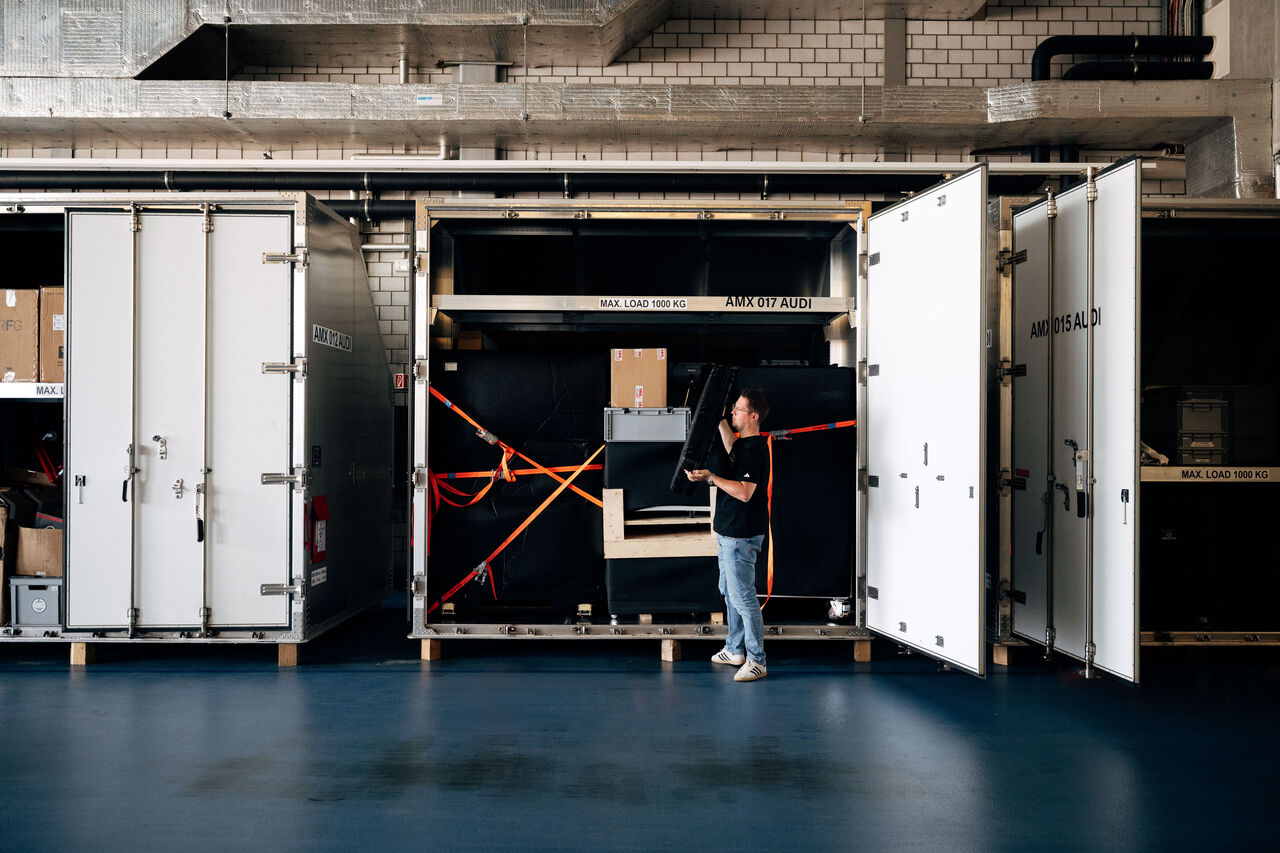
Braun’s supply chain organization now integrates logistics thinking earlier in vehicle development, recognizing that a component’s geometry can halve container efficiency. The F1 team, meanwhile, is designing custom transport containers optimized for cargo aircraft space constraints.
Different scales, identical logic. Both operations must manage complexity under pressure, anticipate disruptions that have become routine — pandemics, wars, trade restrictions — and deliver when it counts. The racetrack just compresses the feedback loop to minutes.
“Some decisions don’t get any better if you put them off longer,” Braun says. Thirty years covering this industry, and that might be the most useful sentence anyone at a German automaker has uttered in a decade.





Share this Story