
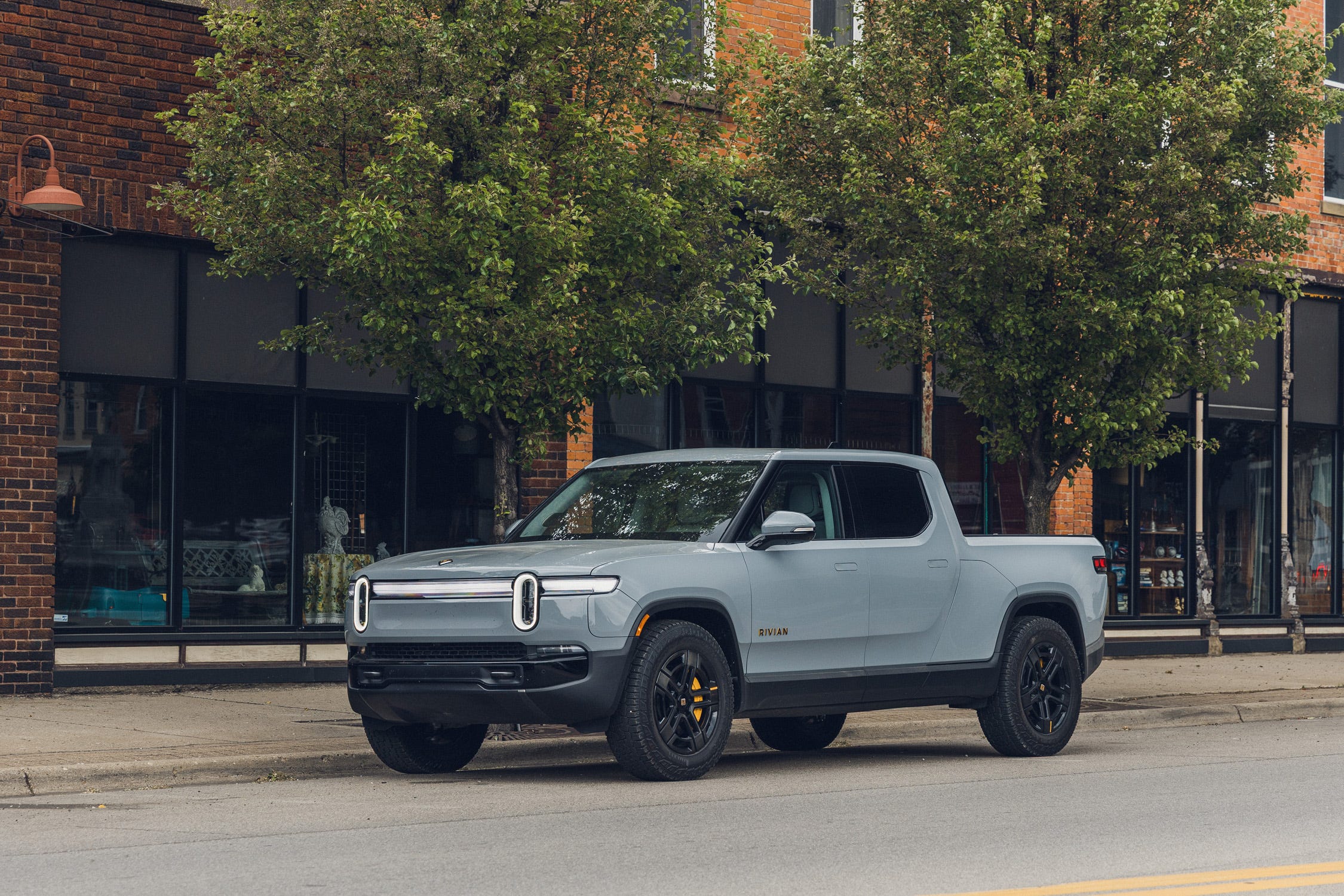


The least expensive way into a Rivian R1T or R1S no longer exists. The company has quietly pulled its Dual Motor Standard Pack configurations from both the pickup and SUV, effectively raising the floor on its flagship lineup by $7,000 overnight.
The 2026 R1T now starts at $81,885. The R1S begins at $85,885. Both figures reflect the Dual Motor Large Pack, which becomes the new entry point.
The departed Standard Pack models topped out at 270 miles of EPA-estimated range; the Large Pack pushes that to 329 miles. More range for more money — the math works out to roughly $118 per additional mile.
This wasn’t a stealth move. Rivian telegraphed it back in March, telling InsideEVs the Dual Standard was on its way out. The timing, though, tells a cleaner story than the company might admit.
Rivian’s compact R2 SUV is arriving, and its most loaded version — the Performance Launch Edition — rings in at $59,485 with up to 330 miles of range. That’s a vehicle offering virtually identical range to the new base R1S for $26,400 less. Letting a cheaper R1 linger at $78,885 with inferior range would have made the flagship look like a bad deal against Rivian’s own product.
So the Standard Pack had to go. It was either a pricing contradiction or a margin problem, and probably both.
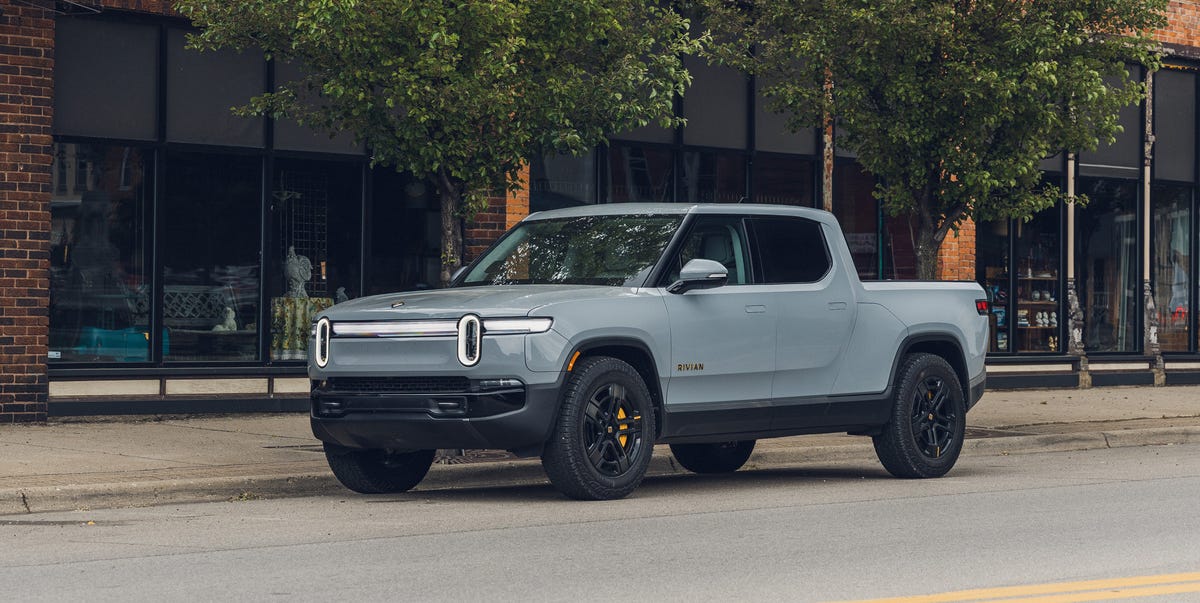
Rivian has been fixated on reaching profitability, and trimming low-margin configurations from its most expensive vehicles is a textbook move. Fewer battery pack variants mean simpler production. Higher average transaction prices mean healthier books.
The R2’s arrival gives Rivian permission to push the R1 upmarket without abandoning entry-level buyers entirely — those customers now have somewhere else to land.
The gap between the two lineups is now unmistakable. The cheapest R2 sits well below $50,000. The cheapest R1 sits well above $80,000. That’s a $30,000-plus chasm, wide enough for Rivian to slot future R2 variants — an R2 with a bigger battery, perhaps, or a performance trim — without cannibalizing R1 sales.
For shoppers who genuinely wanted a Dual Standard R1, Rivian says some may still exist in dealer inventory. That window won’t stay open long.
The broader picture here is a company reshaping its product strategy in real time. When Rivian launched, the R1T and R1S were everything — the brand’s identity, its revenue, its proof of concept. Now they’re being repositioned as the premium tier in a two-tier lineup, with pricing that reflects aspiration rather than accessibility.
It’s a familiar playbook. Tesla did something similar when the Model 3 arrived and the Model S crept upward in price and positioning. The difference is that Rivian is doing it while still burning cash, still scaling production, and still trying to prove it can survive long enough to make any of this matter.
Killing the Standard Pack is a small move on paper. But it reveals how seriously Rivian is treating the R2 launch — not as an addition to the lineup, but as a restructuring of the entire brand. The R1 just became a different kind of product, whether current owners realize it yet or not.
Share this Story