
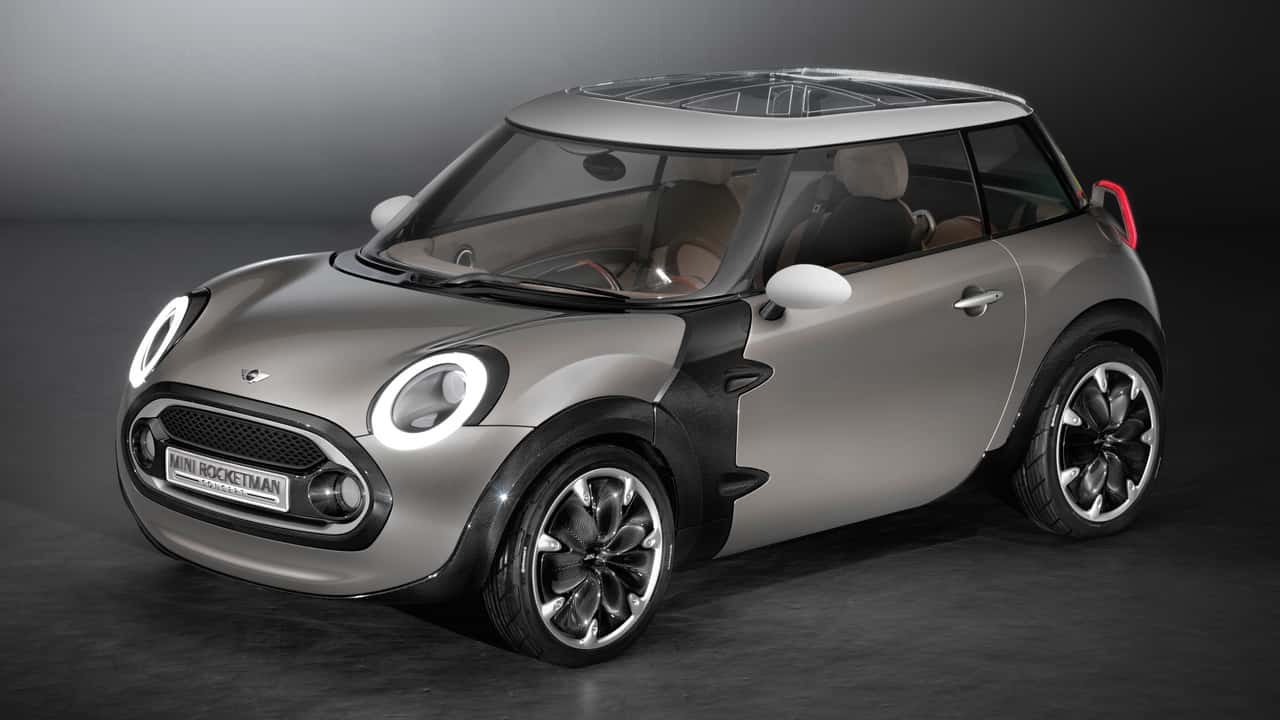


Fifteen years is a long time to carry a torch for a concept car. Mini is still doing it anyway.
In an interview with Auto Express, Mini’s head of design Holger Hampf confirmed the company is actively studying whether its 2011 Rocketman concept can become a real production vehicle. He called it an “exciting project,” then immediately tempered expectations. “It’s not easy,” he said. “I’ll leave it at that.”
That’s the most honest thing a car executive has said in months.
The Rocketman debuted at the 2011 Geneva Motor Show as a three-door hatchback stretching just 3.6 meters, roughly 147.7 inches, nearly identical in length to the original 1959 Mini that Alec Issigonis penned as the definitive people’s car. It featured a carbon spaceframe, four seats despite its minuscule footprint, and a clever slide-out tailgate. It was brilliant, impractical, and exactly the kind of thing Mini should build.
The problem is the car industry of 2025 bears almost no resemblance to the one that existed when the Rocketman first appeared. Every vehicle sold today must meet crash safety standards that punish small cars disproportionately. Cameras, sensors, radar modules, and the computing hardware to run them are no longer optional luxury features.
They’re regulatory and consumer expectations. Hampf acknowledged this directly, saying any future Mini must be safe and equipped with modern ADAS technology. That equipment adds weight, cost, and packaging volume, all of which are enemies of a car this small.
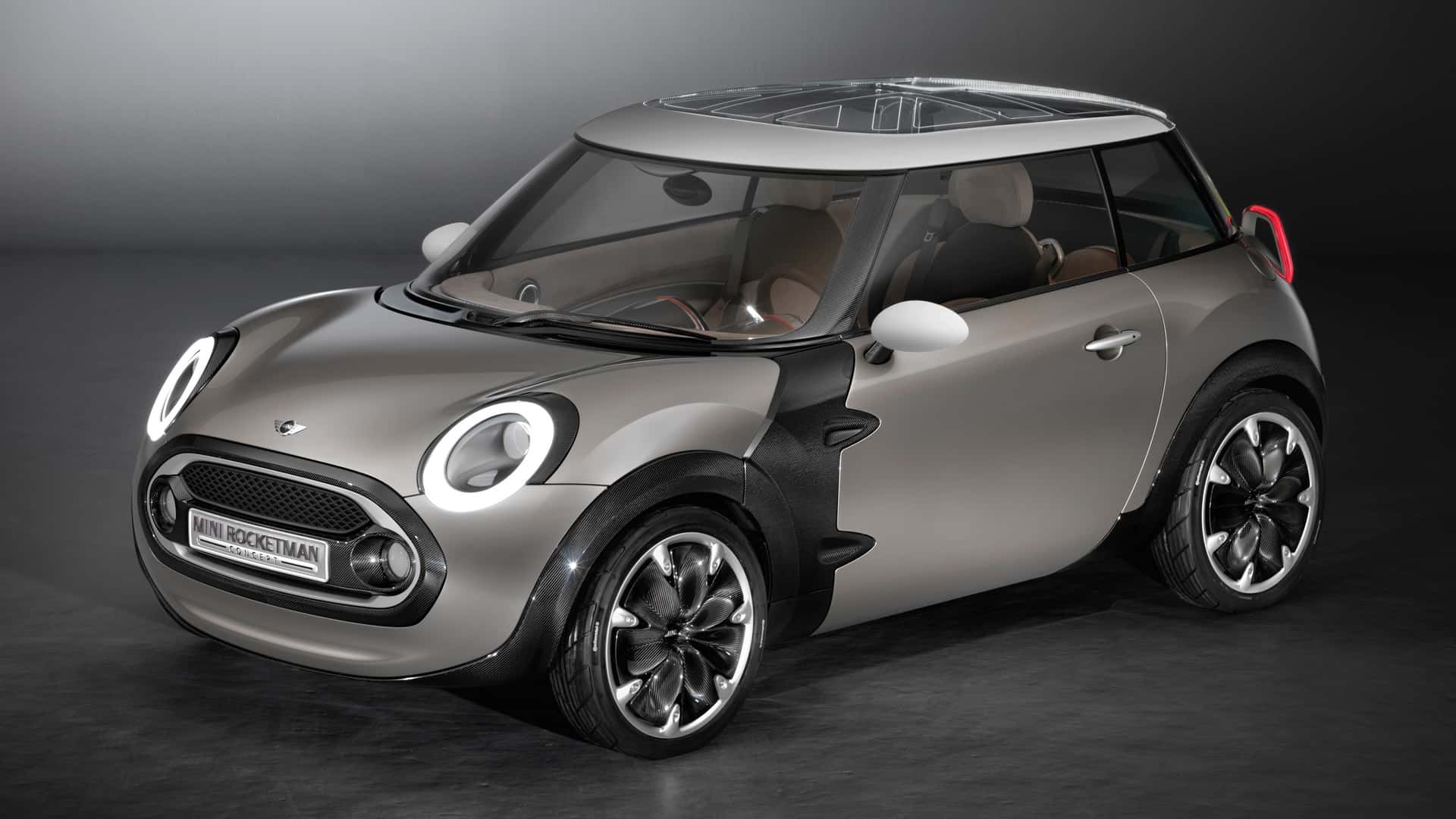
Mini’s design team is “studying these volumes,” trying to solve an engineering puzzle that has defeated small-car advocates for the better part of a decade. The entire industry has been moving in exactly the opposite direction. Cars bloat, and crossovers multiply.
The current Mini Cooper, supposedly the brand’s compact offering, has grown substantially from the car that relaunched the nameplate in 2001. That car itself was considerably larger than the Issigonis original.
If the Rocketman does reach production, it would almost certainly be battery-electric, slotting in as a competitor to the upcoming Renault Twingo EV and the growing wave of affordable European urban EVs. That segment barely exists in the United States, and there’s virtually no chance a production Rocketman would be sold here. Americans have demonstrated repeatedly that they won’t buy genuinely small cars in meaningful numbers, regardless of price or charm.
Hampf offered no timeline. No platform details. No commitment beyond the word “studying.” This is the automotive equivalent of telling someone you’re still thinking about them without actually making plans.
And yet there’s something stubbornly appealing about Mini refusing to let this one go. The brand has spent the last two decades getting bigger, heavier, and more conventional, building a Countryman SUV, a four-door hardtop, vehicles that would have made Issigonis weep. The Rocketman represents the road not taken, a version of Mini that actually means what its name says.
The physics and regulations may ultimately kill it. Safety structures for a 3.6-meter car require engineering creativity that costs money, and small cars generate small margins. The math has never worked in favor of genuinely tiny vehicles in the modern era, which is precisely why almost nobody builds them anymore.
But Mini keeps looking at the Rocketman sketches. Keeps running the numbers. Keeps wondering if there’s a way.
Fifteen years of wondering is either persistence or denial. The difference depends entirely on whether they ever actually build the thing.


Share this Story