
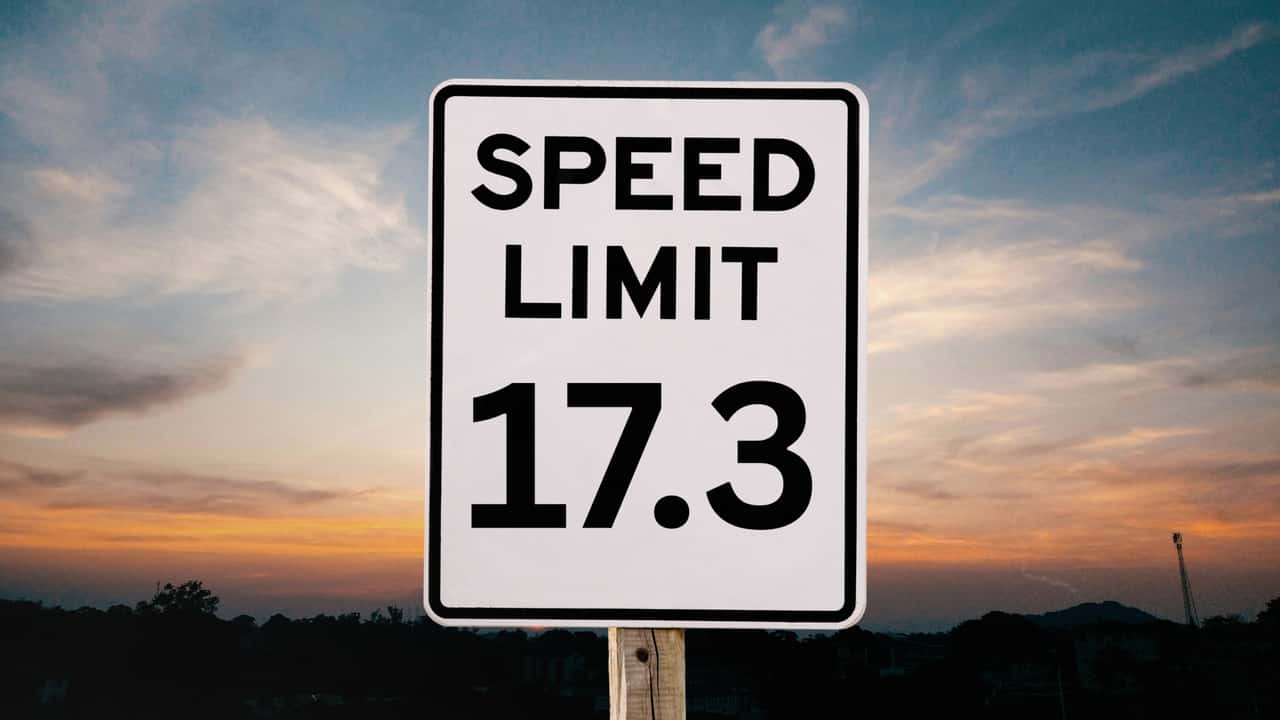


A recycling facility in Appleton, Wisconsin, just posted a speed limit of 17.3 mph. Not 15. Not 20. Seventeen point three. The Outagamie County Recycling and Solid Waste facility announced the change Monday on Facebook, calling it a deliberate attempt to snap drivers out of autopilot on familiar routes.
It’s a gimmick. And it might be the most honest traffic safety measure in America right now, because at least it admits the real problem.
The facility sits 107 miles north of Milwaukee and handles a steady stream of haulers, contractors, and local residents every day. Heavy trucks, distracted drivers, tight quarters. The kind of place where someone backing a trailer doesn’t need a sedan blowing through at 30.
“It makes you look twice,” the facility wrote. “And most importantly, it breaks that ‘autopilot’ feeling we can all fall into when driving familiar routes.”
They’re not wrong about the psychology. A round number like 15 or 20 registers as background noise. Your brain files it away and keeps scrolling through whatever mental to-do list you brought in the car.
A number like 17.3 demands a double take. It disrupts the pattern just enough to force a moment of conscious thought.
Facebook commenters mostly loved it. “Worked last weekend when I was there. Made us laugh,” one user wrote. Another cracked wise about getting pulled over for doing 17.4.
The laughs are the point. A sign that makes you chuckle also makes you slow down, at least the first few times you see it.
But here’s the rub. A 2024 study by Minnesota’s state and local transportation agencies, conducted in St. Louis Park, examined what actually happens when you lower posted speed limits on several roads. The answer: not much.
“The analysis showed drivers may not respond immediately to a posted speed change,” said Gary Davis, the study’s lead researcher.
That finding tracks with decades of traffic engineering research. Drivers set their speed based on road design — lane width, sight lines, curb proximity — far more than they do based on numbers on a sign. Post 25 on a road that feels like 40, and people will do 40.
It’s one of the most well-documented phenomena in transportation planning, and one of the most consistently ignored.
Outagamie County’s decimal-point trick is a creative workaround. It uses novelty and humor instead of authority. That’s smarter than most speed limit changes, which simply swap one ignored number for another.
The facility isn’t the first to try this approach. A shopping center in Colorado Springs has posted an 8.2 mph limit for years, generating confusion and Reddit threads in roughly equal measure. Nashville’s Opry Mills Mall runs a 24 mph zone — just one tick below the standard 25, just odd enough to register.
None of these places are public roads governed by the Manual on Uniform Traffic Control Devices, which is what gives them the freedom to get creative. A county highway department couldn’t post 17.3 without a fight. A landfill can do whatever it wants.
The deeper question is why we’re still relying on signs at all when the evidence says road geometry is what actually controls speed. Narrow the lane. Add a chicane. Put in a speed table. These measures work whether or not the driver is paying attention, which is the whole problem in the first place.
Outagamie County found a charming solution. It’ll work until it doesn’t — until 17.3 becomes just another piece of scenery on a familiar drive, and autopilot kicks back in.
The facility will have bought itself a few months of slower traffic and a viral Facebook post. That’s not nothing. But it’s not infrastructure either.






Share this Story