
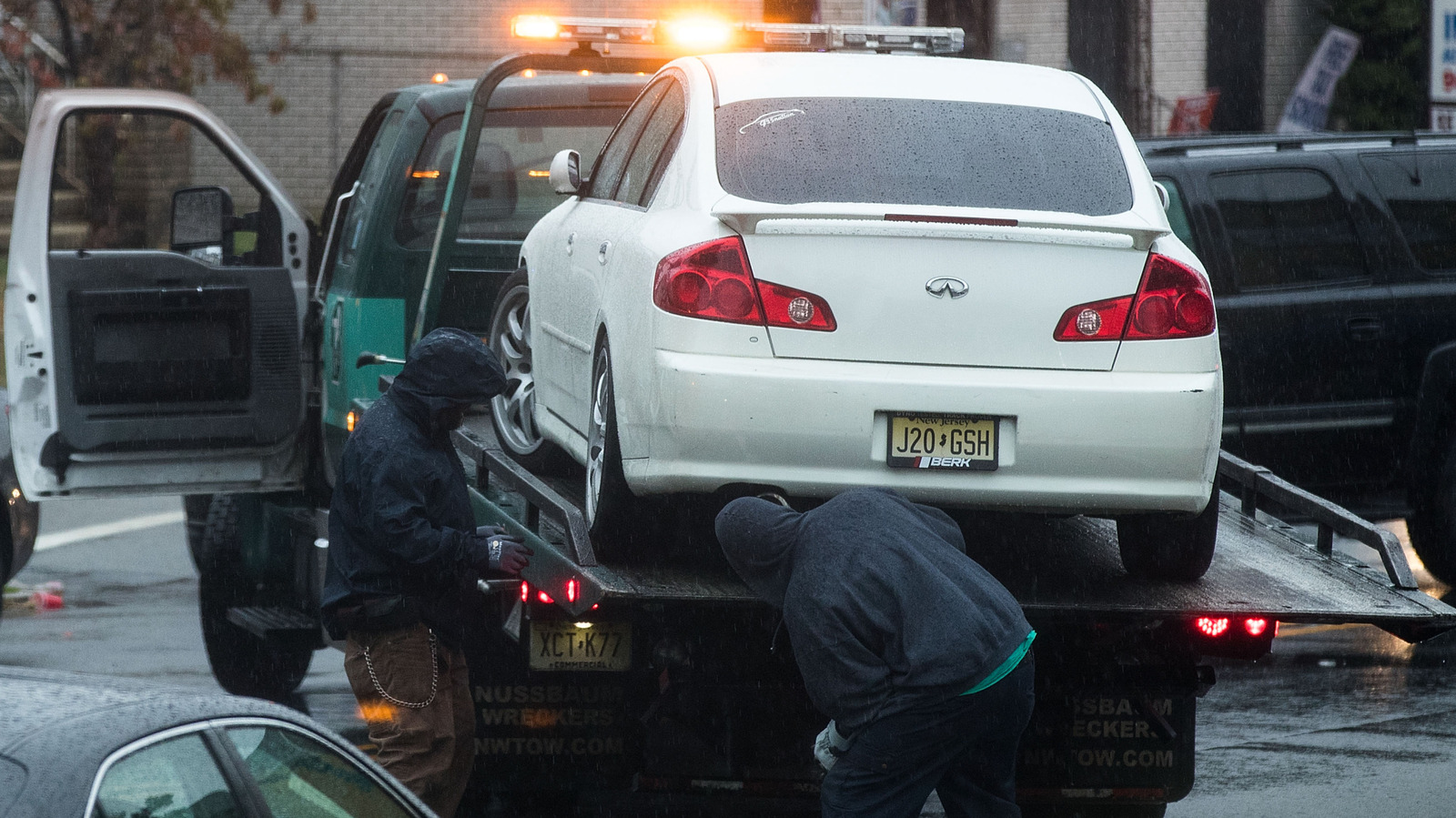


Elias Natal came home from work one December evening to find his Buick gone. Towed from his apartment complex in New Haven, Connecticut, for allegedly not displaying a parking permit — even though he has photos showing the sticker on his windshield exactly where management told him to put it.
When he and his partner went to retrieve the car from Lombard Motors, the lot was closed. No one was available, despite a new state law requiring after-hours access. Storage fees kept ticking.
By the time they scraped together the money four days later, the bill had ballooned to nearly $500. Lombard demanded cash, another violation of the law. Then they had to fight to get their change back.
“To then not give us back like our minuscule change is just, it’s dehumanizing,” Natal said.
Connecticut’s Non-consensual Towing Consumer Bill of Rights took effect last October. It was supposed to fix exactly this kind of predation. The law grew directly out of a year-and-a-half investigation by the Connecticut Mirror and ProPublica that exposed how state towing laws punished low-income residents — people whose cars were hauled away for minor parking infractions and sometimes sold when they couldn’t afford the compounding fees.
The reforms looked good on paper. Apartment complexes must post warning signs. Tow companies must notify owners before hauling cars for minor violations like wrong-spot parking. They must accept credit cards, be reachable after hours, and only tow from apartment complexes based on specific complaints — not roving trucks trolling lots at midnight.
None of that seems to matter at Sunset Ridge Apartments, where Natal lives. No warning signs were posted. The towing company ignored notice requirements.
In the five months since the law took effect, the complex has logged 64 tows — a pace that actually exceeds the 146 recorded across all of 2022 through 2024. Residents say the acceleration is retaliation for forming a tenants union. The property owner, Capital Realty Group, did not respond to requests for comment.
The pattern extends well beyond one New Haven apartment complex. A CT Mirror and ProPublica analysis of police tow logs from nine of Connecticut’s largest cities found that the heaviest towing consistently hits census tracts with more renters, more Black and Hispanic residents, and poverty rates more than double the state average. In Norwalk, the top seven property parcels for tows all belong to the public housing authority.
At Berkeley Heights in Waterbury, 318 cars were towed from 2022 to 2024 — more tows than apartments. Nearly 90 percent of those happened between 10 p.m. and 7 a.m.
Tow trucks don’t patrol cul-de-sacs in Westport at midnight.
Lombard Motors and its sister company, Anthony’s Hightech Auto Center, had already racked up nine complaints and $5,000 in DMV fines before the new law even existed, including penalties for overcharging people to retrieve their vehicles. Lombard didn’t bother showing up to its own hearings. Its owners did not respond to multiple requests for comment.
The Connecticut DMV says it has received just seven towing complaints since October, down from 32 during the same period a year earlier. Natal never filed one. That gap between the official complaint count and the reality on the ground tells you everything about who this system is designed to hear from — and who it isn’t.
Luke Melonakos of the Connecticut Tenants Union called it a “fish-in-a-barrel situation.” Residents have to park somewhere. The rules are confusing, change frequently, and enforcement is outsourced to companies with a direct financial incentive to tow as many cars as possible.
Connecticut passed a law. Some towing companies simply decided it didn’t apply to them. And so far, nobody with the authority to enforce it has proven them wrong.


Share this Story