
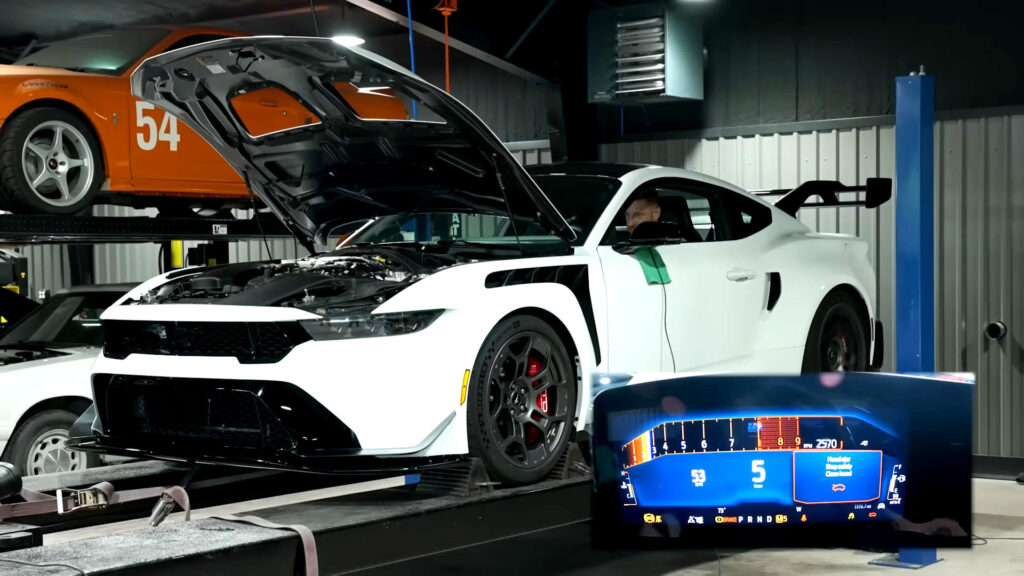


Ford claims the Mustang GTD makes 815 horsepower at the crank. The dyno says that’s a lie — in the best possible way.
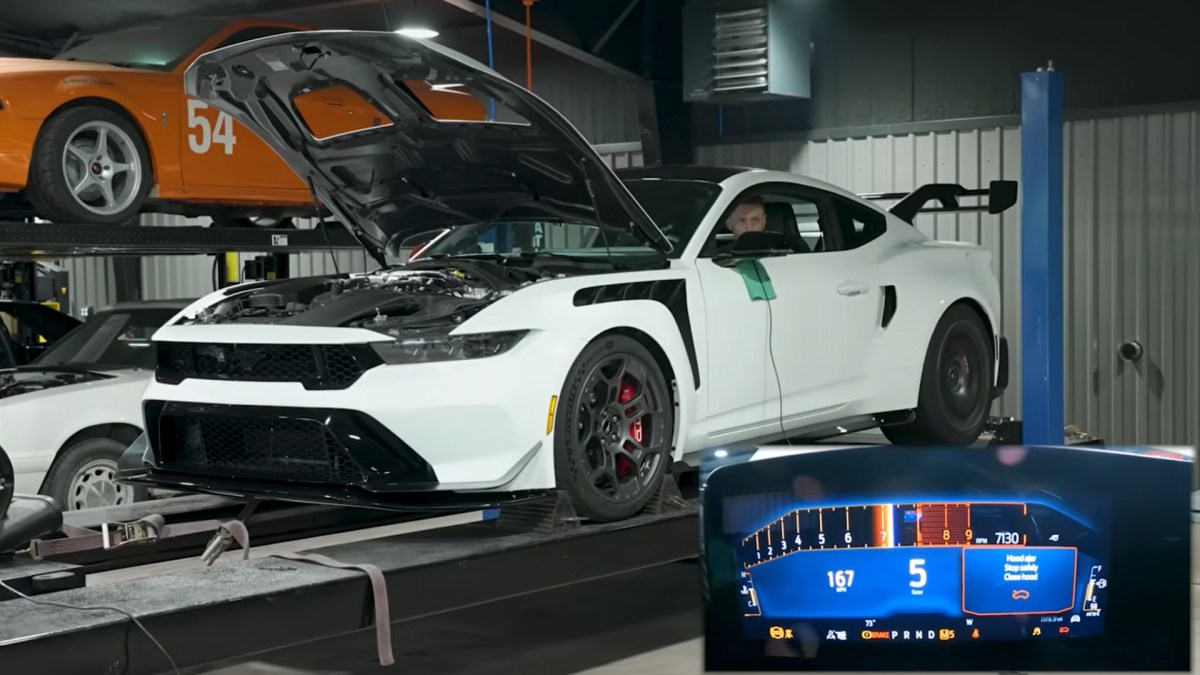
Late Model Restoration, a Texas shop that has been breathing Mustangs for decades, strapped a white-and-carbon GTD with just 1,100 miles on the odometer to its rollers and let the supercharged 5.2-liter Predator V8 scream. The results were not subtle.
On the first pull, the car laid down 740 horsepower and 605 lb-ft of torque at the rear wheels. The second pass — which should have been worse due to heat soak — actually climbed to 753 whp and 609 lb-ft. That second number is the highest recorded GTD dyno figure published so far.
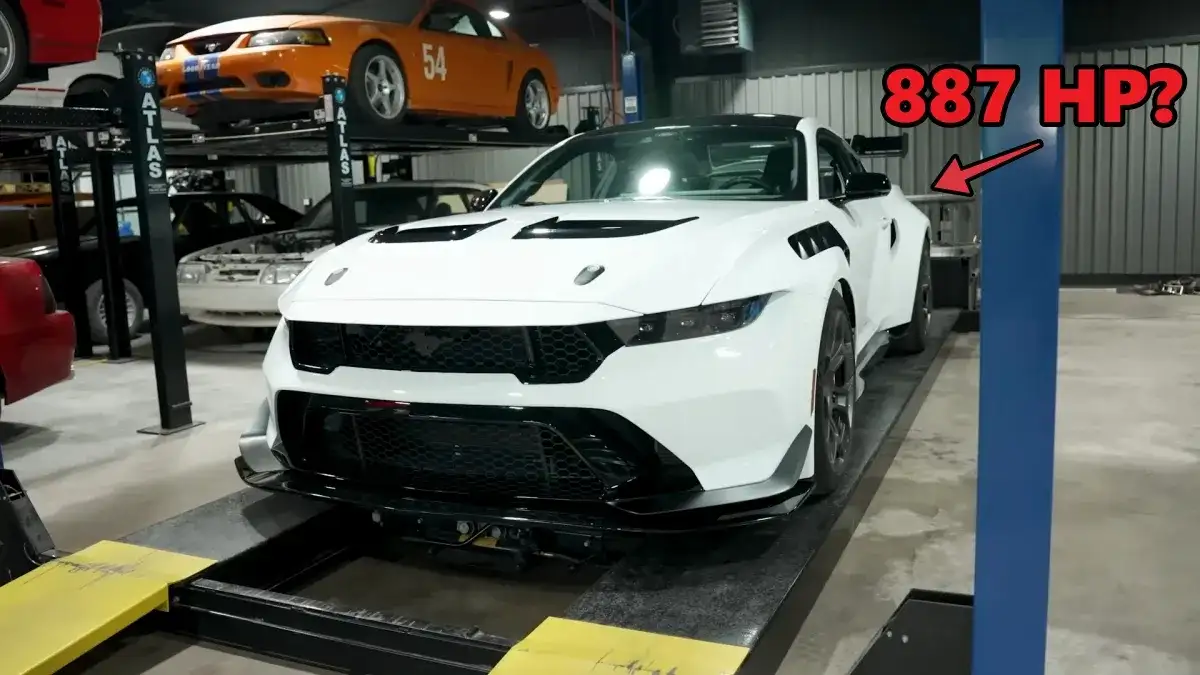
Work backward from those wheel numbers and you land somewhere around 870 to 887 horsepower at the crankshaft, depending on your assumed drivetrain loss. Even using the most conservative estimate, the math doesn’t reconcile with Ford’s official 815 figure. The drivetrain loss comes out to roughly 8 percent, a number that strains credulity for any car — let alone one routing power from a front-mounted engine through a driveshaft to an eight-speed dual-clutch transaxle bolted to the rear axle.
The typical assumption for a rear-drive car is 12 to 20 percent loss. Either Ford’s Predator V8 is making well north of 815 horsepower, or the GTD’s Tremec transaxle is absurdly efficient. Probably some of both.
Automakers have been playing the underrating game for years. Dodge did it with the Hellcat. Chevrolet did it with the C8 Z06. Ford, evidently, is doing it here.
LMR ran both pulls in fifth gear rather than the transaxle’s 1:1 seventh gear, which is the traditional choice for minimizing parasitic losses and producing the cleanest data. Running in a lower gear introduces more mechanical friction, which theoretically suppresses the numbers. If anything, seventh gear might have shown even more power reaching the ground.
The torque curve tells its own story. Nearly 100 percent of peak torque holds across a wide swath of the rev range — the kind of flat, muscular delivery that makes a car devastating on track, not just on paper.
Ford built the GTD to be the most serious production Mustang ever sold, and the $327,960 base price reflects that ambition. Production was capped at 271 units for 2025, with roughly 1,700 total planned, though more than 7,500 applications have flooded in. The used market is already sharpening its knives.
Other GTD dyno videos have surfaced showing 740 whp as a floor. LMR’s 753 whp result sets a new ceiling. The consistency across multiple independent tests makes accidental outliers unlikely.
Ford could have rated the GTD at 870 horsepower and charged even more for it. Instead, the company sandbagged the number by at least 50 horses, maybe more, letting owners discover the surplus themselves. It is an old trick — one that builds cult loyalty and forum mythology faster than any press release ever could.
Every GTD owner who straps their car to a dyno becomes a willing evangelist the moment the numbers flash on screen. The Mustang GTD already holds the Nürburgring record for an American production car. Now its dyno sheets are confirming what the lap time suggested: Ford left margin in the machine.
For a car that was engineered to embarrass Porsche and Ferrari on their home turf, hiding power in plain sight feels entirely on brand.

Share this Story