


Fifty years ago, BMW slapped its badge on a glass-fibre lid made by Römer that weighed 1,400 grams and called it progress. It was. In 1975, most motorcycle helmets were crude, heavy, and treated ventilation as an afterthought.
That first BMW full-face helmet had a removable chin guard, clear and tinted visors, and reflective elements. Features that sound quaint now but were genuinely ambitious for the era.
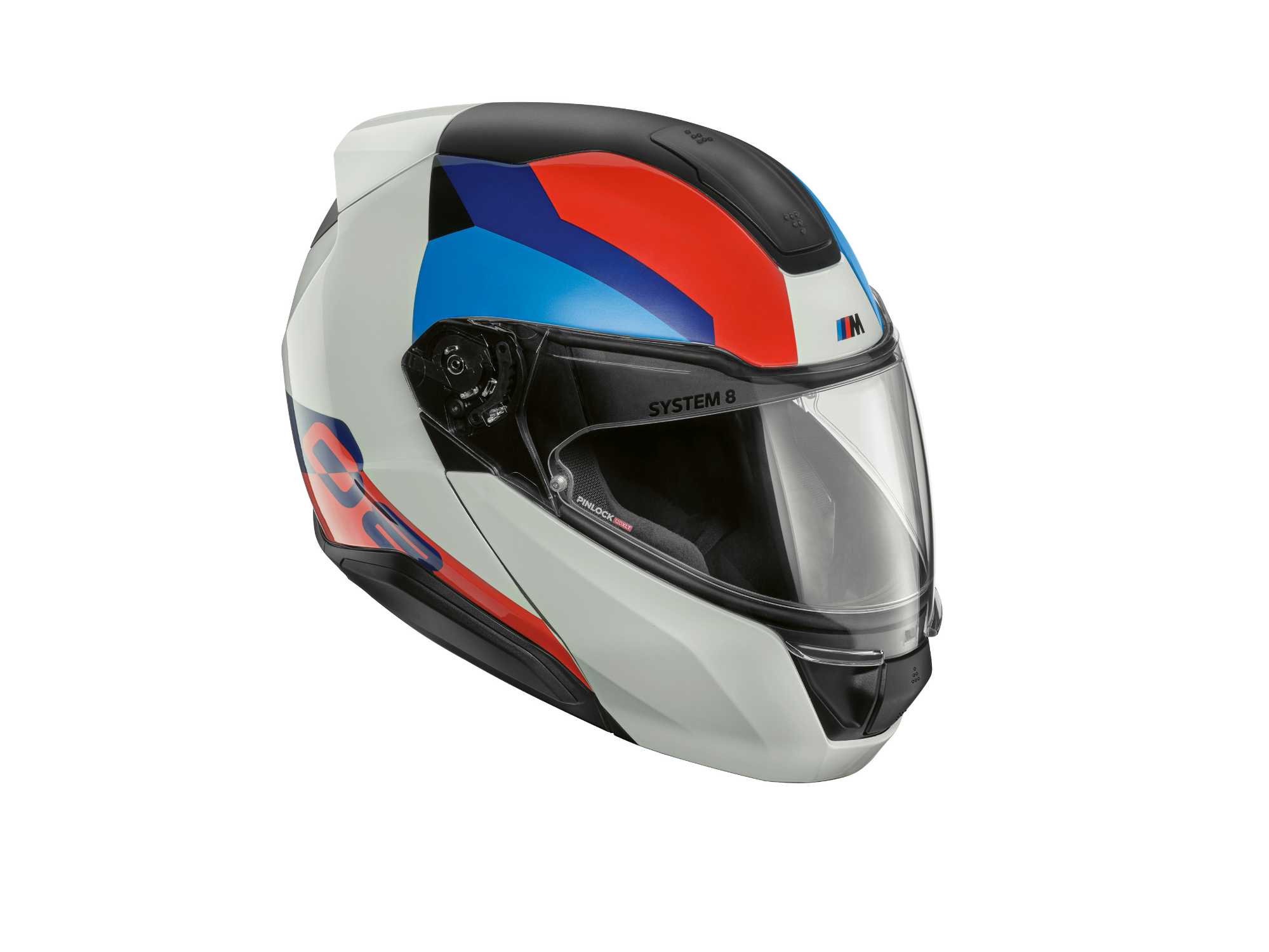
The company is marking that half-century milestone by tracing the lineage from that Römer collaboration straight through to the new System 8 and System 8 Carbon, slated for market launch in May 2026 as part of BMW Motorrad’s 2026 Clothing Collection.
What sits between those two bookends is a dozen iterations of the same obsession: the flip-up system helmet. BMW didn’t invent the concept, but it colonized it. The first System Helmet arrived in 1981 with a removable chin section that converted a full-face into something resembling an open-face or off-road lid.
Every generation since has been a refinement of that core idea — lighter shells, quieter aerodynamics, better ventilation, smarter visors.
The cadence tells its own story. Shell materials went from plain glass-fibre to glass-fibre-Kevlar-carbon composites by 1997’s System Helmet 4. Noise levels dropped to 86 dB(A) at 100 km/h by the System 5 in 2005, a figure the System 6 EVO matched in 2013 while shaving weight further.
Bluetooth communication arrived with the System 5’s WCS 1, making wireless rider-to-rider chatter possible above 150 km/h. The System 6 introduced an integrated, continuously adjustable sun visor. The System 7 Carbon, launched for 2017, went to a full-carbon shell.
Now the System 8 Carbon pushes things further. Certified to the current ECE 22-06 standard, it uses a carbon-aramid-glass-fibre composite shell paired with a polystyrene inner shell of varying densities. The headline safety addition is MIPS Integra TX, which addresses rotational forces during impact — a technology that’s become table stakes in high-end cycling helmets but remains relatively rare in motorcycle gear.
BMW also offers a more affordable System 8 with a glass-fibre-aramid shell carrying the same ECE 22-06 certification and identical feature set minus the MIPS layer and carbon weight savings. Both come in two shell sizes, feature Pinlock 200 dual-pane anti-fog visors, ratchet-buckle chin straps, integrated neck straps, and preparation for BMW’s ConnectedRide COM P1 communication system.
Ten colorways and five optional visor kits round out the package. The multi-joint flip-up mechanism keeps both helmets compact when open, and both are approved for riding in the open position. That detail matters more than it sounds, since not every flip-up helmet on the market carries that certification.
The broader pattern here is unmistakable. BMW Motorrad has spent five decades iterating on a single product category with the patience of an engineering house that treats helmets the way its car division treats inline-six engines — as a core competency worth perfecting rather than outsourcing.
Each generation solved a specific problem: the System 3 chased ECE 22-03 compliance, the 4 EVO hit ECE 22-05, the 5 cracked wireless communication, the 7 went full carbon, and the 8 tackles rotational brain injury.
Whether the System 8 Carbon justifies its inevitable premium over excellent lids from Shoei, Arai, and Schuberth will depend on real-world testing. But BMW’s willingness to keep investing in helmet R&D while most motorcycle manufacturers farm out head protection entirely says something about where the company sees its brand living. Not just on the motorcycle, but wrapped around the rider’s skull.
May 2026. Mark it.


Share this Story