
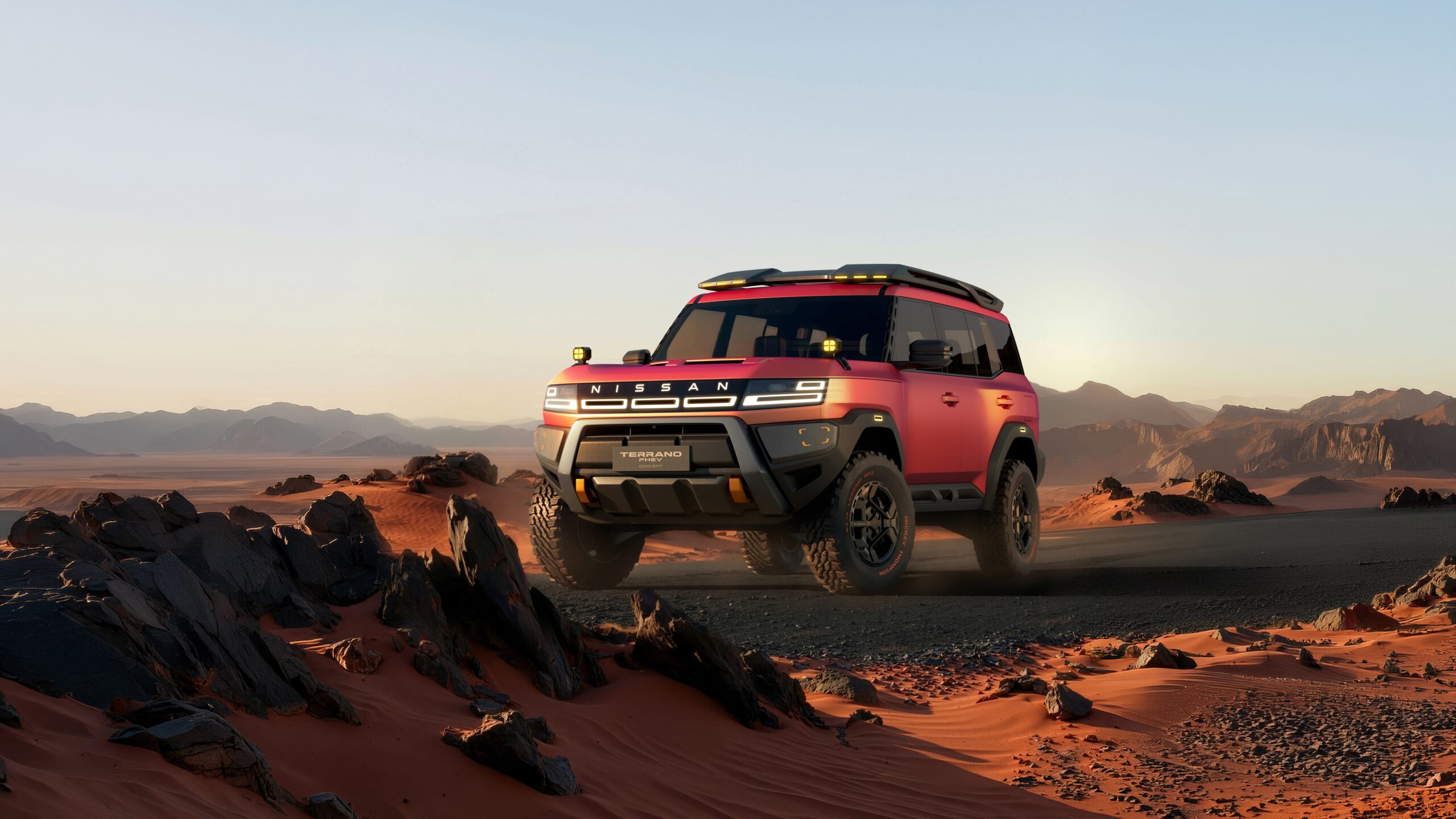


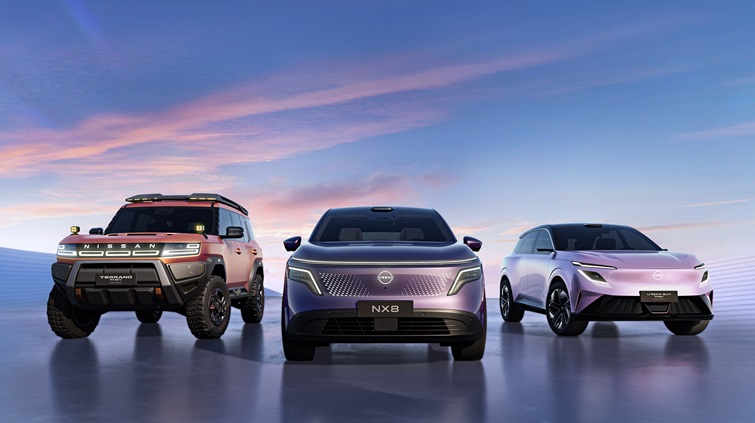
Nissan pulled the sheet off two plug-in hybrid SUV concepts at Auto China 2026 in Beijing on Thursday, but only one carries real weight beyond the show floor. The Terrano PHEV Concept resurrects a nameplate mothballed since 1999 and, unlike so many auto show fantasies, comes with a firm production timeline: showrooms within 12 months.
The other reveal, an Urban SUV PHEV aimed squarely at young Chinese buyers, is a domestic play. The Terrano is different. Nissan’s own press release confirms the production version is “intended for selected global markets,” making it a clear signal that the company sees China not just as a sales target but as an export launchpad.
That’s the real story here. Nissan is betting its global product pipeline on Chinese factories, Chinese speed, and Chinese supply chains.
CEO Ivan Espinosa didn’t dance around it. China is not only a highly competitive domestic market but also a source of innovation, enabling us to create new value and experiences for customers in China and in the global markets,” he said at the unveiling. The N7 sedan is already slated for export to Latin America and ASEAN. The Frontier Pro PHEV will follow the same path, adding the Middle East, and now the NX8 and Terrano join that outbound queue.
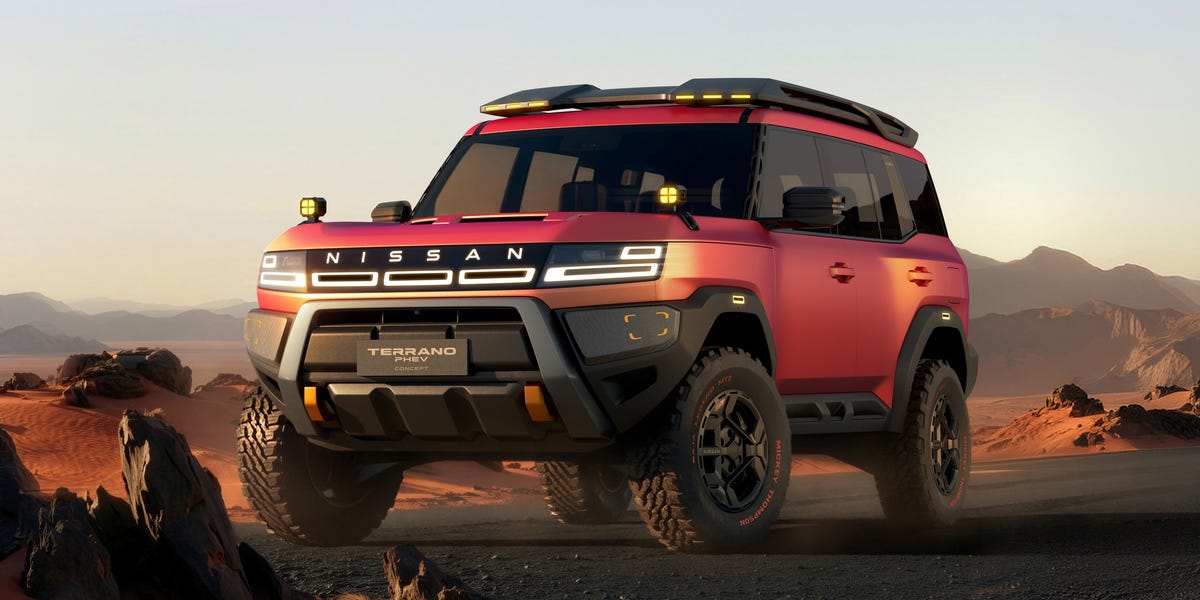
The concept itself looks the part. Boxy proportions, short overhangs, integrated skid plates, tow hooks, a roof-mounted spare tire, and a ladder out back — this is no crossover cosplaying as a truck. Three hood vents feed the engine, and yellow auxiliary lights sit on the hood and roof rack.
The design is handsome without resorting to the hyper-aggressive nonsense that plagues most modern off-road-themed SUVs. Underneath, details are scarce. Nissan confirmed a plug-in hybrid powertrain but offered nothing on battery capacity, electric range, engine displacement, or transfer case specifics.
For a vehicle supposedly a year from production, that’s a notable gap. What makes the Terrano fascinating for American buyers is its potential bloodline. Nissan has already confirmed a new body-on-frame Xterra and Pathfinder are in development.
The Terrano nameplate historically rode on Pathfinder bones in overseas markets. Car and Driver floated the possibility that the Terrano previews the next-generation Pathfinder, and the timing lines up almost too neatly. Whether Nissan would actually import a Chinese-built SUV to the U.S. under current trade conditions is another question entirely.
Australian outlets jumped on the news fastest, and for good reason. The country is a natural fit for a rugged PHEV with genuine off-road credentials and no tariff wall blocking Chinese-origin vehicles.
Nissan’s broader ambition is equally telling. The company plans to introduce three more new energy vehicle models in China within a year and targets one million annual Chinese sales by fiscal year 2030, with exports as a strategic pillar. For a company that nearly merged with Honda out of desperation just over a year ago, this is an aggressive posture.
Nissan is no longer treating China as simply a market to sell into. It is treating China as the factory floor for its global comeback. The Terrano is the most tangible proof yet — a heritage name, wrapped in genuinely appealing sheet metal, built where the cost structure and technology ecosystem now favor production, and aimed at buyers on multiple continents.
Whether the production version delivers on the concept’s promise is a question for next year. But Nissan is clearly done waiting.

Share this Story