
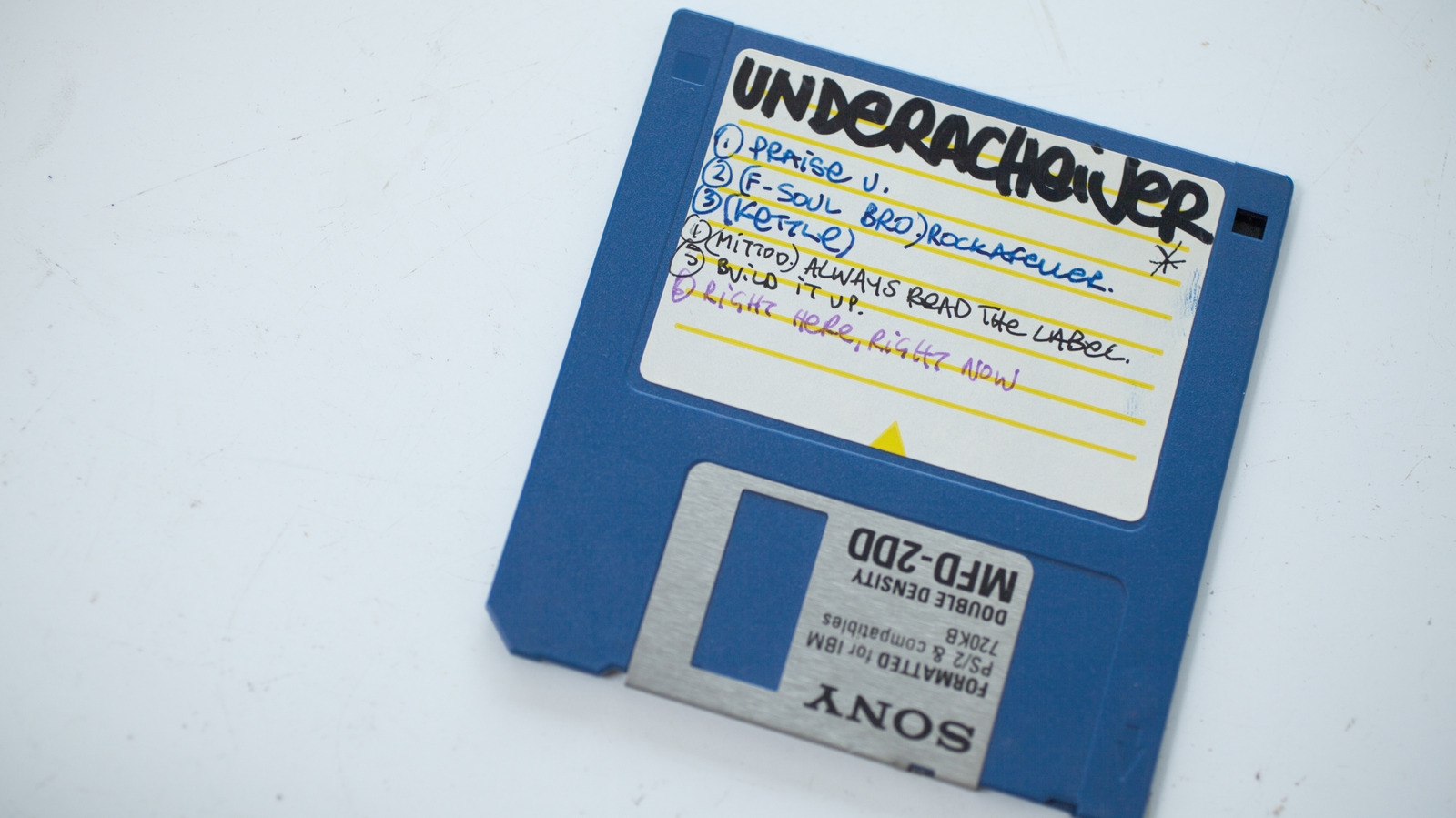


A Ukrainian engineer plugged a 3.5-inch floppy disk drive into his Tesla last week, and the car recognized it without a single line of code modified. Oleg Kutkov posted the results on X, showing the decades-old hardware whirring and chattering as it read an MP3 file straight off a diskette. The song, naturally, was Rick Astley’s “Never Gonna Give You Up.”
The stunt required only one piece of special hardware: a converter between the drive’s old FDD connector and USB. Once plugged in, Tesla’s onboard system, which runs on a Linux kernel, detected the drive and mounted it automatically as external storage. It treated it the same way it would recognize a modern flash drive for Sentry mode, dashcam footage, or media playback.
“It’s nice that the Linux kernel still supports this subsystem,” Kutkov wrote. The USB controller emulated a generic TEAC floppy interface that Linux has carried support for since the days when people actually used these things.
This is not a Tesla story. This is a Linux story.
The fact that a car built in the 2020s can read media from a format that peaked in 1995 says almost nothing about Tesla’s engineering and almost everything about the philosophy baked into open-source software. The Linux kernel has hauled forward support for ancient hardware subsystems for decades, a design choice that commercial operating systems abandoned long ago. Windows dropped native floppy support years back. Linux never bothered to cut the cord.
Tesla’s system scripts are designed to mount any detected disk drive as external storage, with some exceptions. A floppy drive, apparently, is not one of those exceptions. Nobody at Tesla sat down and decided to support 3.5-inch diskettes. The underlying operating system just never stopped.
The practical value here rounds to zero. A 1.44-megabyte floppy can hold maybe a fraction of a compressed MP3. The full Rick Astley track runs about 9.1 megabytes, which would span seven disks.
Kutkov likely trimmed the file or crushed the audio quality to fit enough on a single diskette for his demonstration. He also tried formatting the floppy for Tesla’s Sentry video feature, and it predictably failed. A single disk couldn’t store more than a second of footage.
For context, installing Windows 3.1 required six floppy disks. That entire operating system was smaller than one pop song encoded for modern playback. Baldur’s Gate 3 consumes 140.7 gigabytes, and storing it on floppies would require roughly 100,000 disks.
None of that matters to the point Kutkov was actually making. He wasn’t trying to build a practical workflow. He was probing the edges of a system that most Tesla owners treat as a sealed black box.
The fact that the car runs Linux is well known among the technical community but largely invisible to consumers who interact only with the touchscreen interface. Plugging in a floppy drive and watching it spin up is a small, clever way to remind people what’s actually under the hood. Not an engine, but an operating system with roots stretching back to 1991.
It also underscores a tension Tesla has never fully resolved. The company builds on open-source foundations but wraps the result in proprietary layers that discourage tinkering. The Linux kernel will happily talk to a floppy drive from 1988. Getting Tesla to let you do anything meaningful with that access is another matter entirely.
Kutkov’s experiment is a parlor trick with a sharp edge. The car recognized hardware older than most of its drivers. The software community that made that possible gets no line item on the Monroney sticker.


Share this Story