
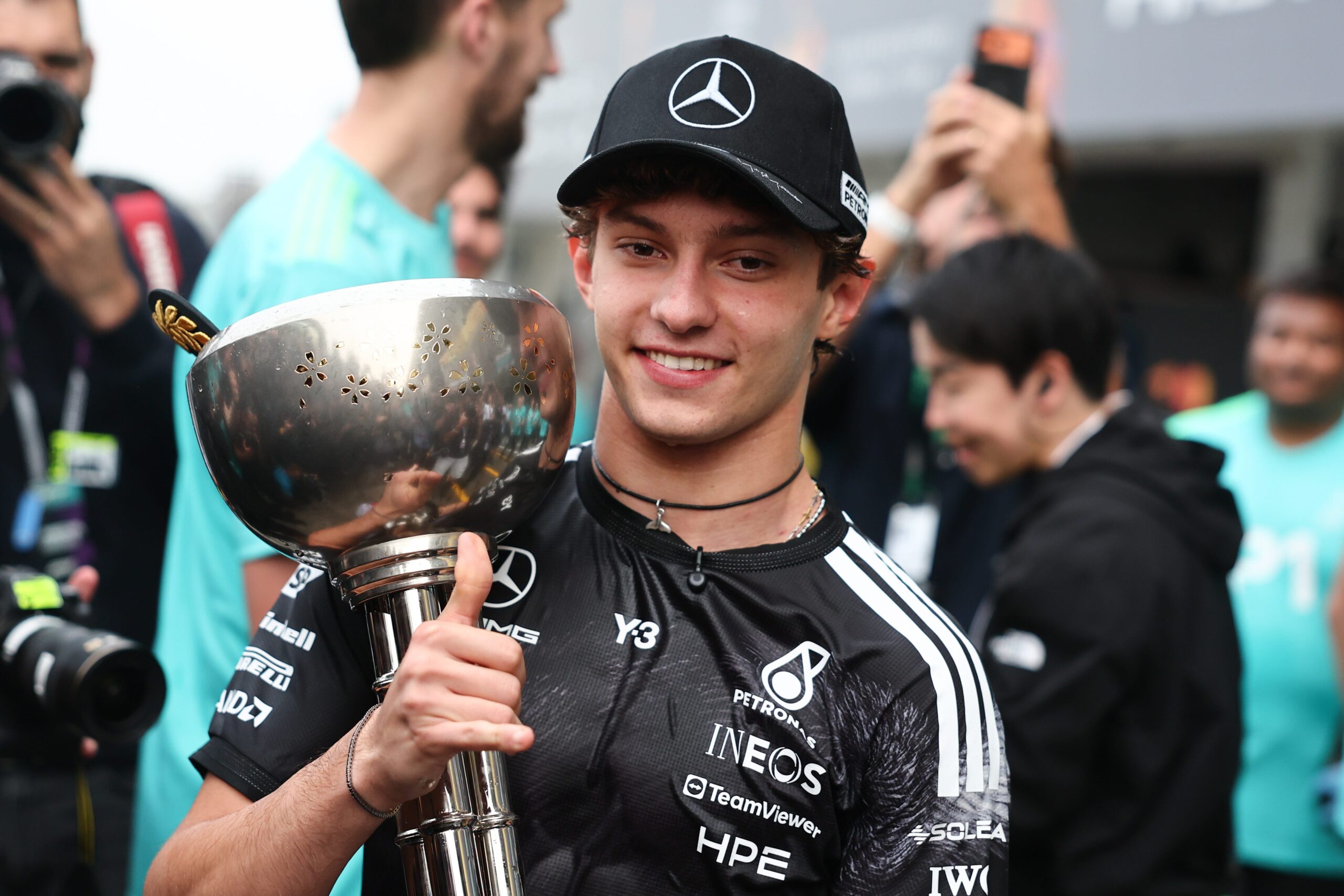


Kimi Antonelli dropped to sixth off the line at Suzuka, watched Oscar Piastri steal the lead into Turn 1, and still won the Japanese Grand Prix by 13.7 seconds. That gap tells you everything about where Mercedes stands three races into the 2026 season — and where everyone else doesn’t.
The 19-year-old Italian now has two victories in three weekends and leads the drivers’ championship. His teammate George Russell owns the other win. Mercedes has locked out the front row at every race so far.
The Silver Arrows aren’t just fast. They’re operating in a different zip code.
Antonelli knows the cracks in his own armor. “I need to raise my game,” he said after the race, a startlingly honest admission from a driver standing on the top step. “I had a terrible start, and we got lucky with the safety car. I have three weeks now to practice some starts. It has been a weak point.”
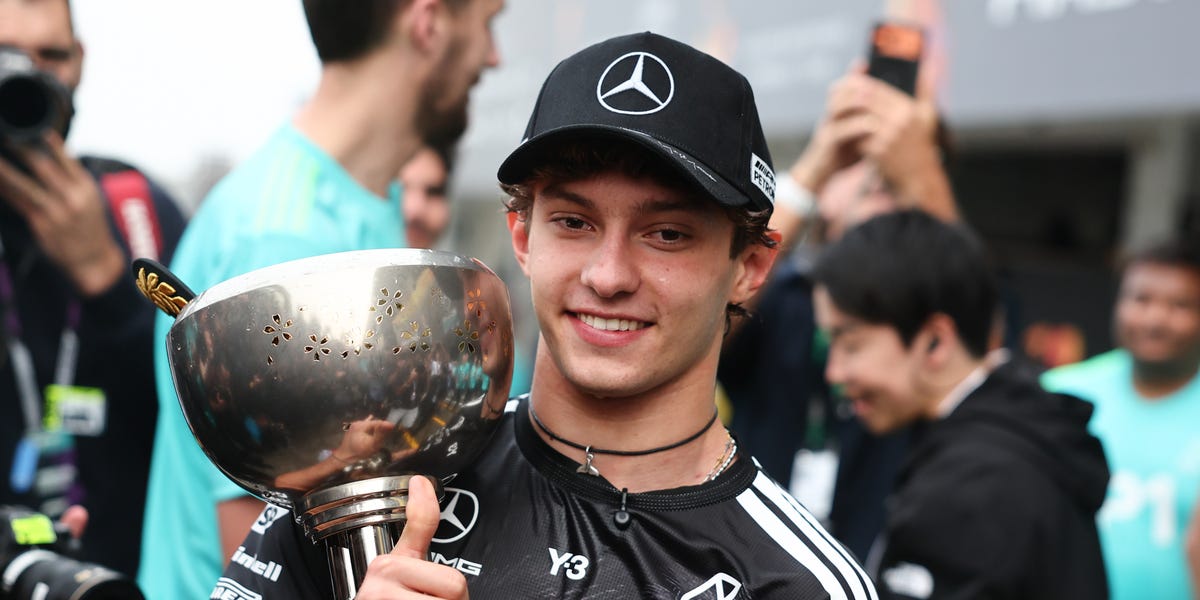
Lucky is relative. Antonelli qualified on pole, had the raw pace to pull away from the entire field once he reclaimed the lead, and built a margin that made the final laps a formality. The safety car — triggered by Oliver Bearman’s violent 50G crash — reshuffled the deck in Antonelli’s favor after his poor getaway. But you still have to capitalize on fortune, and he did so ruthlessly.
Piastri deserves a nod. The McLaren driver, making his first actual race start of 2026 after two consecutive DNS results, launched from third to first with an aggressive move into Turn 1. He held station as long as the car allowed, eventually settling for second.
For a team that’s been scrambling since the new regulations dropped, a 1-2 finish for Piastri and Lando Norris in fifth represents genuine progress.
Charles Leclerc rounded out the podium for Ferrari. Lewis Hamilton, in his second season at Maranello, could manage only sixth. The seven-time champion briefly ran second after the start but faded — a pattern Ferrari will need to address quickly if the SF-26 is going to matter beyond the opening rounds.
Russell finished fourth, his first race off the podium this year, and quietly the less interesting Mercedes story right now. He’s had the speed in qualifying and the race, but Antonelli is the one converting. The dynamic inside that garage is shifting fast.
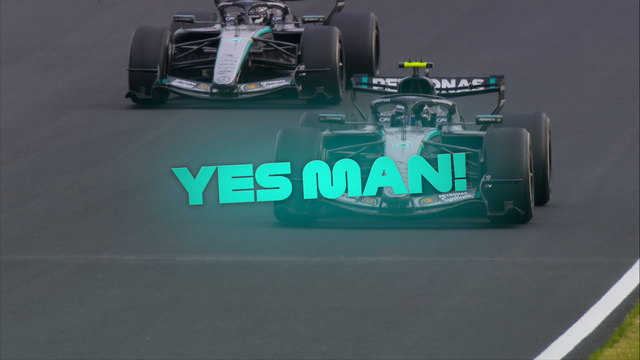
Max Verstappen limped home eighth. The defending champion has yet to find anything resembling his dominant form from previous seasons, and three races in, the RB26 looks like a car searching for answers. Pierre Gasly slotted in seventh for Alpine, Liam Lawson took ninth for Racing Bulls, and Esteban Ocon grabbed the final point for Haas.
The broader picture is stark. Mercedes built a car so superior that its young driver can botch the start, fall to sixth, and still win by nearly 14 seconds. That’s not a competitive advantage. That’s a chasm.
The 2026 regulation reset — new power units, new aero philosophy, ground-effect refinements — was supposed to shuffle the competitive order. It did. Straight into Mercedes’ hands.
Antonelli’s self-awareness is the fascinating subplot. Most drivers in his position would be celebrating an unbeatable car. He’s talking about weaknesses. He knows the machinery won’t always bail him out, and he knows that Russell, three years his senior and plenty fast, isn’t going to quietly play wingman forever.
Three races down. The championship lead belongs to a teenager who can’t launch a car cleanly but can demolish a field once the visor drops. Mercedes has a problem most teams would kill for — two drivers fighting over wins with no external threat in sight.

Share this Story