



Six days. That’s all the gap between Audi CEO Gernot Döllner telling the world his company had entered a triumphant “new chapter” and the quiet departure of the executive who was supposed to write it.
Yvonne Bettkober, head of Audi’s “Transformation, Consulting, and Organization” department, left the company and the entire Volkswagen Group with immediate effect on March 24. The press release calls it “at her own request and by mutual agreement,” which is corporate German for something more complicated than either party wants to discuss publicly.
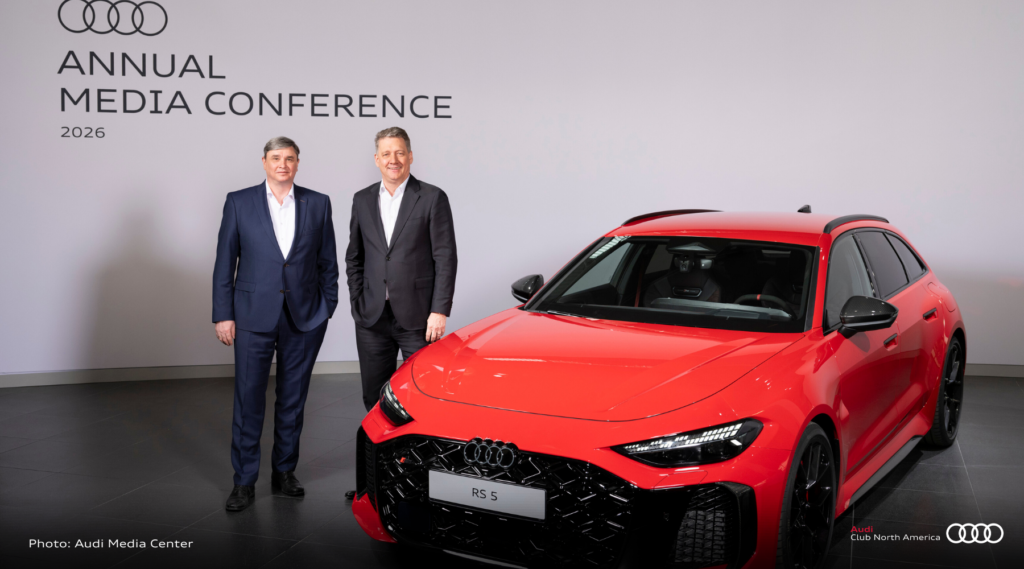
On March 18, Döllner and CFO Jürgen Rittersberger had stood before reporters at Audi’s annual media conference painting a picture of a company reborn. A refreshed design philosophy, the Q9 flagship SUV headed for America, the affordable A2 e-tron arriving this fall, a joint architecture deal with Rivian, and Formula One on the horizon. The word “transformation” came up repeatedly, always in the past tense, as if the hard part were already behind them.
Then the person running that transformation walked out the door.
Döllner’s statement thanked Bettkober for “outstanding leadership” and the “significant momentum she created during a defining phase.” He praised her for making Audi “more focused, efficient, and agile.” The language reads like a eulogy for a project that was declared complete whether or not it actually is.
Daniel Kauer, Audi’s general secretary and head of corporate strategy, picks up transformation duties on an interim basis, on top of his existing workload. A permanent successor will be named later. This is the organizational equivalent of stacking furniture in a room you don’t plan to use much anymore.
The timing raises an obvious question. If Audi’s restructuring has truly reached its “key strategic milestones,” as the company claims, why does the transformation department need a permanent head at all? And if the work isn’t done, why let its architect leave mid-stride?
Audi’s challenges haven’t exactly evaporated. Rittersberger himself acknowledged a “difficult economic and geopolitical environment” throughout 2025. Döllner conceded that technological innovation is being driven by the United States and China, not Germany.
The company still needs to streamline operations, simplify processes, reduce complexity, and somehow improve profitability in a market where Chinese competitors are eating European luxury brands alive on price and technology.
The Rivian partnership, branded RV Tech, won’t deliver its first vehicle until 2028. The A2 e-tron is months away. The Q9 is still forthcoming. The Formula One program is a massive capital commitment with no guarantee of brand return.
Every one of these bets requires the kind of organizational agility that a transformation office is supposed to provide.
Audi sold this annual conference as proof of momentum. But restructuring a legacy automaker isn’t a single chapter you close and shelve. It’s a rolling effort that touches procurement, engineering, manufacturing, software, and culture all at once.
Declaring the mission accomplished and letting the mission leader leave is a choice that tells you more about the internal politics than any press release will. Döllner said transformation is “only possible as a team.” He called it “Team Audi.” That team just lost its coach, and the game is far from over.
The pattern is familiar across the Volkswagen Group — bold strategic pronouncements followed by executive reshuffles that suggest the strategy is more fluid than leadership lets on. Audi is not the first brand under the VW umbrella to lose a key transformation figure at a critical juncture, and it probably won’t be the last.
What Ingolstadt needs now isn’t another motivational slogan about new chapters. It needs someone in the room making sure the pages don’t fall out of the binder.




Share this Story