


General Motors built 1,117 EV1s between 1996 and 1999. It sold exactly zero. When the leases expired in 2003, the company repossessed every last one, crushed most of them, and handed a few disabled shells to museums and universities.
That chapter of GM’s history — immortalized in the documentary “Who Killed the Electric Car?” — became one of the most damning self-inflicted wounds in automotive history. Now GM President Mark Reuss is on camera telling a YouTube restoration team, “Whatever you need, we’ll help.”
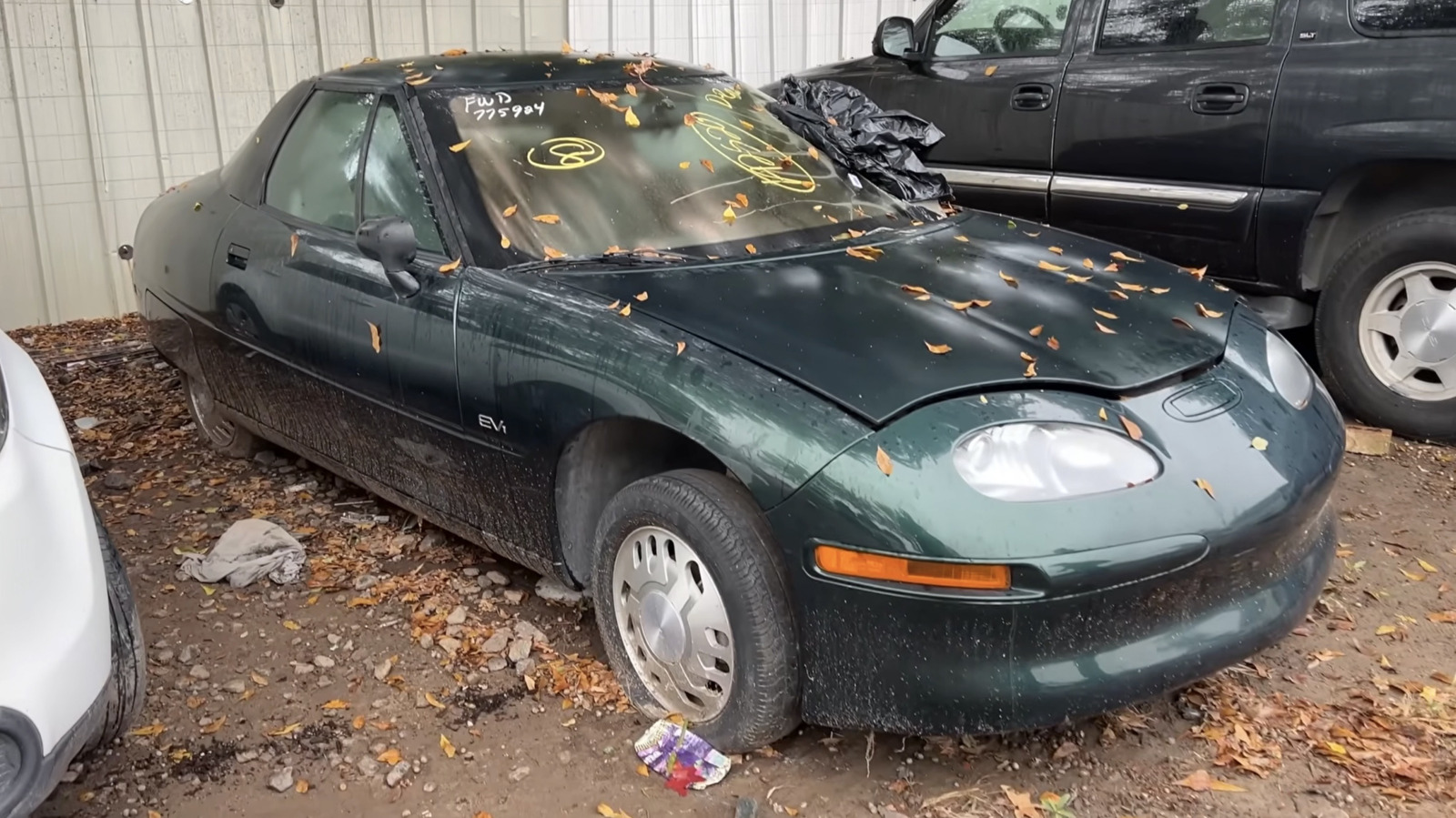
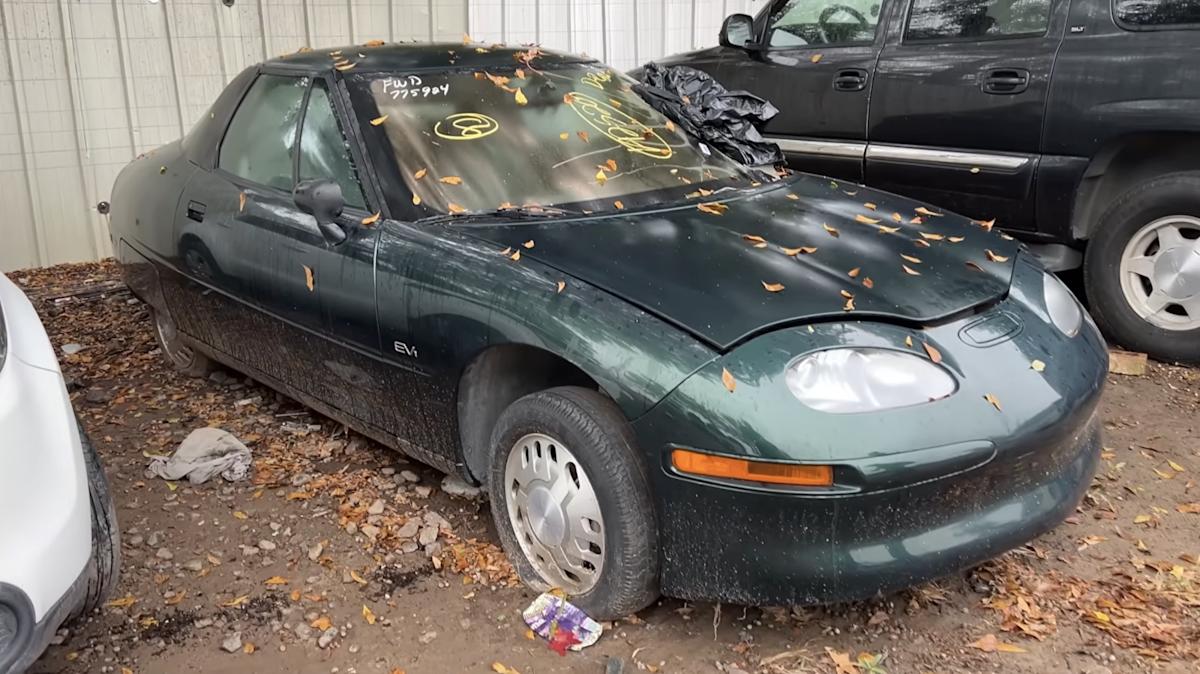
The car at the center of this unlikely redemption is VIN 212, a sun-bleached green EV1 that sat neglected at Clark Atlanta University until campus police tagged it as abandoned. A court order sent it to auction. Billy Caruso bought it for $104,000, making it the first and only privately owned EV1 in existence.
Caruso teamed up with Questionable Garage, an engineering-focused YouTube channel, to attempt what seemed impossible: restore a car that was never meant to survive, using parts that don’t exist. The team kept Caruso’s identity hidden and concealed the car’s location. They feared GM would dispatch lawyers to seize the vehicle or shut down the project entirely.
The fear was justified by history. GM spent years ensuring no EV1 would ever turn a wheel again outside its control. The company disabled the handful of museum pieces so thoroughly they couldn’t move under their own power. The crushing campaign was systematic, deliberate, and — for many EV advocates — unforgivable.
So when GM reached out not with a cease-and-desist but with an invitation to its Global Technical Center in Warren, Michigan, the whiplash was real. Reuss had been watching the restoration videos. Instead of shutting the project down, GM opened its Heritage Center vaults.
Adam King and Kevin Kirbitz walked the Questionable Garage crew through GM’s electric vehicle lineage — from the 1966 Electrovair II with its lunar-rover-grade silver zinc batteries to the 1987 Sunraycer solar racer to the Impact prototype that directly spawned the EV1. Then they let the team crawl over the first production EV1 ever built, a car GM had already partially restored itself. That car’s production date — November 14, 1996 — set the deadline for the restoration: get VIN 212 running by its 30th anniversary.
GM didn’t stop at a tour. The company supplied donor parts from another EV1, a stash that reportedly includes a power inverter module, interior pieces, body panels, and the EV1’s unique windshield — a component so rare it might as well be carved from meteorite. Before GM’s intervention, the plan was to cobble together electronics from a Chevy S-10 Electric pickup, which shared much of the EV1’s drivetrain technology.
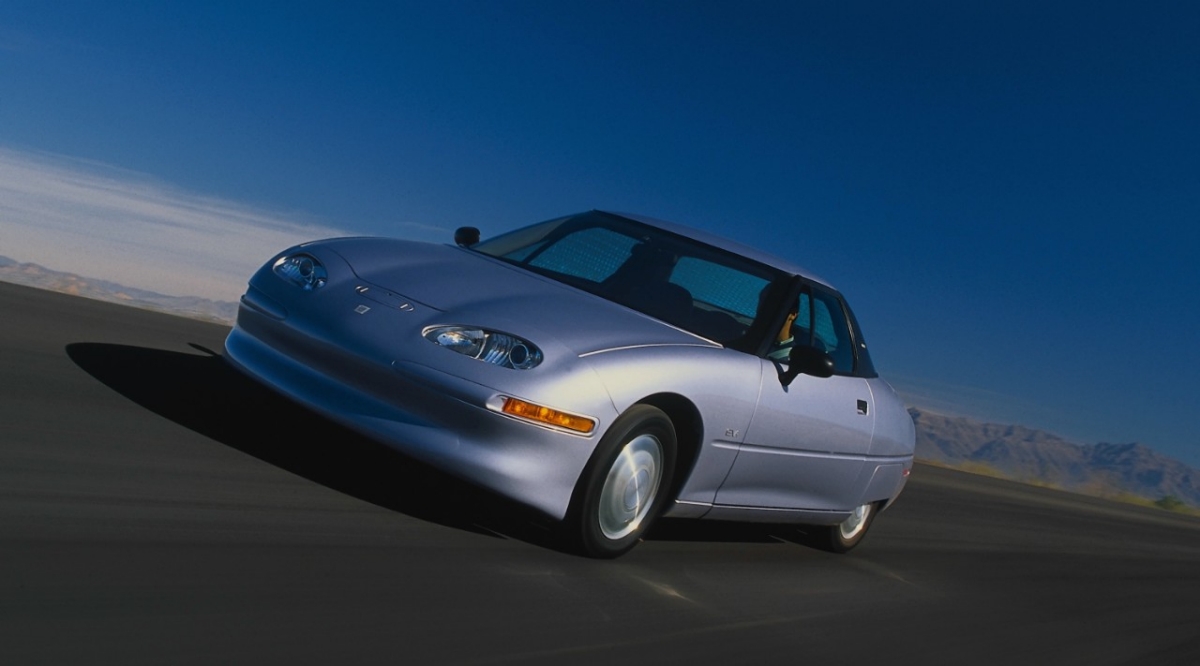
The EV1 deserves this second look. It pioneered heat pump climate control, electronic by-wire throttle and braking, regenerative braking blended with conventional hydraulics, low-rolling-resistance tires, and an aluminum space frame chassis. These are technologies that now define every serious EV on the market. GM was building the future in 1996 and then chose to bury it.
That’s the tension GM can never fully escape. You don’t get credit for generosity in 2026 when you were the one wielding the crusher in 2003. Reuss’s support is genuine and welcome, but it doesn’t rewrite the ledger.
Over a thousand cars were destroyed. Lessees who loved their EV1s begged to buy them and were refused. The technology was shelved for nearly two decades while the rest of the industry eventually caught up on its own.
What’s happening now is a restoration in more than one sense. Questionable Garage is rebuilding a car, and GM is trying to rebuild a narrative. Whether VIN 212 turns a wheel by November 14 will be a mechanical achievement. Whether it changes how people remember what GM did to the other 1,116 is a much harder question.


Share this Story