
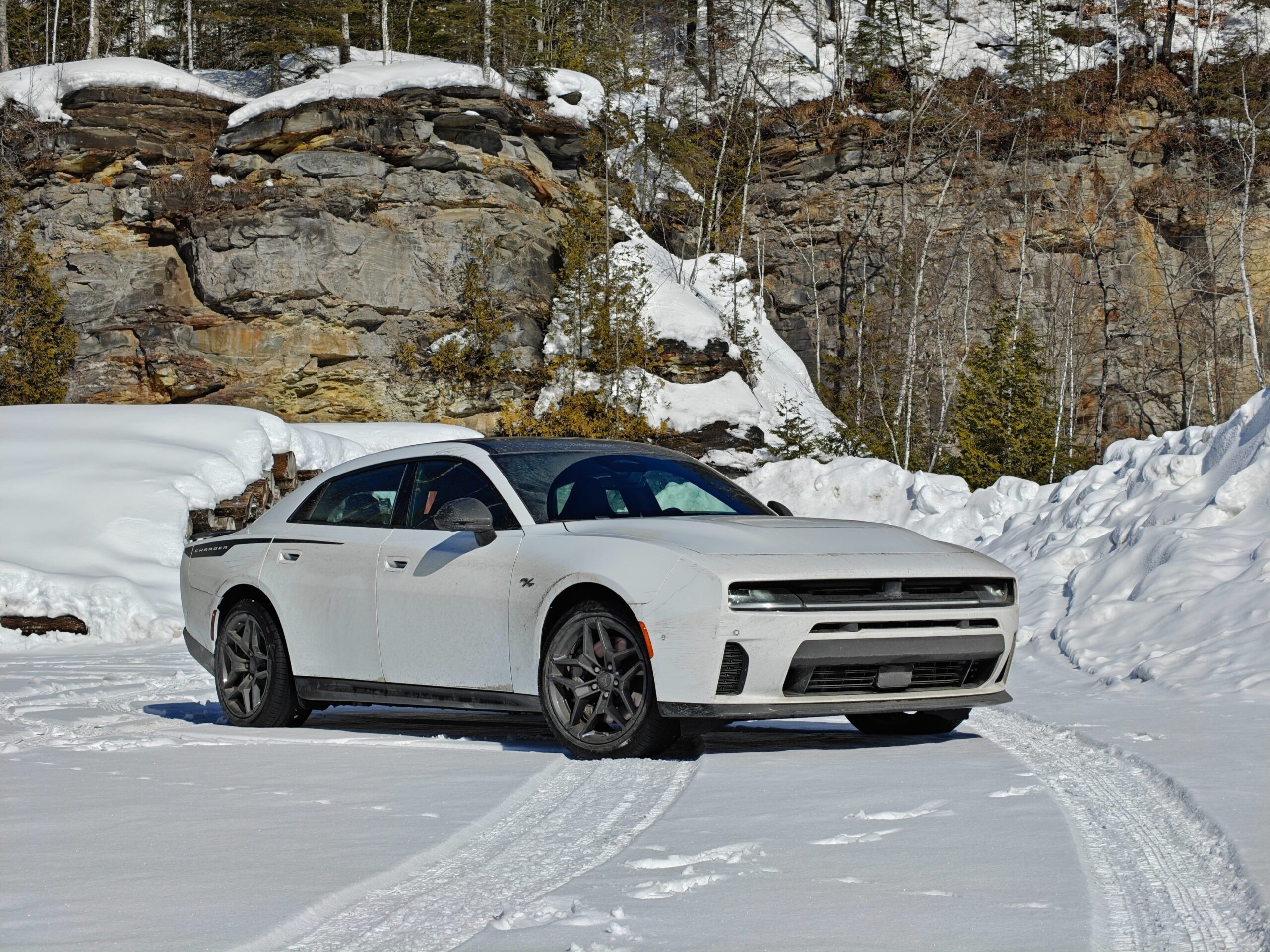


Four hundred twenty horsepower from a twin-turbo inline-six, standard all-wheel drive, and a chassis originally designed around a battery pack it doesn’t carry. That’s the 2026 Dodge Charger R/T — a gas-powered muscle car forced into existence on an electric vehicle’s skeleton.
The R/T completes the new-generation Charger lineup, slotting below the 550-hp Scat Pack as the entry point to Dodge’s reborn nameplate. Its “Sixpack” 3.0-liter twin-turbo six makes 420 hp and 468 lb-ft of torque, which is actually 50 more horsepower than the old 5.7-liter Hemi V8 it replaces. The number sounds right. The backstory is stranger than fiction.
Remember, this car debuted as a two-door electric. When buyers balked, Dodge pivoted to gas power — but before the company even knew it would still be allowed to build V8s. So the engineering team had to make a turbocharged six-cylinder feel like a proper muscle car, wrap it in both coupe and sedan bodies sharing identical wheelbases and cabin volumes, and build the whole thing on a platform shaped by a giant battery that the gas models don’t even use.
The consequences of that origin story are tangible. Rear seat packaging suffers because the floor was raised to accommodate EV battery placement, leaving a six-footer with knees hiked up and skull brushing the roofline. The cargo hold is long and wide but shallower than it needs to be. You’re literally sitting on top of a ghost.
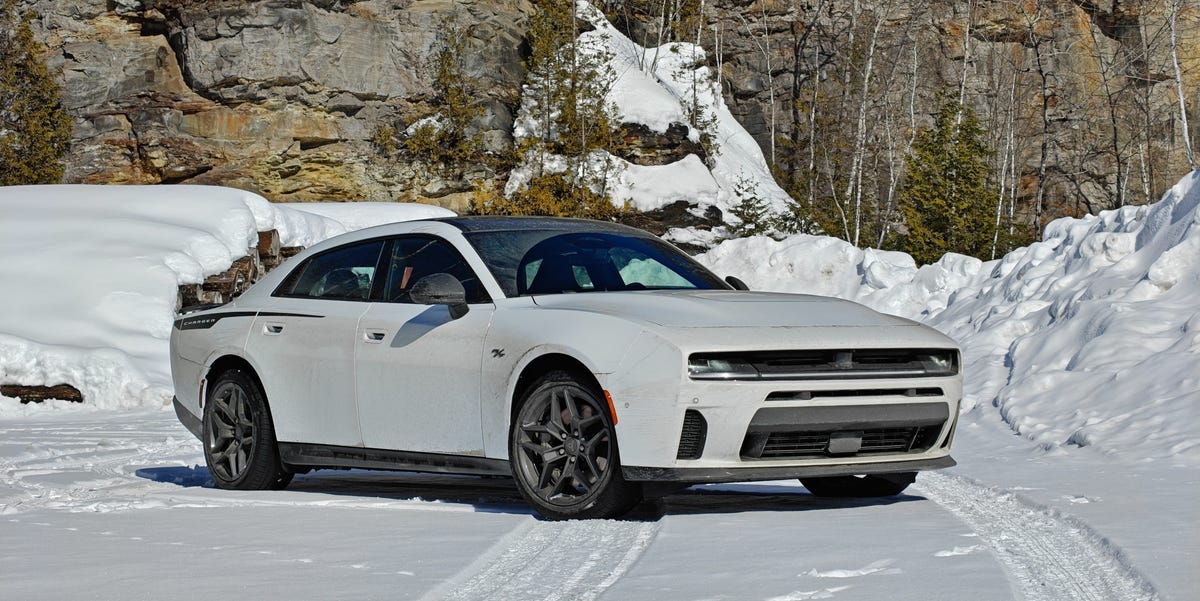
On the road, though, the compromises blur. First drives in Vermont and New Hampshire revealed a car that rides beautifully over frost heaves and potholes, soaking up punishment that would rattle smaller sport sedans. The R/T weighs 4,741 pounds, porky by any measure, but that mass contributes to a plush, confident cruise.
Throttle response from the smaller turbos actually feels snappier than the Scat Pack’s larger units, which need an extra beat to spool. The exhaust note is clean and pleasant without the droning that plagued the more powerful variant at highway speeds.
Steering feel is numb. The paddle shifters are tiny buttons that feel like discount game-controller inputs. The pistol-grip shifter is ergonomically clever but slightly flimsy.
Interior plastics hit you with a new-toy-store smell intense enough to notice. These are not the details you expect at $62,980 as tested.
And that price is the real rub. The R/T Plus with the Preferred Package lands in BMW M340i territory — a car with less power but a half-second advantage to 60 mph and a sharper driving experience. Dodge is betting that personality and heritage outweigh objective performance metrics, and for a certain buyer, that bet might pay off.
The infotainment system is genuinely excellent — intuitive, packed with features, and well-integrated into a dashboard design that manages to look complex without being cluttered. Drive modes span from a muted Wet/Snow setting to a Sport mode that unlocks a true rear-wheel-drive button for tail-out shenanigans. At Team O’Neil Rally School, testers found the platform easy to rotate and recover at sane speeds.
That’s the Charger’s sweet spot: controllable hooliganism, not surgical precision.
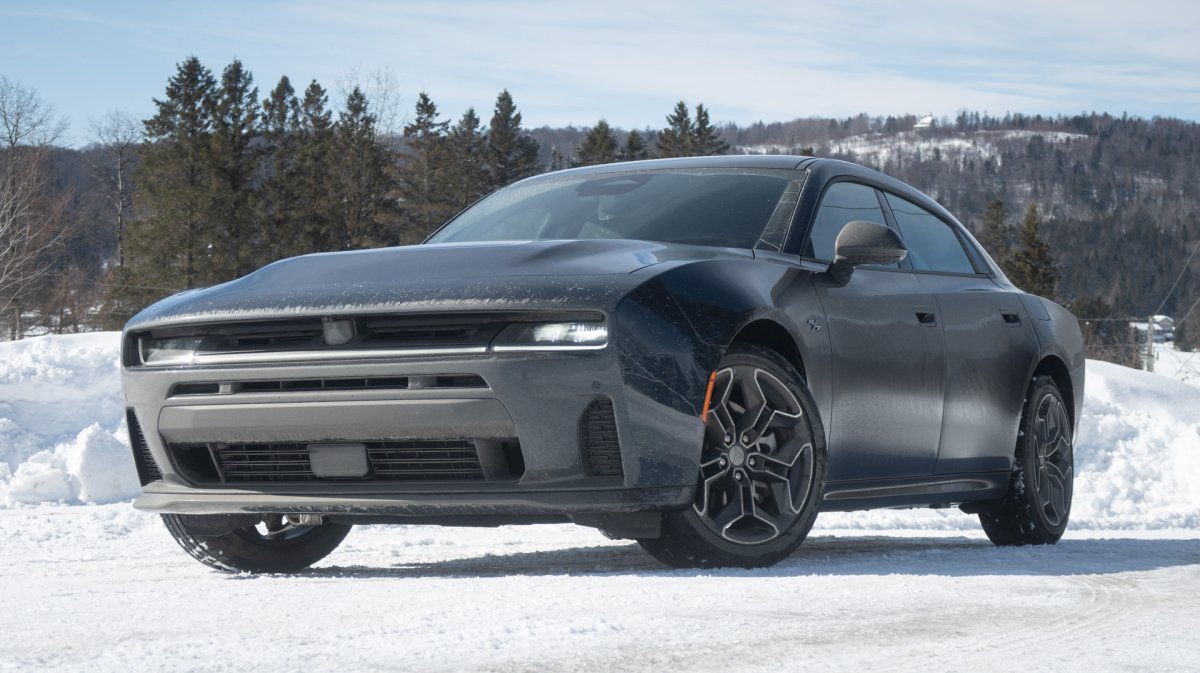
Fuel economy sits at a claimed 20 mpg combined, though real-world driving returned closer to 18. Not great for a six-cylinder in 2026, but nobody cross-shopping a Charger R/T is leading with efficiency concerns.
What Dodge pulled off here is genuinely impressive given the constraints. The engineering team was handed a platform purpose-built for electrons and told to make it breathe gasoline, growl convincingly, and carry the weight of a nameplate that means something to millions of enthusiasts.
The result isn’t perfect. The rear seat packaging betrays its origins. The price asks a lot. The steering won’t fool anyone who’s driven a proper sport sedan.
But the Charger R/T has something most of its competitors gave up chasing lap times: character. It feels like a Dodge and it looks like a Dodge. And for the aftermarket crowd already sharpening their wrenches, the Sixpack platform is begging to be pushed well past 420 horses.
The eighth-generation Charger was born backward — electric first, gas second, designed for a battery it may never carry. That it works at all is a minor miracle. That it’s actually fun to drive is something more.
Share this Story