


Mitsubishi once had the audacity to launch the first mass-market electric vehicle you could actually walk into a dealership and buy. That was the i-MiEV back in 2009, and it was, charitably speaking, not a runaway success. Since then, the company has been a bystander in the EV race.
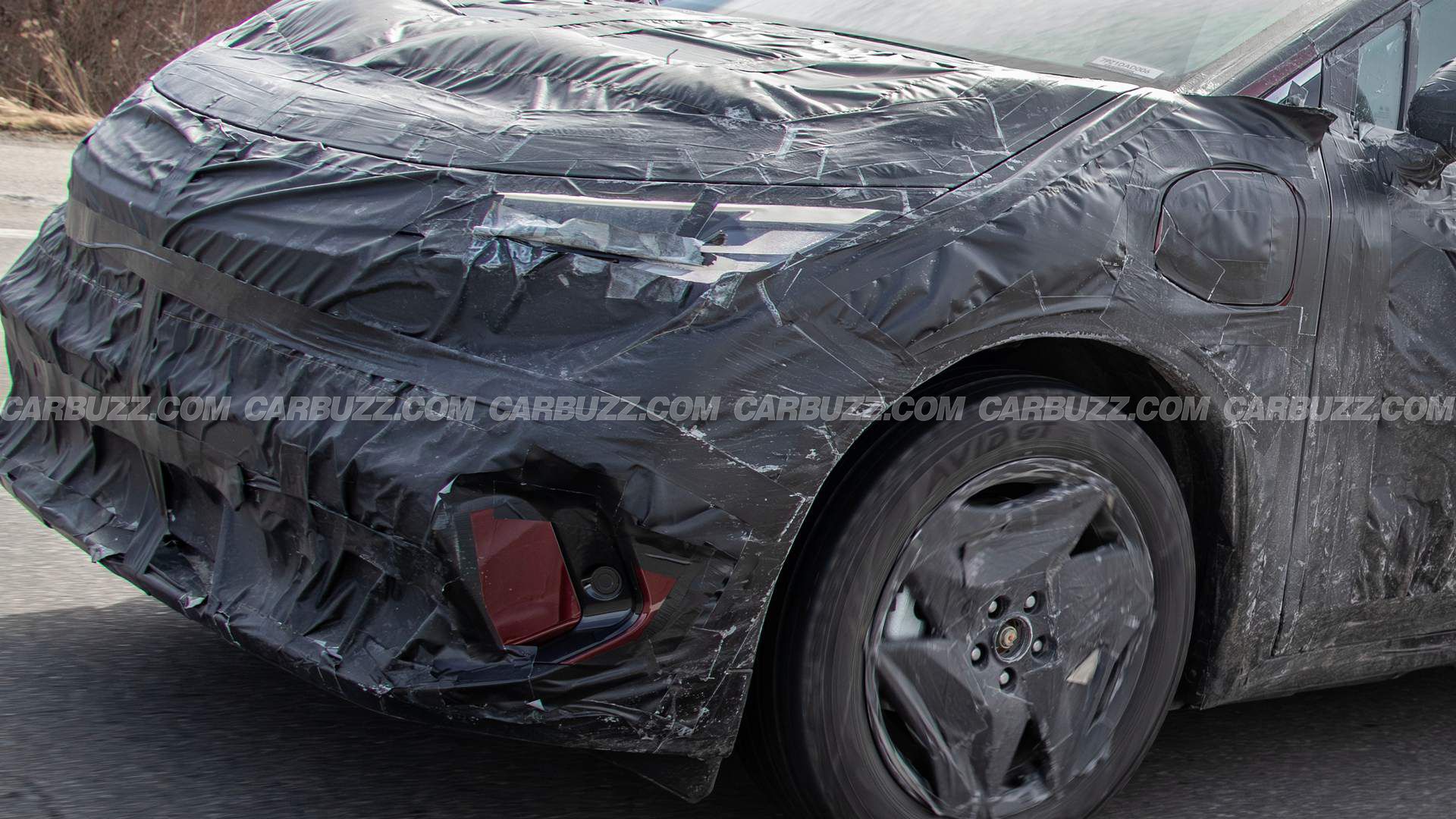
Now spy photographers have caught what appears to be its second real attempt at a battery-electric vehicle, and it’s wearing a very familiar silhouette under all that camouflage.
The prototype spotted testing is, quite plainly, a Nissan Leaf with Mitsubishi styling cues grafted on. The distinctive arc that runs from nose to tail on the new Leaf is unmistakable, a shape unique enough to identify even under heavy camo wrap. But before anyone rolls their eyes at yet another badge-engineering exercise between the Renault-Nissan-Mitsubishi alliance partners, this one actually appears to have some substance to its differentiation.
The headlights ditch Nissan’s sharp C-shaped signature in favor of multi-element clusters that carry Mitsubishi’s design DNA. The lower bumper gets a unique treatment with more body color showing through, contrasting with the Leaf’s blacked-out approach. Out back, the taillights feature an unusual square grid pattern that looks more Stuttgart than Tokyo, though that may just be clever camouflage trickery.
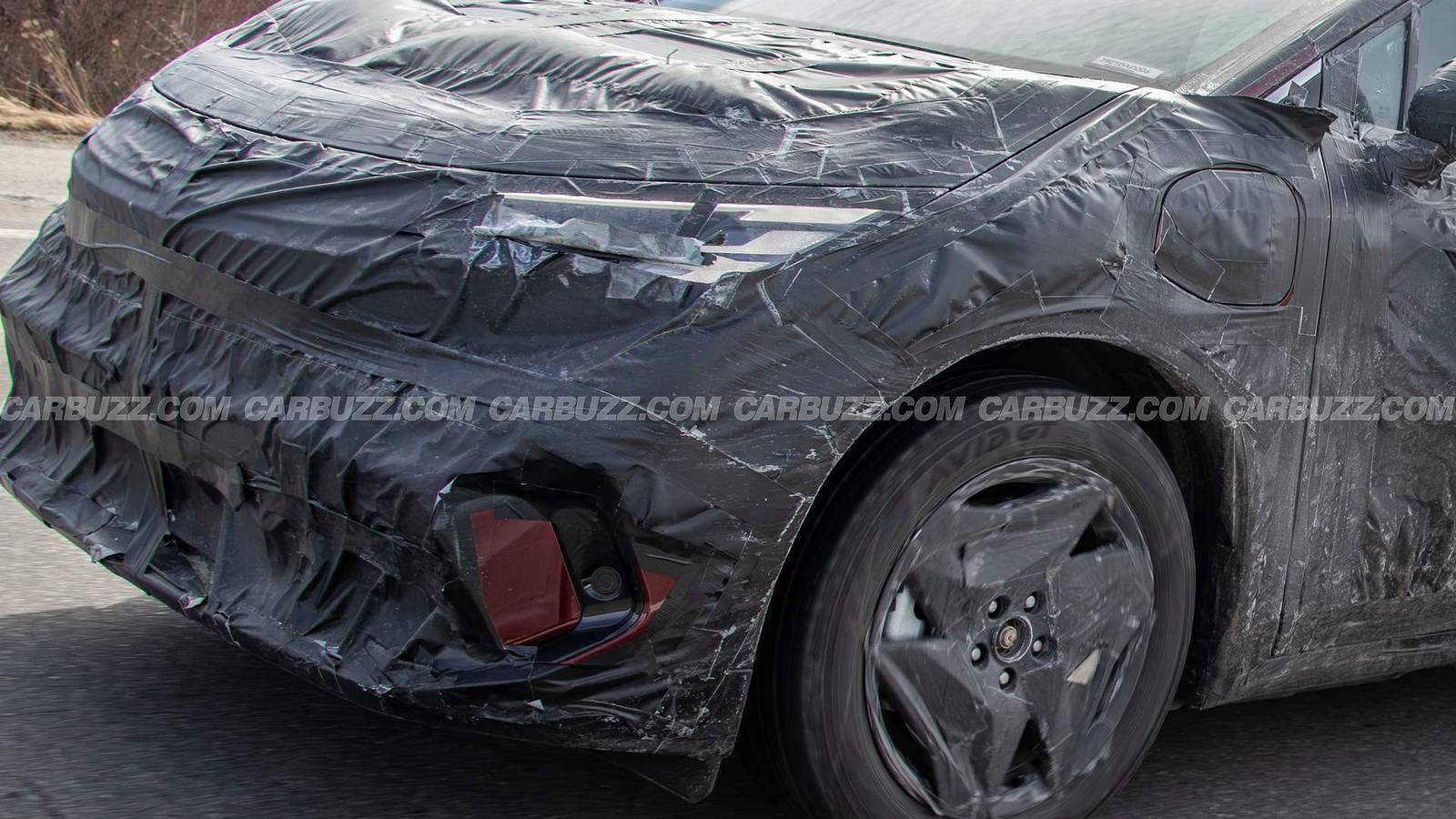
Three-spoke wheels give the prototype a distinctly Mitsubishi flavor, a callback to some of the brand’s best designs from the Montero and 3000GT era. It’s a small detail, but it works with the crossover’s unconventional proportions to create something that at least feels like its own vehicle rather than a lazy rebadge.
That distinction matters because Mitsubishi’s track record with alliance platform sharing has been mixed. The Outlander, built on Nissan Rogue bones, managed to carve out a genuine identity. The Nissan Rogue PHEV that Mitsubishi sells, on the other hand, is barely more than a logo swap.
This new EV falls somewhere in between. Shared platform, shared powertrain, but enough unique sheetmetal to give it a personality.
Under the skin, expect the full Leaf mechanical package. That means a 214-horsepower electric motor producing 261 pound-feet of torque, fed by a 75 kWh lithium-ion battery good for up to 303 miles of range. Those are the specs from the 2026 Nissan Leaf’s higher-trim models, and Mitsubishi will likely mirror that lineup closely.
Pricing should land in the neighborhood of $30,000, putting this squarely in the affordable EV fight alongside the Leaf itself and the Chevrolet Bolt. That’s a crowded and increasingly cutthroat segment, but Mitsubishi has always thrived as a value play.
As for what they’ll call it, your guess is as good as anyone’s. The company’s back catalog offers names like Colt, Lancer, and RVR as possibilities. Whatever the badge reads, this vehicle is believed to be one of seven new models Mitsubishi teased last May, likely slated for an official reveal this summer.
There’s an honest conversation to be had about whether the world needs another rebadged crossover EV. But Mitsubishi’s situation is pragmatic, not aspirational. The company doesn’t have the resources to develop a ground-up electric platform on its own, and its alliance with Nissan exists precisely for moments like this.
If the Leaf is genuinely good, and early reviews suggest it is having already picked up multiple awards, then putting it in front of Mitsubishi’s loyal customer base with unique styling and competitive pricing is a perfectly rational move.
The real test will be whether Mitsubishi can convince buyers that this vehicle offers something the Leaf sitting on the lot next door does not. History says brand loyalty and dealer relationships count for more than most people think. If Mitsubishi prices it right and leans into its rugged, adventure-oriented branding, this Leaf in wolf’s clothing could be exactly the lifeline the brand needs.

Share this Story