
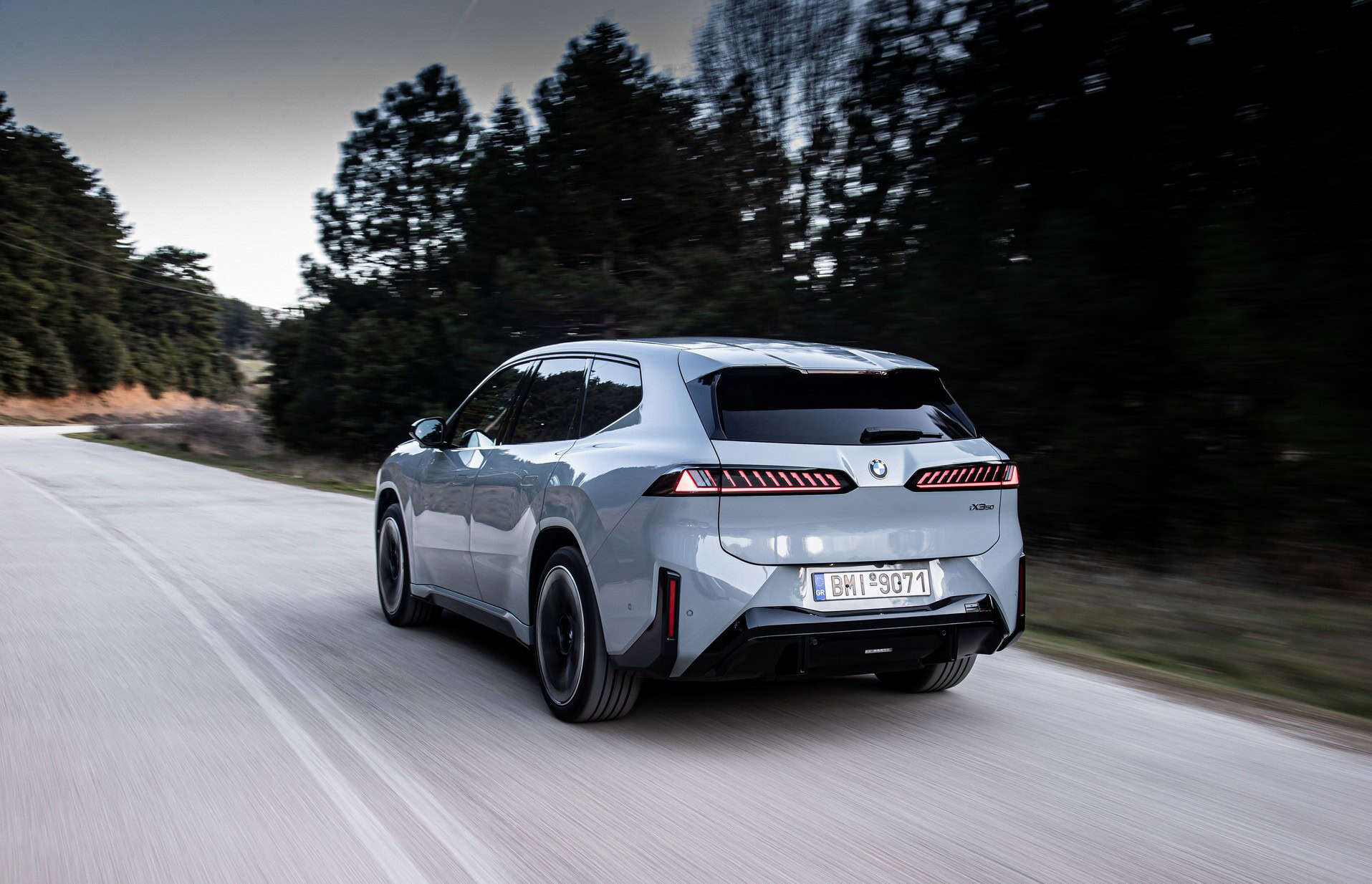


A single driver, no climate control, no radio, no driver swaps. Geoff Hills of Performance BMW in St. Catharines, Ontario, nursed a 2027 BMW iX3 50 xDrive from Niagara Falls to just past Québec City and squeezed 1,011 km out of one charge. It took nearly 15 hours.
The dealership’s launch unit rolled on 21-inch wheels, which the EPA rates at roughly 640 km of range. Hills beat that number by 58 percent.
He averaged 10.8 kWh/100 km, or about 5.8 miles per kWh. Do the math on his elapsed time and distance, and you get an average speed of roughly 68 km/h. That’s 42 mph. This was not a road trip. It was an exercise in patience and aerodynamic discipline.
Hills is candid about the conditions. The iX3 stayed locked in Max Range mode. Windows up, HVAC off, radio off. A chase car and videographer followed, but nobody else touched the steering wheel.
Fifteen hours alone in a sealed cabin with no creature comforts is less a range test and more a meditation retreat with regenerative braking.
The run edges past BMW’s own publicity stunt from earlier this year, when a six-person development team drove a Debrecen-built iX3 from the Hungarian factory to BMW Welt in Munich, covering 1,007.7 km with 2 percent charge remaining. That car wore smaller 20-inch wheels, which should have given it a measurable efficiency advantage. Hills beat it by 3.3 km on bigger rubber with one set of hands.
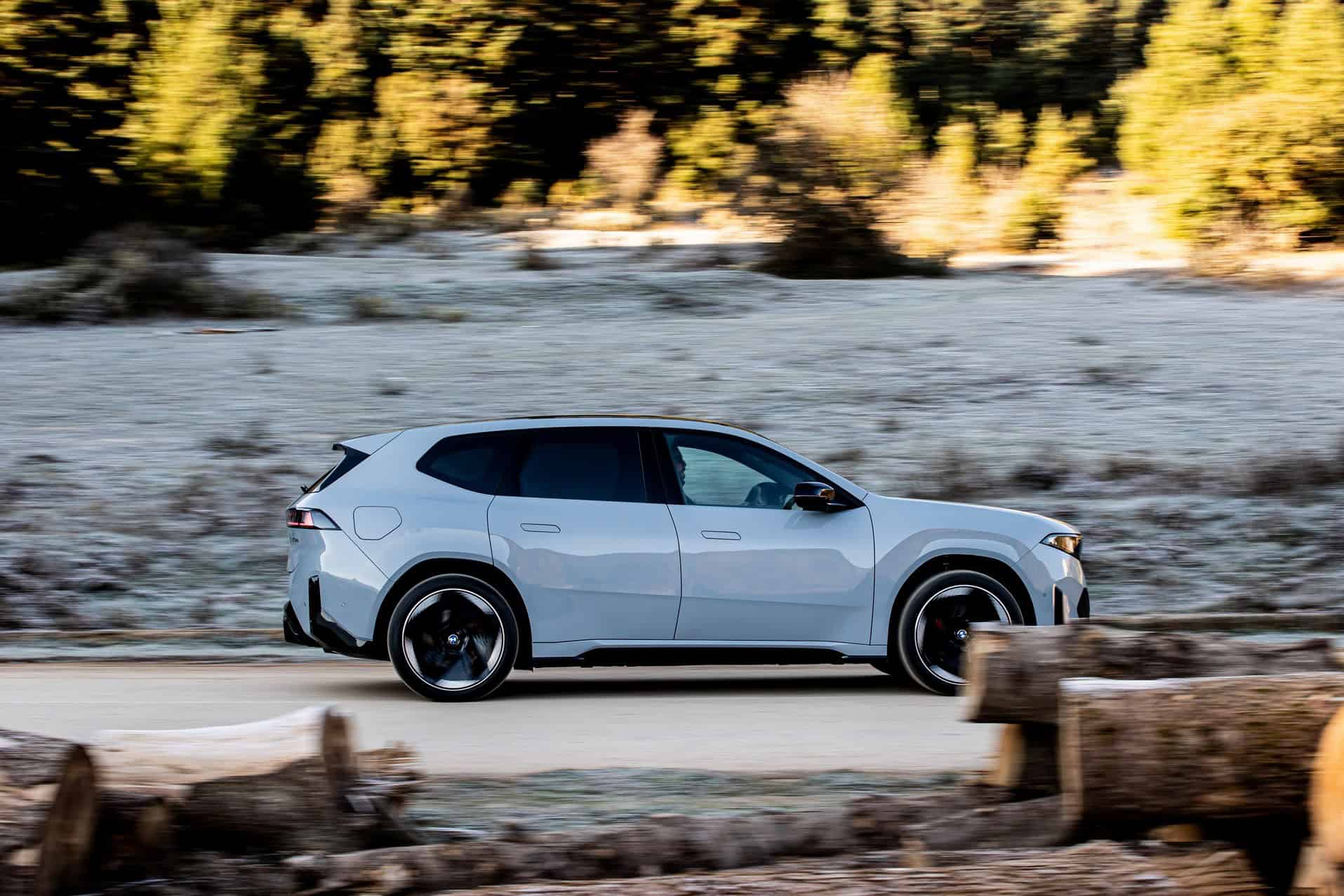
But neither run holds the overall iX3 record. BMW China managed 1,030.2 km in August with the long-wheelbase iX3 50L xDrive, looping from its Shenyang plant to its Beijing R&D center and arriving with 5 percent still in the battery. Same 108.7 kWh pack, different body, different conditions. The Qinghai Lake portion of that Chinese effort averaged 12.6 kWh/100 km, considerably less efficient than what Hills pulled off in Ontario.
What connects all three drives is the gap between what they prove and what they promise. Natural Resources Canada certifies the iX3 50 xDrive at up to 698 km on the most efficient wheel and tire combination. The EPA pegs the 21-inch setup closer to 640 km. Both numbers already assume you are driving like a reasonable person, not crawling across two provinces with the heat off.
Canadian pricing starts at $75,900 CAD, and anyone spending that much on a winter-capable electric SUV is going to use the heated seats, the climate control, and probably the highway. Real-world range in a Canadian January, with cabin heat pulling energy and cold air thickening around the battery, will land well south of 1,011 km. It will likely land south of the NRCan number, too.
That doesn’t diminish what Hills did. It frames it. The iX3’s 108.7 kWh battery is legitimately massive, and its efficiency floor is low enough that a disciplined driver on a warm day can stretch it past a thousand kilometers. BMW’s sixth-generation battery architecture and the car’s .24 drag coefficient are doing real work here.
But the dealership itself calls it “a deliberate max range test.” Not a commute. Not a road trip. A stunt, executed well, by a guy willing to sit in silence for most of a day.
The real question the iX3 still has to answer is simpler. Can it deliver 500-plus usable kilometers in February, with the defroster running and a family in the back, on a route that includes the 401 and the Transcanadienne? That test hasn’t been filmed yet.

Share this Story