
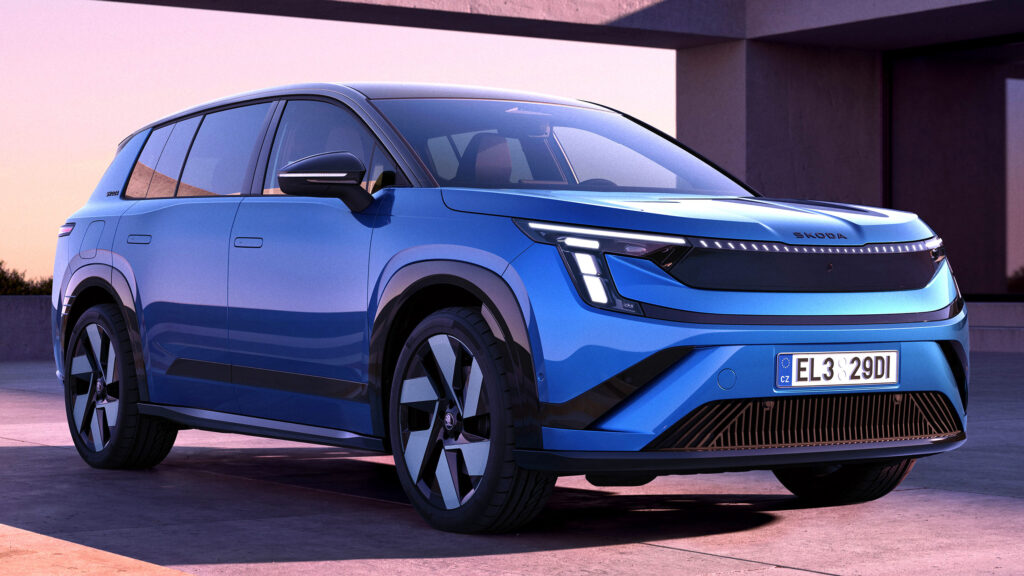


Skoda just pulled the sheet off the Peaq, a three-row electric crossover that claims up to 402 miles of WLTP range and slots in as the Czech brand’s new flagship. It’s built on Volkswagen Group’s updated MEB+ platform, and it’s aimed squarely at the space Hyundai’s Ioniq 9 currently owns almost unchallenged.
But the Peaq isn’t trying to match the Korean giant inch for inch. At 191.9 inches long with a 116.7-inch wheelbase, it’s 7.3 inches shorter than the Ioniq 9 and gives up 6.5 inches between the axles. That’s a meaningful gap in a segment where interior volume is the whole game.
Skoda is betting that close enough, combined with sharp pricing and VW Group engineering, will be enough to carve out a lane.
Three powertrains span the lineup. The entry-level Peaq 60 pairs a 63 kWh NMC battery with a single rear motor making 201 horsepower, good for 285 miles of WLTP range and a 10-to-80-percent DC fast charge in 27 minutes at 160 kW. The mid-range Peaq 90 bumps the battery to 91 kWh and the motor to 282 hp, stretching range to that headline 402-mile figure while supporting 199 kW charging.
The range-topping 90x adds a front motor for all-wheel drive, producing 295 hp total, though range dips to 381 miles. All three can tow up to 4,409 pounds, which puts the Peaq in genuinely useful territory for European families hauling caravans. Bidirectional charging and one-pedal driving round out the powertrain story.
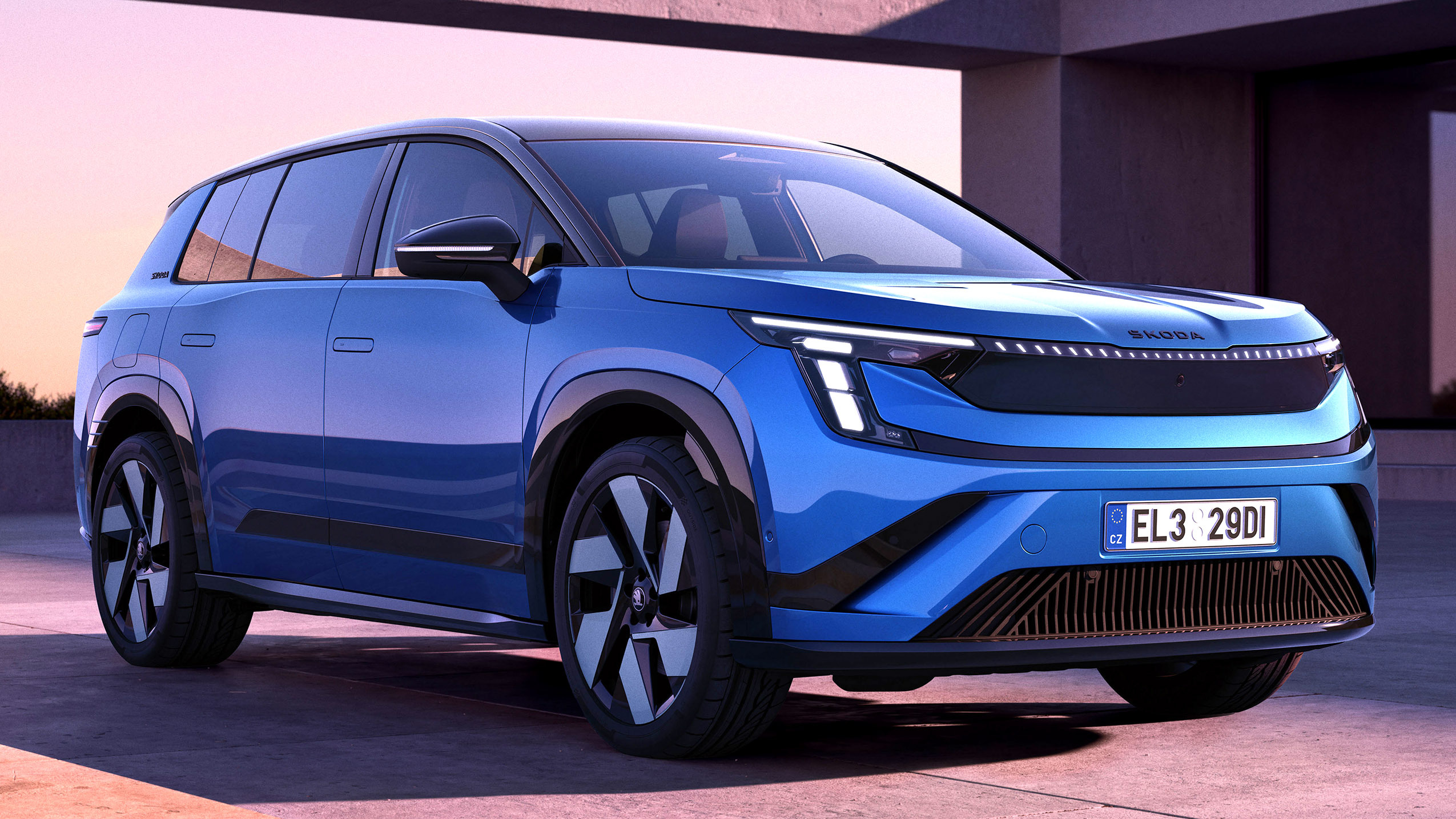
The design traces its lineage to the 2022 Vision 7S concept, and it shows. T-shaped lighting at both ends, flush door handles — a first for Skoda — and a drag coefficient of 0.249 give the Peaq a cleaner look than anything else in the brand’s stable. A nine-segment panoramic roof with electrically adjustable transparency is the kind of party trick that moves metal in showrooms.
Inside, Skoda has gone vertical with a 13.6-inch Android-based infotainment screen, another brand first. The cabin is deliberately minimalist, with a floating center console and most physical switches eliminated. Five- and seven-seat configurations are available.
The optional Relax Package installs lounge-style front seats with legrests, ventilation, massage, headrest pillows, and a center console table. It essentially turns the front row into a business-class cabin. Cargo capacity maxes out at 75.9 cubic feet with seats folded, plus a modest 1.3-cubic-foot frunk.
Standard driver assistance includes Front Assist, Side Assist, and Turn Assist, with optional Travel Assist 3.0 adding highway semi-autonomous capability. Skoda says more than 110 pounds of recycled materials went into each Peaq, a nod to the sustainability messaging European buyers increasingly expect but rarely verify.
The real question is whether Skoda can deliver this package at a price that undercuts the Ioniq 9 meaningfully enough to offset the size deficit. The brand has a history of offering VW Group technology at a discount — that’s literally the business model. The upcoming Epiq city EV at €25,000 suggests aggressive positioning across the lineup.
But three-row EV buyers tend to be pragmatists, not badge chasers. They count cubic feet and charge times. On paper, the Peaq’s 402-mile range tops the Ioniq 9’s EPA estimates, and charging speeds are competitive.
The towing capacity matches. The interior tech is modern without being overwrought. Skoda hasn’t announced pricing or market availability beyond Europe.
For now, the Peaq exists as a statement of intent: the brand that built its reputation on sensible value wants the top of the EV crossover market, too. Whether it earns that seat at the table depends entirely on the number printed on the window sticker.



Share this Story