
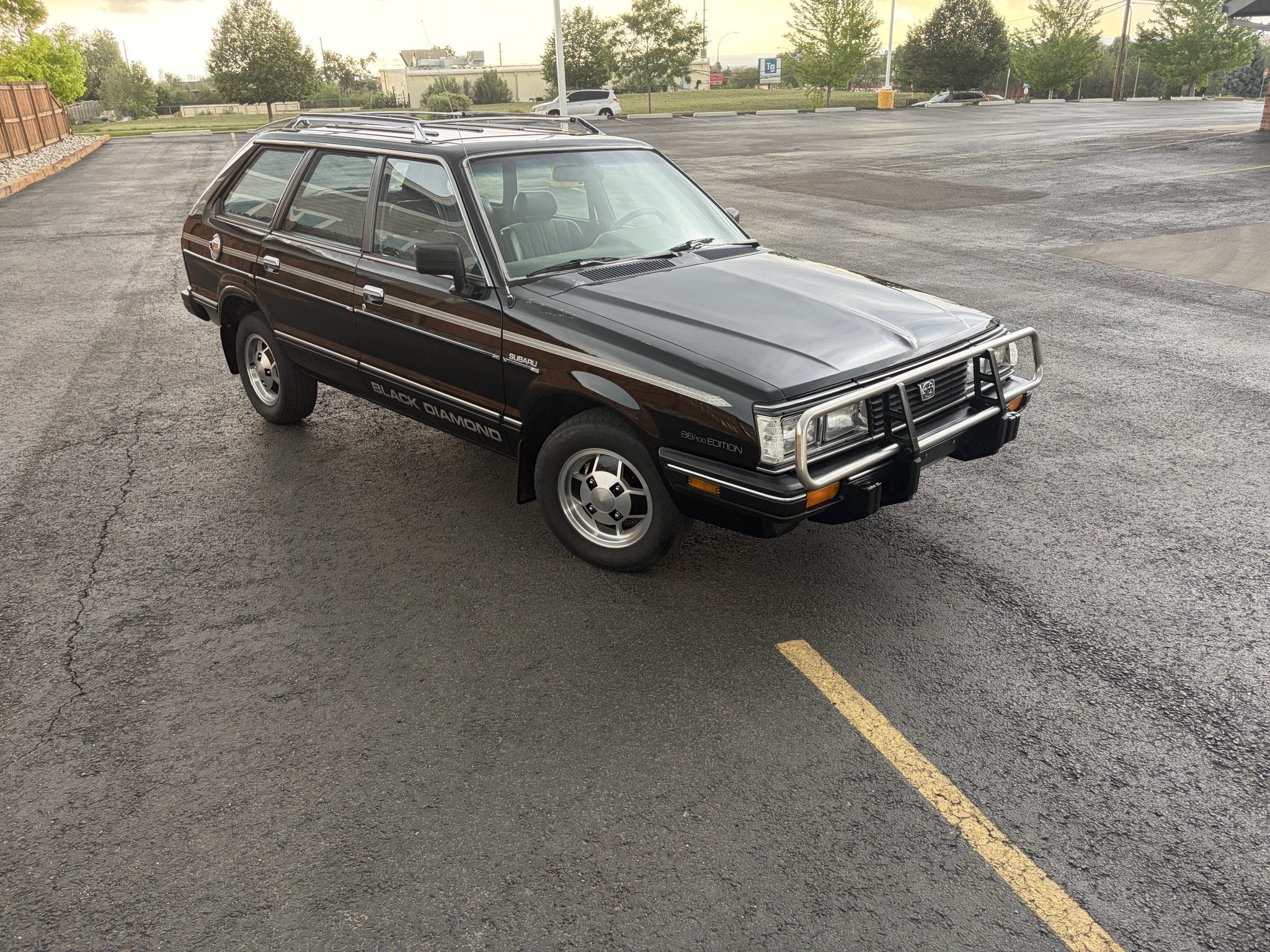


A 1983 Subaru GL 4WD wagon with 375,000 miles on the clock just surfaced on Bring a Trailer, and it might be the most honest car listing you’ll see all year. No concours trailer queen. No barn-find fairy tale. Just a beat-up, rebuilt, resprayed, and relentlessly driven little box that refuses to quit.
This particular GL wears the apparently rare Black Diamond Edition package, a stickers-and-decals affair originally cooked up for Colorado dealerships. The skiing tie-in wasn’t just marketing fluff. In 1983, if you wanted to get to the mountain before dawn after a foot of overnight powder, a Subaru wagon with shifter-engaged four-wheel drive was the tool that got it done.
The numbers tell a story no restoration can fake. That 1.8-liter flat-four, making a modest 73 horsepower and 94 pound-feet of torque, has been rebuilt twice. Two full engine overhauls on a car most people would have crushed after 200,000 miles. Someone loved this thing enough to keep investing in it long past the point of financial logic.
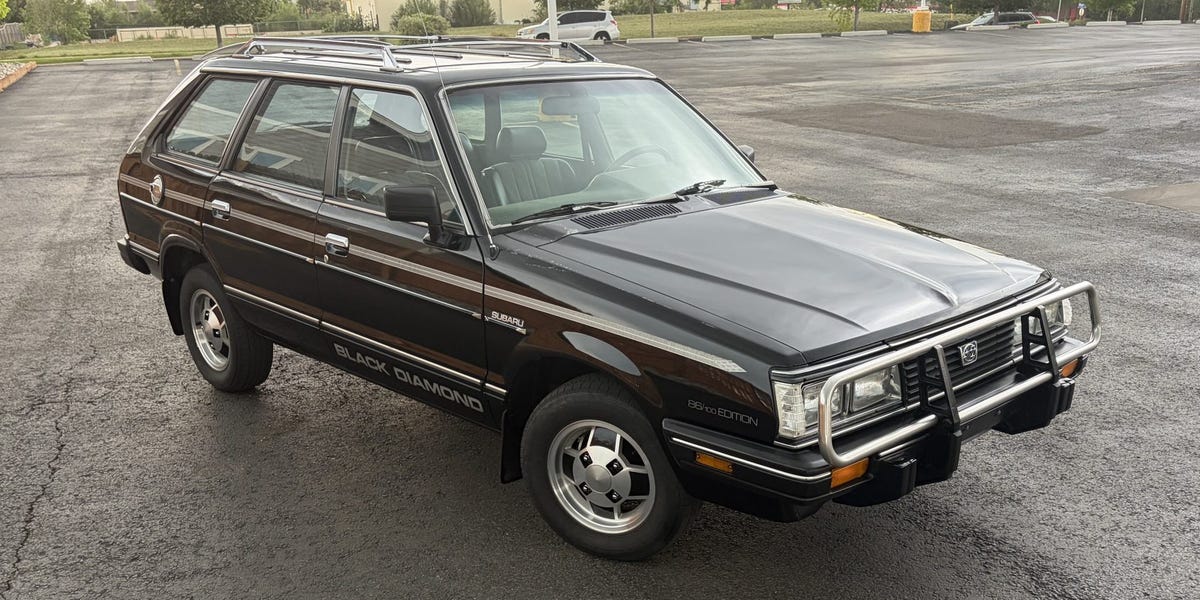
And that’s what separates a survivor from a project. The body shows rust repair and a 2009 respray with reapplied graphics. It’s not concours — it’s better than concours.
It’s a car that was used hard, maintained properly, and kept alive because somebody actually wanted to drive it. The interior is practically untouched, an analog cockpit of 1980s Japanese thrift, complete with power window controls showing honest wear and not much else.
The four-speed manual sends power to the front wheels or all four, depending on where you slot the transfer case lever. No electronics. No drive-mode selectors. No touchscreen asking if you’d like to engage Snow Mode. You pulled a lever, and the car did what you told it.
This is the Subaru that built the brand’s reputation before the brand got comfortable. In 1983, the company was a fringe player in the American market, selling funky little cars to people who valued function over flash. The flat-four engine was genuinely unusual, the wagon shape was unashamed, and the four-wheel-drive system was a real differentiator when most compact cars couldn’t handle a wet parking lot.
Compare that to today’s lineup. The Crosstrek and Forester were Subaru’s two best-selling models last year, and both are competent, anonymous crossovers that blur into the sea of compact SUVs clogging every dealer lot in America. They sell because they offend nobody. The GL wagon sold because it served somebody specific.
Three hundred seventy-five thousand miles is a staggering number for any car, let alone a sub-compact Japanese wagon from the Reagan era. It means roughly 8,900 miles a year, every year, for 43 years. It means someone drove this car to work, to the mountains, to the grocery store, and back again more times than most of us will drive anything, ever.
The auction closes June 23. Whoever wins it won’t be buying a museum piece. They’ll be buying proof that a weird little car, properly cared for, can outlast everything that replaced it.
The Subaru GL didn’t need broad appeal. It just needed an owner who believed in it. Two engine rebuilds and nearly four decades later, that belief looks a lot like vindication.
Share this Story