
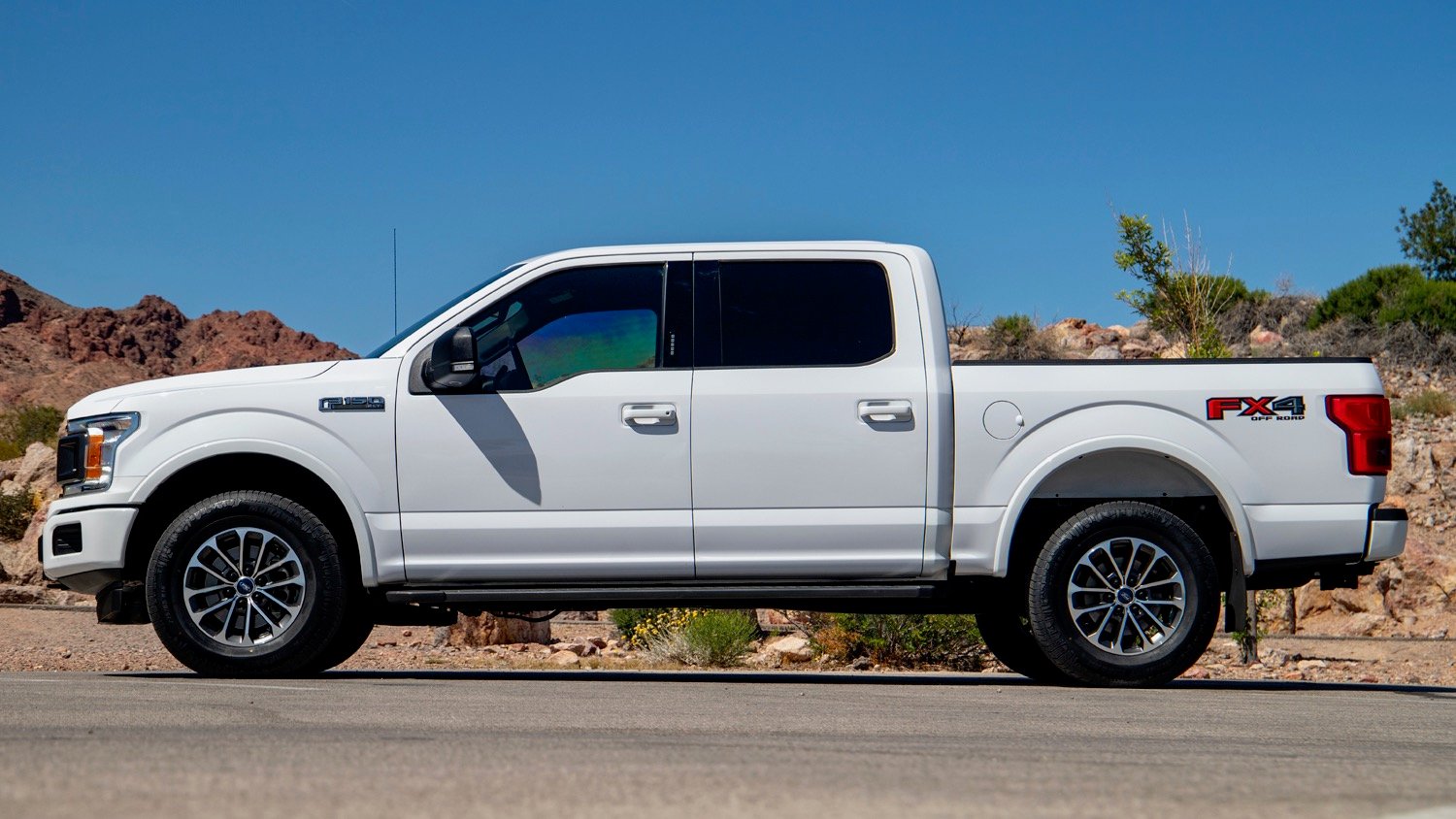


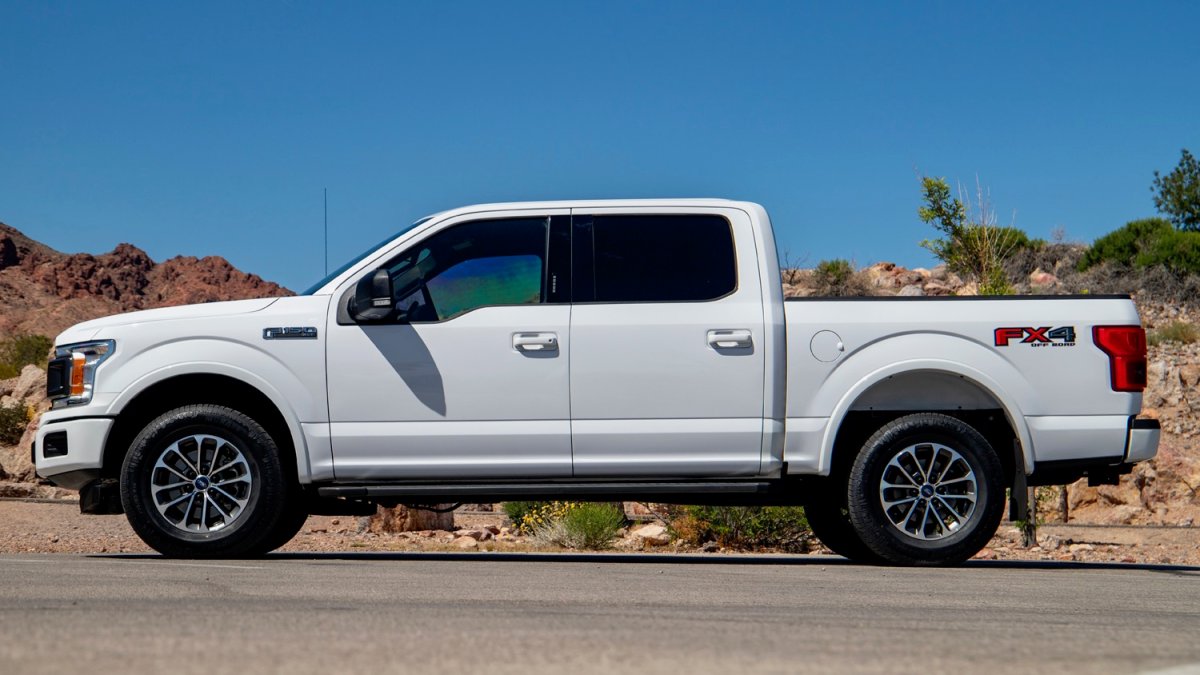
A 2018 Ford F-150 XLT with 93,000 miles, Oxford White paint, and a dark charcoal interior is currently sitting on Bring a Trailer. Not a Lightning. Not a Raptor. Not even an old Bronco someone pulled from a barn. A regular crew cab pickup you could find on any dealer lot in America.
The truck is admittedly well-equipped — twin-turbo 3.5-liter EcoBoost, 10-speed automatic, four-wheel drive, FX4 Off-Road Package, Max Trailer Tow Package. It’s a one-owner ex-dealer demo that photographs well. But “photographs well” used to be the minimum standard on Bring a Trailer, not the selling point.
The seller, consigning the truck for a Nevada dealership, made no apologies. They argued that while hundreds of identical F-150s exist for sale right now, those trucks are buried on franchise lots behind finance office games or listed by private sellers who can’t be bothered to wash them. The pitch is simple: you’re paying for presentation, transparency, and a no-haggle auction format.
It’s not an unreasonable argument. But it does fundamentally change what these platforms are supposed to be.
Bring a Trailer built its reputation as a curated marketplace for the interesting, the rare, and the mechanically compelling. The whole point was that a knowledgeable community could surface cars that didn’t fit neatly into the used-car industrial complex. A 1988 BMW M5, a low-mile Acura Integra Type R, a weird French van nobody remembers — that curation was the product, not just the transaction.
And yet the mundane is creeping in. A 2018 Audi Q7 Prestige with 75,000 miles just sold on BaT for $19,250, roughly $3,000 to $5,000 above Kelley Blue Book’s estimate for a comparable vehicle in very good condition. A 2016 Cadillac Escalade ESV Platinum with only 4,500 miles fetched $44,500, about $15,000 over KBB’s range for an excellent-condition example.
Sellers are clearly winning this trade. The BaT audience, conditioned to trust the platform’s vetting process and detailed photo sets, is paying a premium for cars they could find cheaper with 20 minutes on AutoTrader. The auction format creates urgency, the comment section creates community validation, and the result is that ordinary vehicles command extraordinary attention.
For BaT, the math is obvious. More listings mean more final-value fees. A $19,250 Q7 generates revenue just as reliably as a $192,500 air-cooled 911. Volume scales; exclusivity doesn’t.
The question is whether the audience will tolerate the dilution. Scrolling past a white F-150 to find the 1972 Datsun 240Z is a minor inconvenience today. But if the ratio keeps shifting, the platform risks becoming just another used-car marketplace with better photography and a comments section full of people who know what a PPI is.
There is a counterargument floating around that today’s boring crossovers and pickups could become tomorrow’s collectibles, that some future generation will get misty-eyed over a 2018 F-150 the way boomers chase 1967 Camaros. Maybe. But collectibility has never been primarily about nostalgia. It’s about scarcity, design significance, and mechanical distinction. A mass-produced EcoBoost pickup checks none of those boxes.
Bring a Trailer succeeded because it understood that not every car deserves a stage. The moment it forgets that, it becomes Cars.com with a gavel.

Share this Story