
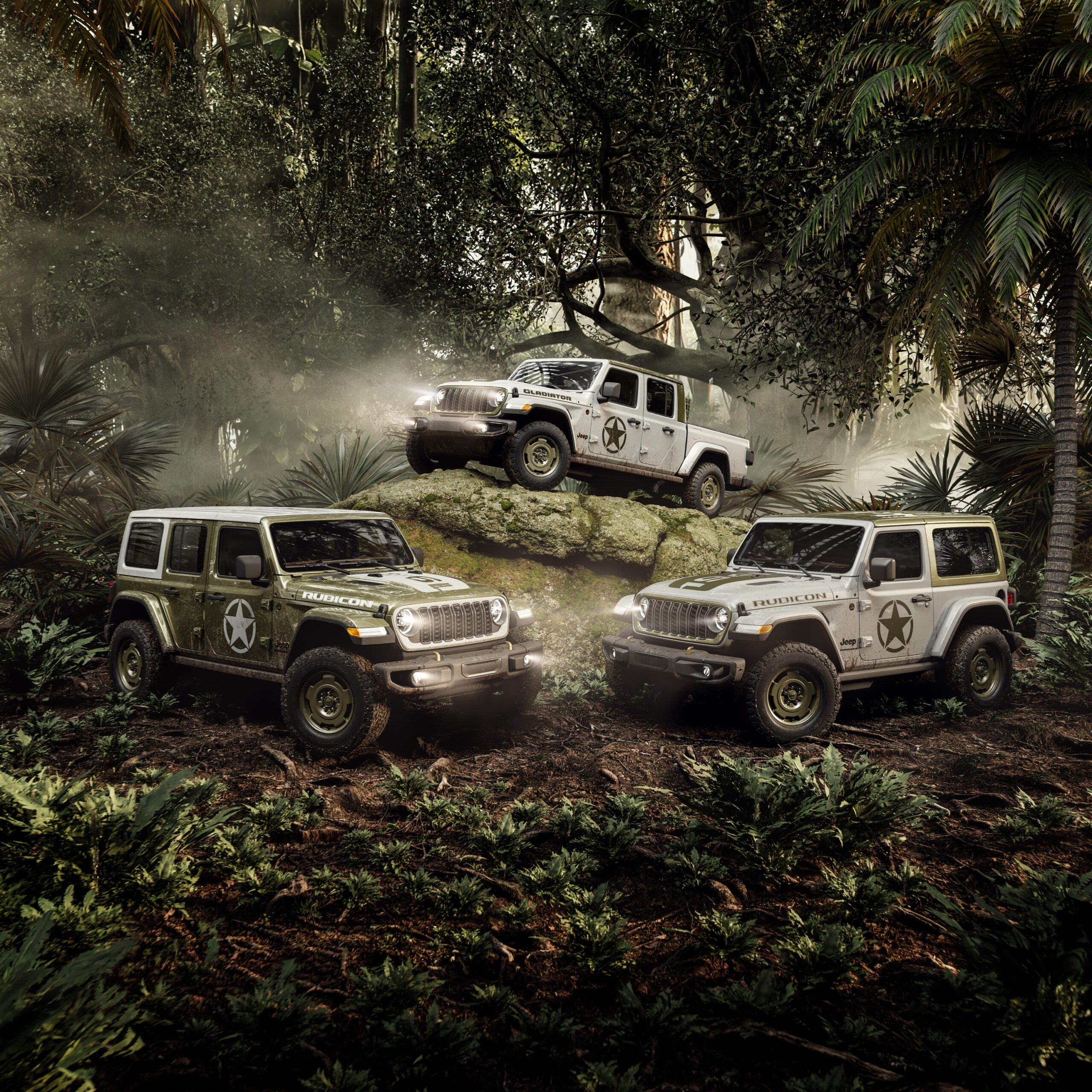


Jeep is charging as little as a hundred bucks extra to wrap the Wrangler in World War II cosplay. The 2027 Wrangler Sarge and Gladiator Sarge, the latest entries in the brand’s Twelve 4 Twelve special-edition series, dress up existing Willys and Rubicon trims with green paint, military star decals, and bronze tow hooks. All in tribute to the 1941 Willys MB that started it all.
There are no mechanical changes. Not one. No extra horsepower, no revised suspension tuning, no additional off-road hardware. This is a sticker-and-paint job, and Jeep isn’t even trying to pretend otherwise.
The exterior comes in a shade called ’41 Green, applied to the body, wheels, hardtop, and available on the grille surround, which can alternatively be finished in white. Steel Rubicon Rock Rails get the same green treatment. Hood decals and door stars complete the olive-drab aesthetic, giving the whole package the look of something that should be storming a beach rather than idling in a Starbucks drive-through.
Inside, the theme continues with Drab Green and Cattle Tan Nappa leather — the latter a new color for Jeep — plus Soul Cloth seat wrapping and Mayan Gold accent stitching. A 1941 cup holder plaque, a star medallion on the shift knob, and Jeep grille logos on the HVAC vents round out the cabin. A special plaque on the rear swing gate makes sure the next person tailgating you knows what they’re looking at.
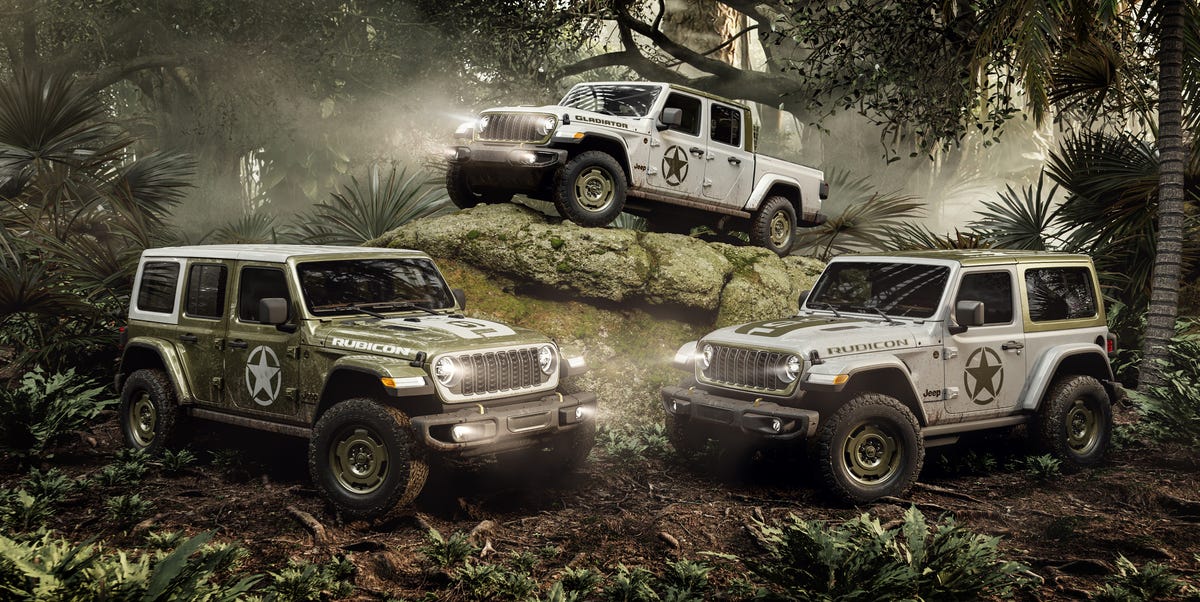
Both two- and four-door configurations are available, and the editions go on sale later this summer. Jeep says the Wrangler Sarge will start just $100 above a comparably equipped Willys or Rubicon, while the Gladiator Sarge commands a $500 premium. Those are remarkably modest upcharges, which tells you something about the actual cost of the additions.
This is the Twelve 4 Twelve playbook in action: twelve special editions across twelve months, keeping the Wrangler and Gladiator in the news cycle without engineering a single new part. Previous entries this year have included the America250 and the Rockslide, each working a slightly different visual angle on the same bones. The strategy assumes — probably correctly — that Jeep’s core buyer cares more about tribal identity than spec sheets.
Jeep has earned the right to mine its military heritage more than most brands have earned the right to mine anything. The Willys MB is genuinely iconic, not just marketing-department iconic. That history still resonates with the people writing checks for $50,000 off-roaders that will spend most of their lives on pavement.
The question is whether twelve rounds of cosmetic editions in a single model year start to dilute the concept. Special editions work because they feel scarce. Stack them on top of each other month after month and they start to feel like what they are: a volume play dressed up as exclusivity.
For a hundred dollars, though, the Sarge is hard to argue with. It costs less than a tank of gas in most states and gets you a genuinely sharp-looking truck with real historical DNA behind the design choices. Jeep knows its audience will never tire of olive drab and five-pointed stars. The bet is that the rest of us won’t either.

Share this Story