
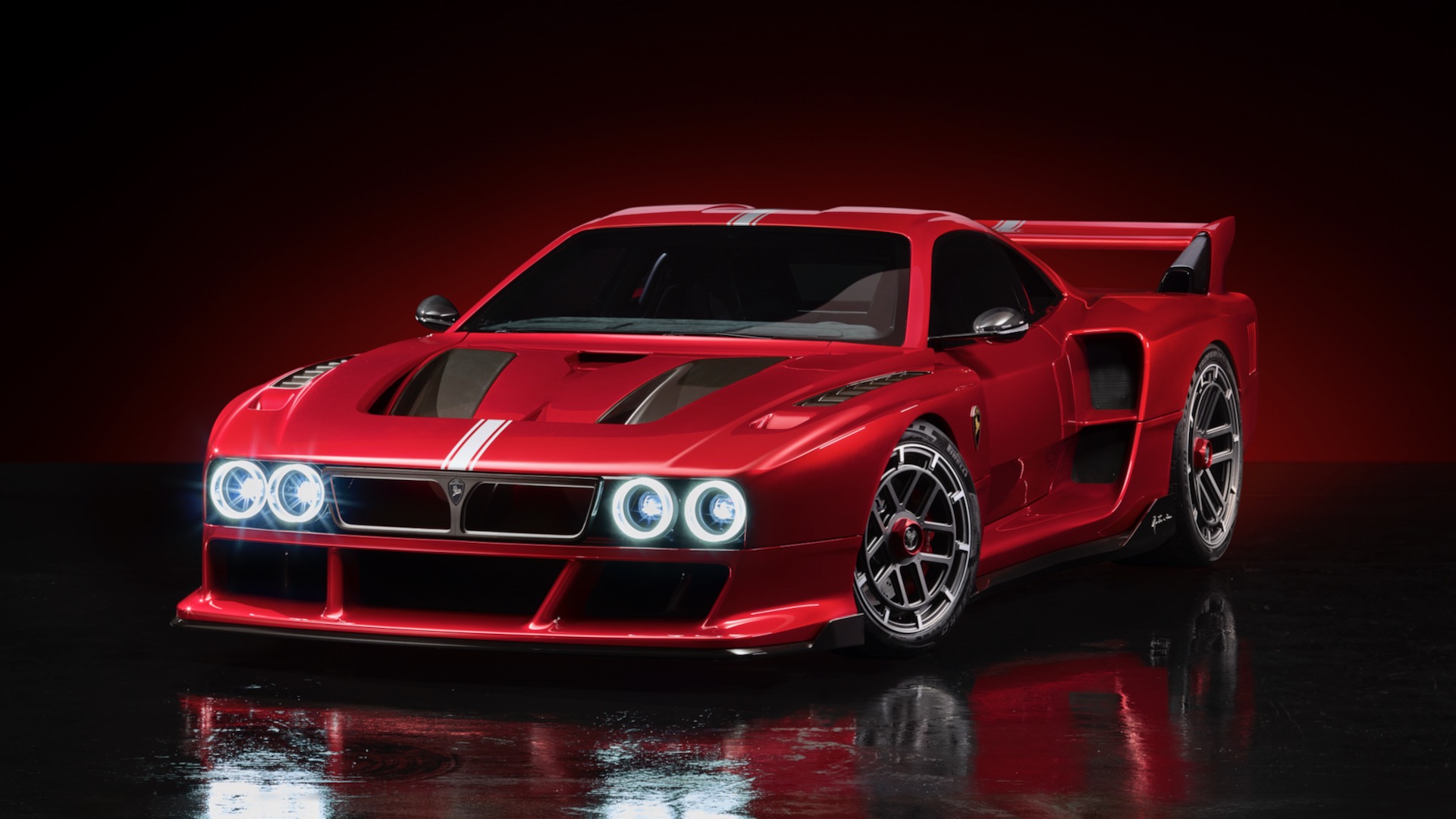


The last two-wheel-drive car to win a World Rally Championship just got a 1,000-horsepower heart transplant from Sweden’s most uncompromising engine builder. That sentence alone tells you everything about where Kimera Automobili’s ambitions have landed.
Unveiled Friday at the Concorso d’Eleganza Villa d’Este, the Kimera K-39 is a ground-up hypercar wrapped in the unmistakable silhouette of the Lancia 037. Under its skin sits a twin-turbo V8 developed by Koenigsegg, making 1,000 horsepower at 7,350 rpm and 885 pound-feet of torque at 5,500 rpm, with a redline stretching to 8,250 rpm. This is not a restomod — this is an Italian coachbuilder raiding Christian von Koenigsegg’s parts bin to build something entirely new.
Kimera has been building toward this for years. The Italian company started in 2021 with the EVO37, a modernized tribute to the legendary Lancia rally weapon. The EVO38 followed in 2024, channeling the 037’s never-produced successor.
Each step escalated. The K-39 is the full leap — no longer a tribute, but an original hypercar that happens to wear a familiar face.
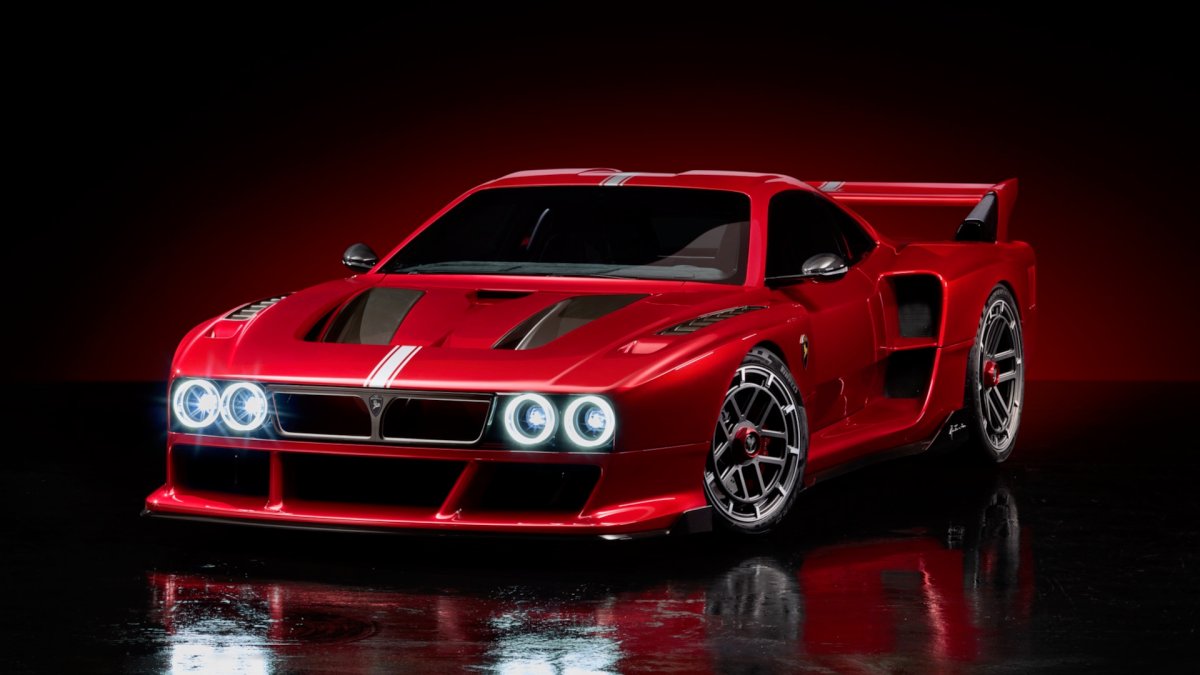
The partnership with Koenigsegg runs deeper than a crate engine deal. Kimera says owners will have access to Koenigsegg’s cloud infrastructure for diagnostics and software updates, the kind of long-term support that tiny-volume manufacturers almost never provide. The company also aims to certify the K-39 as a new vehicle in markets worldwide, not just as a limited-run toy hiding behind show-and-display exemptions.
Visually, the K-39 retains the 037’s short wheelbase and massive boxy fenders, the proportions that made the original look like it was crouching even when parked. But the scoops are deeper and the ducts more intricate, reflecting four decades of aerodynamic knowledge the Lancia engineers never had.
And Kimera wants to prove it all at Pikes Peak. The company declared the planned hill climb attempt a “defense of a vision of the automobile that believes in the refined and sustainable evolution of combustion technology.” No date was given.
The rhetoric is rich, though the physics of Pikes Peak — where thin air at 14,115 feet starves naturally aspirated engines and gives battery-electric cars a structural advantage — will be less forgiving than a press release. Turbos help, but they don’t erase altitude entirely.
There’s a historical thread pulling tight here. Lancia’s factory team never raced at Pikes Peak, but Audi — the 037’s great rival, the team it beat for the 1983 WRC title — set a record there in 1987 that still stands as the fastest pre-pavement time. Kimera is chasing a ghost that Lancia itself never confronted.
Ten Pikes Peak-spec K-39s will be built for what Kimera calls its “most loyal customers,” fitted with larger rear wings and additional aero hardware. Pricing for neither the standard nor Pikes Peak variant was disclosed. With a Koenigsegg V8 at the center, “attainable” is not part of the conversation.
Small Italian companies promising extraordinary things is an old story, one that ends badly more often than not. Kimera has at least shipped real cars to real customers with the EVO37 and EVO38. That earns it a longer leash than most.
But jumping from tributes to a globally homologated, Koenigsegg-powered hypercar with Pikes Peak ambitions is a different magnitude of promise entirely. The 037 became legendary by punching above its weight against all-wheel-drive technology that was supposed to make it obsolete. Kimera is betting the same spirit can carry a combustion hypercar into a world increasingly tilting toward electrons, and whether that’s romantic conviction or strategic stubbornness depends entirely on execution.
Share this Story