



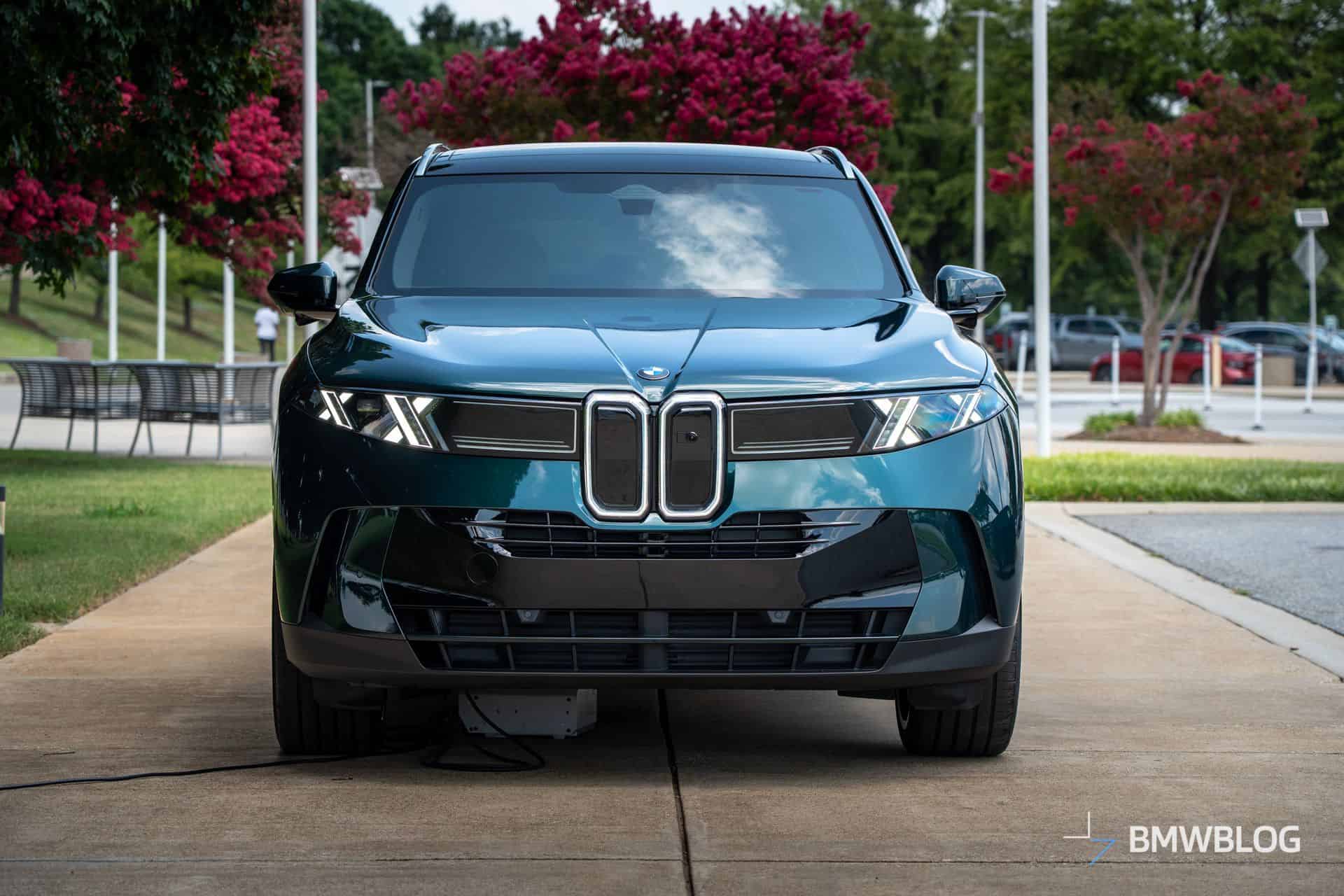
More than half of all BMW X3 orders in Europe are now fully electric. That single data point, buried in BMW Group’s first-quarter results, tells you more about where the German automaker is headed than any strategy deck ever could.
BMW reported that well over 50,000 new orders landed for the iX3, the first Neue Klasse model, during Q1 2026. Total BEV orders across Europe jumped roughly 40 percent year-over-year. German market sales climbed 10.7 percent. In China, BMW outperformed the overall market, and MINI posted its fifth consecutive quarter of global growth.
These are not incremental numbers. They suggest the Neue Klasse launch, which BMW has staked its decade on, is landing with buyers, not just with auto show crowds.
But the company isn’t standing still on the product side alone. Days after releasing those sales figures, BMW i Ventures closed a $300 million Fund III, pushing total capital under management past $1.1 billion. The fund’s thesis is unapologetically narrow: artificial intelligence applied across the automotive value chain.
That means physical AI, robotics, manufacturing optimization, supply chain intelligence, and advanced materials. Not AI as a buzzword on an investor slide, but AI as a toolkit BMW believes will restructure how cars get designed, built, and sold.
Marcus Behrendt and Kasper Sage, the managing partners at BMW i Ventures, made the case bluntly. “The models are capable enough. The tools are mature enough,” they wrote in announcing the fund. “Founders building on top of them are creating entire new categories of companies.”
The fund operates out of Mountain View, San Francisco, and Munich, backing startups from seed through Series B. Its track record across 90-plus investments includes more than 30 exits, 11 public companies, and a Fund I that returned top-quartile capital. GaN Systems, backed in 2017, was acquired by Infineon for $830 million. Tekion became a category leader in AI-native automotive retail. Skylo is bringing satellite connectivity to BMW vehicles.
What makes Fund III different from a generic corporate venture play is the independence claim. Investment decisions stay with the BMW i Ventures team, not Munich’s product planners. Portfolio companies don’t get absorbed into a corporate roadmap. They get access to BMW’s engineering bench, production environments, and commercial relationships, then they go build.
That dual motion, record EV orders on one side, a fresh $300 million war chest for AI startups on the other, is the real story. BMW is proving it can sell electric cars at scale while investing in the assumption that the way those cars get made is about to change in dramatic ways.
The timing is deliberate. The Neue Klasse architecture was designed from the ground up for software-defined vehicles. The AI investments feeding into Fund III aren’t disconnected bets on trendy startups. They’re meant to flow back into how BMW engineers, manufactures, and delivers the next generation of that platform.
Other automakers are chasing one or the other. Some are scrambling to make EVs people actually want. Others are throwing money at AI without a clear product story to connect it to. BMW is attempting both at once, and the early numbers suggest it’s working.
The risk, of course, is execution. Venture capital is patient until it isn’t. Consumer demand is fickle, and 40 percent order growth in one quarter does not guarantee a second. But if you had to pick an automaker that looks like it knows what it’s doing right now, selling cars and seeding the technology that builds the next ones, BMW just made a strong case.

Share this Story