
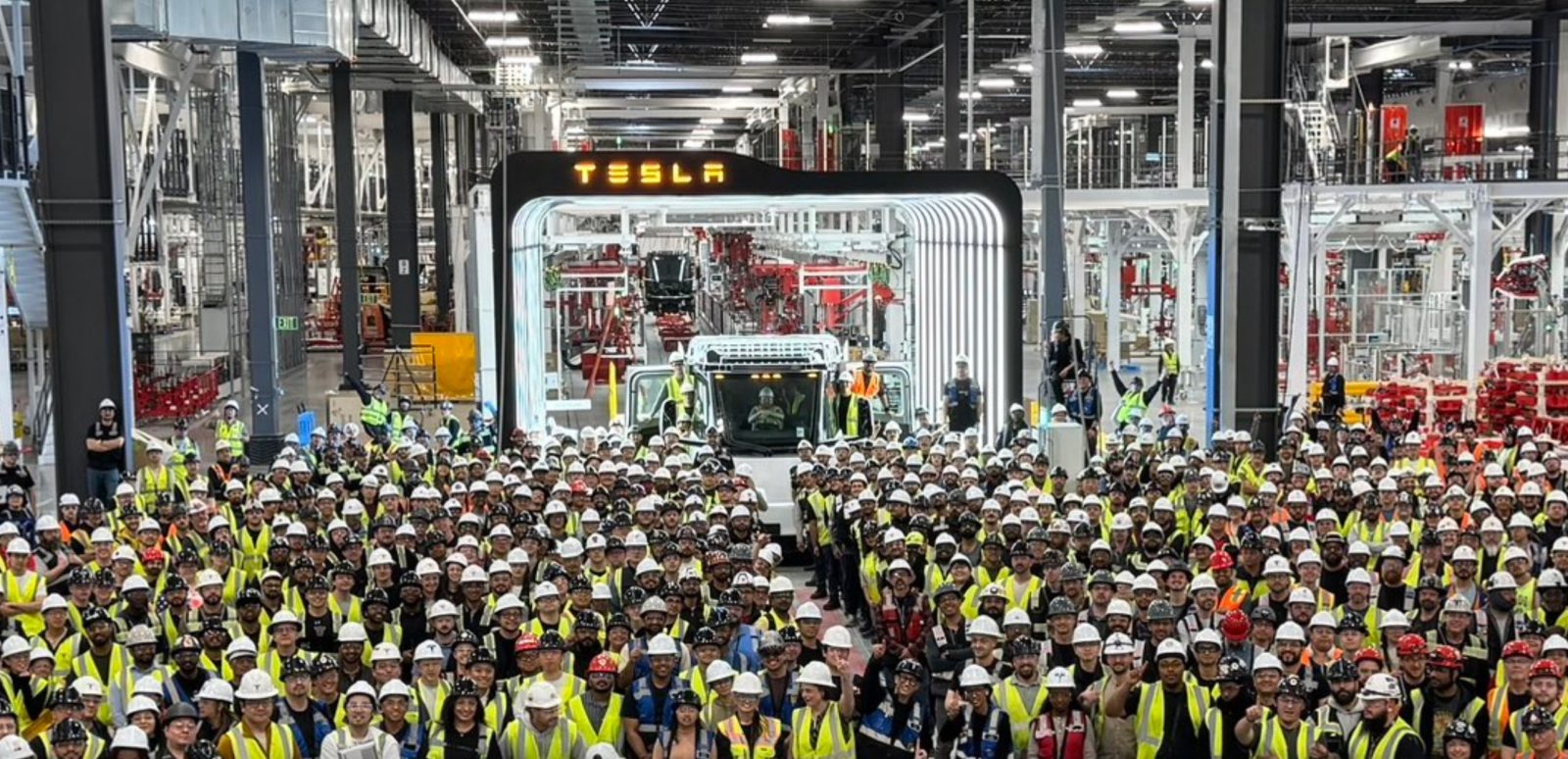


Nine years after Elon Musk first pulled a sheet off the Tesla Semi prototype, the first truck has rolled off what the company calls a high-volume production line in Nevada. Tesla announced the milestone Wednesday with a characteristically terse post on X: “First Semi off high volume line.”
That single sentence carries a lot of weight — and a lot of baggage.
The Semi was unveiled in 2017 with promises of 500-mile range and a production timeline that, like so many Tesla timelines, proved wildly optimistic. The original target was 2019. Then it slipped. And slipped again. A handful of Semis were delivered to PepsiCo in late 2022, but volume production remained a mirage.
Now Tesla says it’s real. The all-electric Class 8 truck, built at the company’s Nevada facility, is designed for long-haul freight with a claimed range of roughly 500 miles per charge. Deliveries to customers are expected to begin this year.
The timing is deliberate. Tesla has staked 2026 as the year it transforms from an automaker into something broader — a company simultaneously ramping Semi trucks, Cybercab robotaxis in Texas, Megapack 3 battery storage systems, and Optimus humanoid robots. To fund that sprawl, Tesla said in January it would more than double capital spending this year to north of $20 billion.
That’s an enormous bet spread across an enormous number of bets.
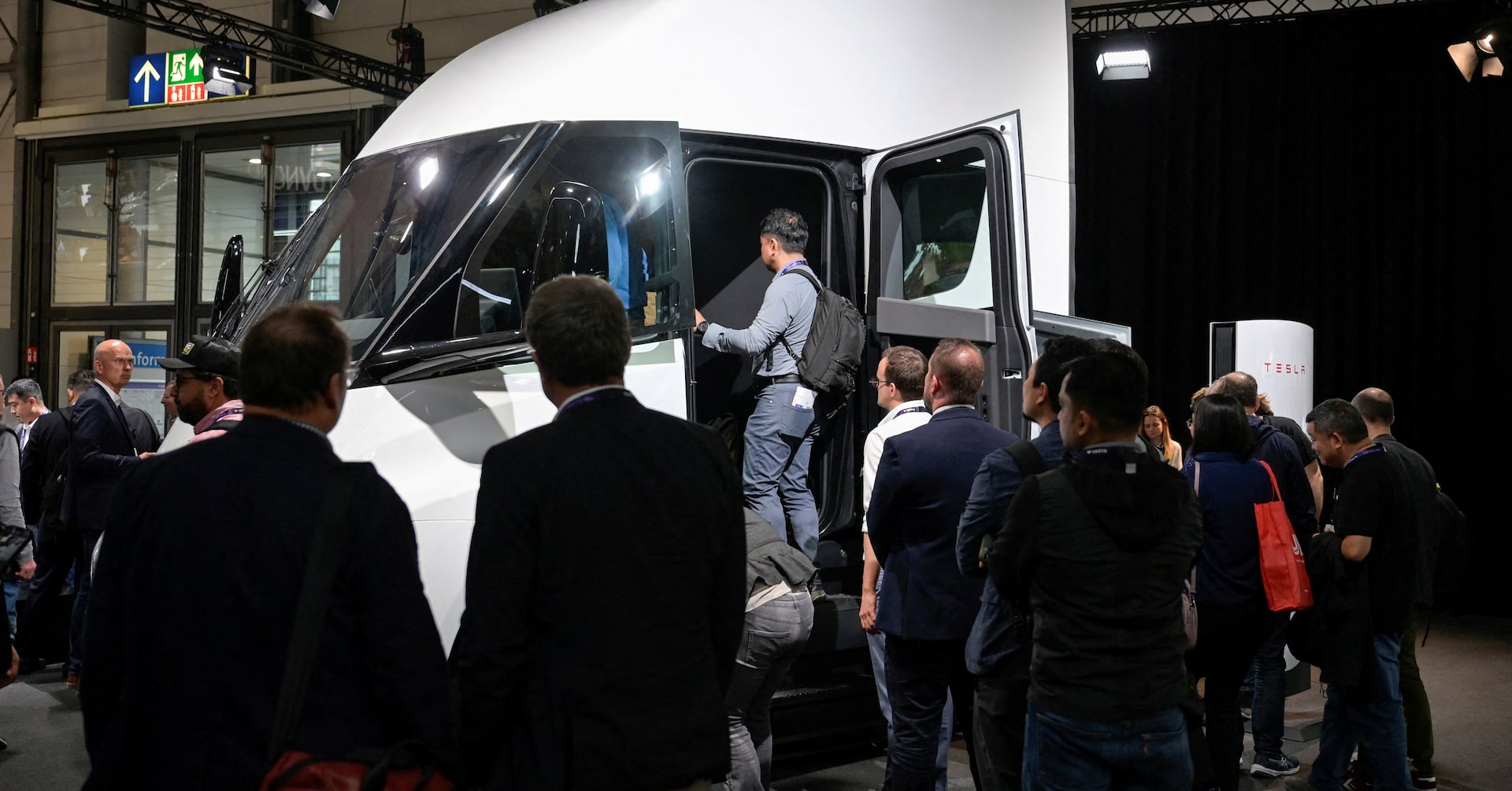
The Semi enters a commercial truck market that has been skeptical but increasingly curious about battery-electric drivetrains. Daimler’s Freightliner eCascadia and Volvo’s VNR Electric are already in customers’ hands, albeit in modest numbers. None has cracked the code on long-haul range the way Tesla claims to have done.
If the 500-mile figure holds under real-world loads and weather, the Semi could reshape fleet economics overnight. Diesel is expensive. Drivers are scarce. Maintenance on an electric drivetrain is minimal.
But “high volume” remains undefined. Tesla didn’t disclose how many trucks the line can produce per week, per month, or per year. It didn’t name customers beyond PepsiCo. The company has a habit of celebrating the first unit off a line long before steady-state manufacturing kicks in — the Cybertruck’s early ramp was a masterclass in that particular art.
What surrounds this milestone matters. Ford just raised its profit outlook. GM is pouring over a billion dollars back into gas-engine production in the U.S. and Canada. Volkswagen is cutting costs after a first-quarter profit drop.
Stellantis barely scraped past estimates. The legacy industry is playing defense and offense simultaneously, hedging electrification with combustion.
Tesla, by contrast, is doubling down everywhere at once. The Semi, the Cybercab, the Megapack, the robot — each one represents a market Tesla hasn’t yet proven it can dominate, funded by a core car business facing falling margins and political headwinds.
One truck off one production line is a photo op. A thousand trucks delivered to fleets hauling freight across Interstate 80 — that’s a revolution. Tesla has made the first part happen before.
The distance between a milestone and a business remains the company’s most persistent challenge. The Semi is rolling. The question, as always with Tesla, is how fast and for how long.



Share this Story