
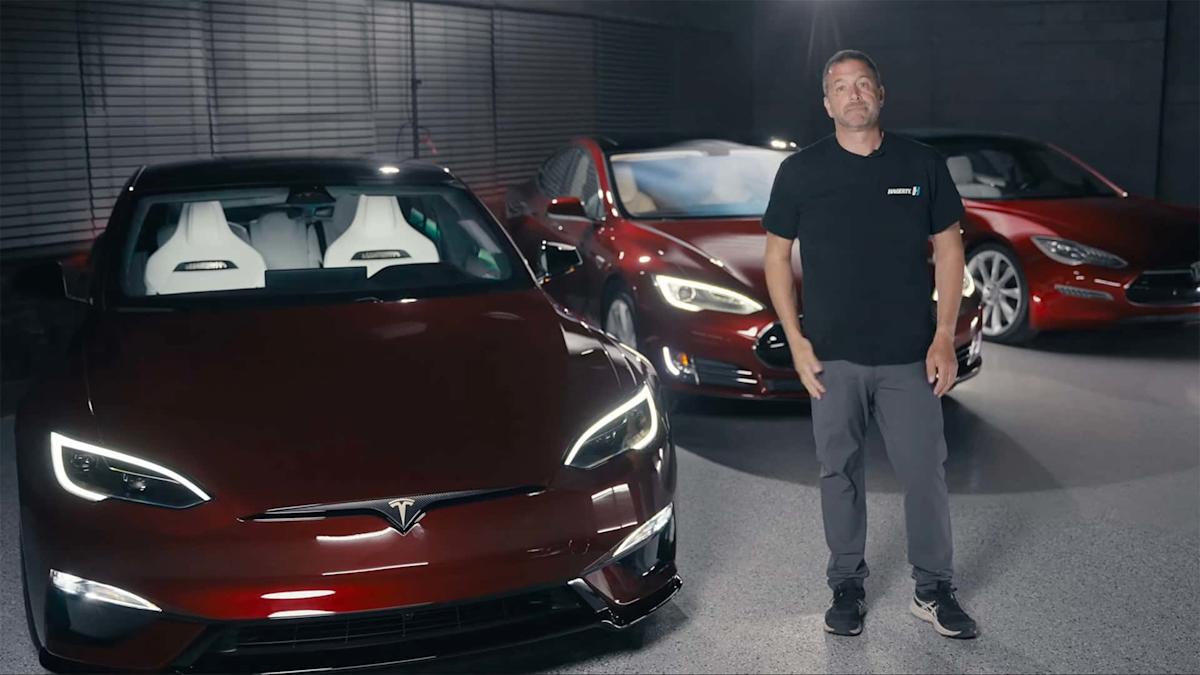


Fourteen years, one basic body shell, and roughly 97 percent of its original parts swapped out along the way. The Tesla Model S is finally done, and Tesla is sending it off with a limited-run Signature series priced north of $155,000 — complete with a $50,000 penalty if you try to flip one within a year.
That anti-resale clause tells you something. Tesla knows these final cars carry symbolic weight even if they’re mechanically indistinguishable from a standard Model S Plaid you can pick up used for under $40,000. The company that rewrote the rules for what a car could be is now borrowing from the Ford GT playbook to manufacture scarcity around a sedan it never bothered to replace.
And that’s the real story of the Model S: Tesla never replaced it. Not once in 14 years. Most automakers would have cycled through three or four generations in that span. Tesla just kept shaving parts — from 5,000 components down to roughly 3,000 — swapping batteries, rewriting software, and restyling the nose twice.
Jason Cammisa, who once had to phone around for a hotel that would let him plug in, estimates only about 3 percent of the original car survives in the current version. It was less a product lifecycle and more a ship of Theseus.
Car and Driver’s Tony Quiroga wrote what amounts to a eulogy in the magazine’s May/June 2026 issue, and he nailed the contradiction at the car’s core. The early Model S felt like a $40,000 sedan bolted to a $40,000 battery. Fit and finish lagged the price tag.
The retracting door handles were pointless. The yoke steering wheel was, in Quiroga’s words, “stupider-than-stupid.” GM engineers who tore one apart found it violated countless internal design rules.
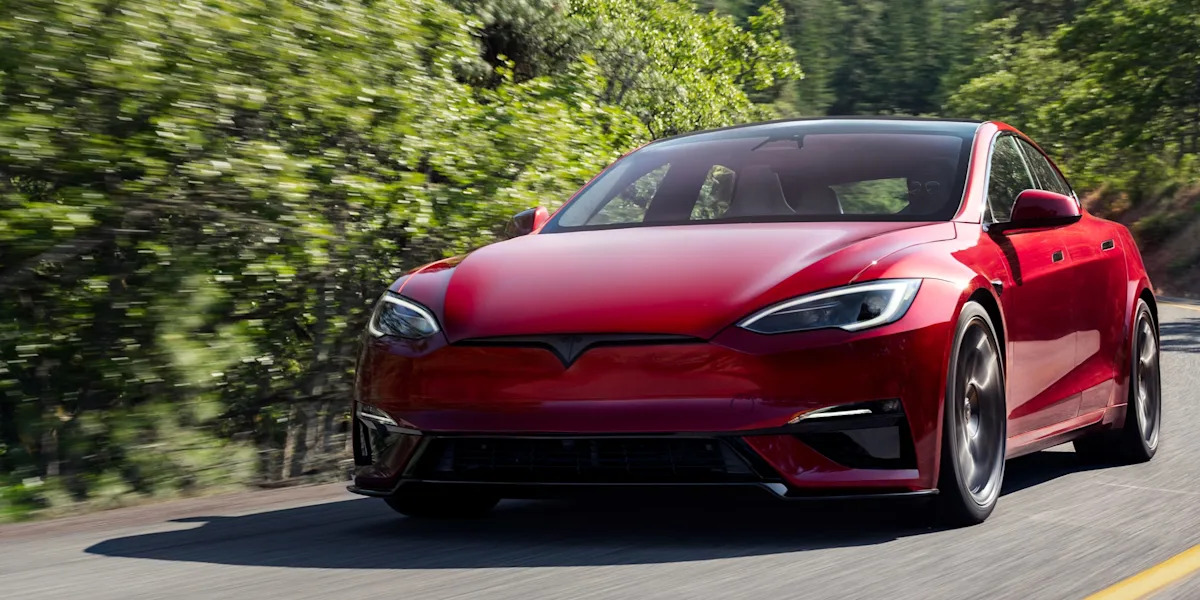
None of that mattered. The Model S outsold the entire Jaguar brand in its early years. It hit 60 mph in 4.6 seconds in 2013, matching V-8 sport sedans, and the Plaid version eventually got there in 2.1 seconds with a 9.4-second quarter-mile at 151 mph. Instant torque, no downshifts, no turbo lag. That rewired people’s expectations permanently.
But the Model S did something more lasting than go fast. It normalized the giant touchscreen. It introduced over-the-air updates to an industry that still thought software meant infotainment.
It proved one-pedal driving could work. It built the template that every automaker from Rivian to Mercedes to Hyundai is still chasing. The flush door handles that annoyed Quiroga? Now they’re everywhere.
The timing of this farewell is awkward. Buyers are fleeing the Tesla brand, and resale values have cratered. Quiroga gently suggests bumper stickers for owners worried about the Musk association. The company itself seems more interested in robots and robotaxis than sedans.
So Tesla marks the end of its most important car with a $155,000 limited edition and a legal threat aimed at speculators. It’s a fitting send-off for a vehicle that was always more significant than it was refined. The Model S proved an electric car could be fast, desirable, and genuinely different.
It also proved that a car doesn’t have to be perfect to change everything that comes after it. The industry the Model S forced into existence still hasn’t fully caught up. That’s the kind of legacy no Signature badge or anti-flipping clause can manufacture.
Share this Story