
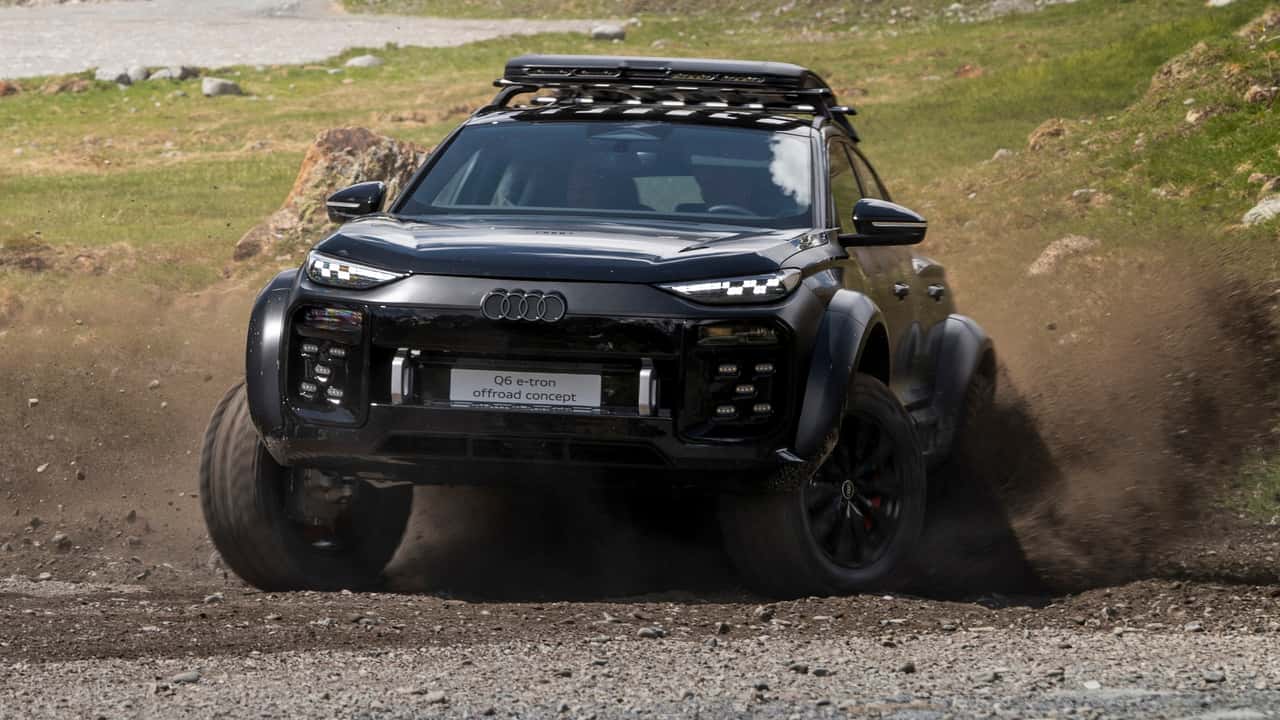


Audi CEO Gernot Döllner has confirmed the company is actively considering a body-on-frame off-road SUV. The quickest path to building it runs straight through Scout Motors’ factory in South Carolina.
Speaking with journalists at an event in Morocco last week, Döllner didn’t hedge. “We are thinking about something like that,” he said. “No decision has been taken yet, but it is definitely in the framework that we are thinking about.”
The critical qualifier: Audi won’t spend years and billions developing a ladder-frame platform from scratch. “If we do something like that, it is only thinkable to do it on a platform that is already there,” Döllner said. “You need a platform that is authentic in this segment; otherwise it does not make sense.”
That narrows the field to exactly one candidate inside the Volkswagen Group. Scout Motors, the revived American brand, builds its Traveler SUV and Terra pickup on a purpose-built body-on-frame architecture with dual electric motors, front and rear lockers, and more than 12 inches of ground clearance.
Scout is targeting production start at its Blythewood, South Carolina, plant in 2027. Powertrain options include a fully electric setup offering an estimated 350 miles of range and a Harvester range-extender hybrid pushing that figure to 500 miles. The Traveler SUV starts under $60,000, which leaves significant pricing headroom for Audi to layer on the luxury without crashing into the Mercedes G 580 EV’s $164,550 base price.
The Rivian R1S, at $78,885, sits closer to where a four-ringed off-roader might land.
Döllner is also pushing to compress Audi’s development timelines from as long as seven years down to two or three. Borrowing Scout’s platform is a textbook way to do that. If approved, an Audi off-roader could realistically appear by 2028 or 2029, far sooner than starting from a blank sheet.
One complication: Scout’s plant has a 200,000-unit annual capacity, and the brand already holds 150,000 refundable reservations. Sharing that production line with a premium Audi product could create bottlenecks before either brand hits its stride.
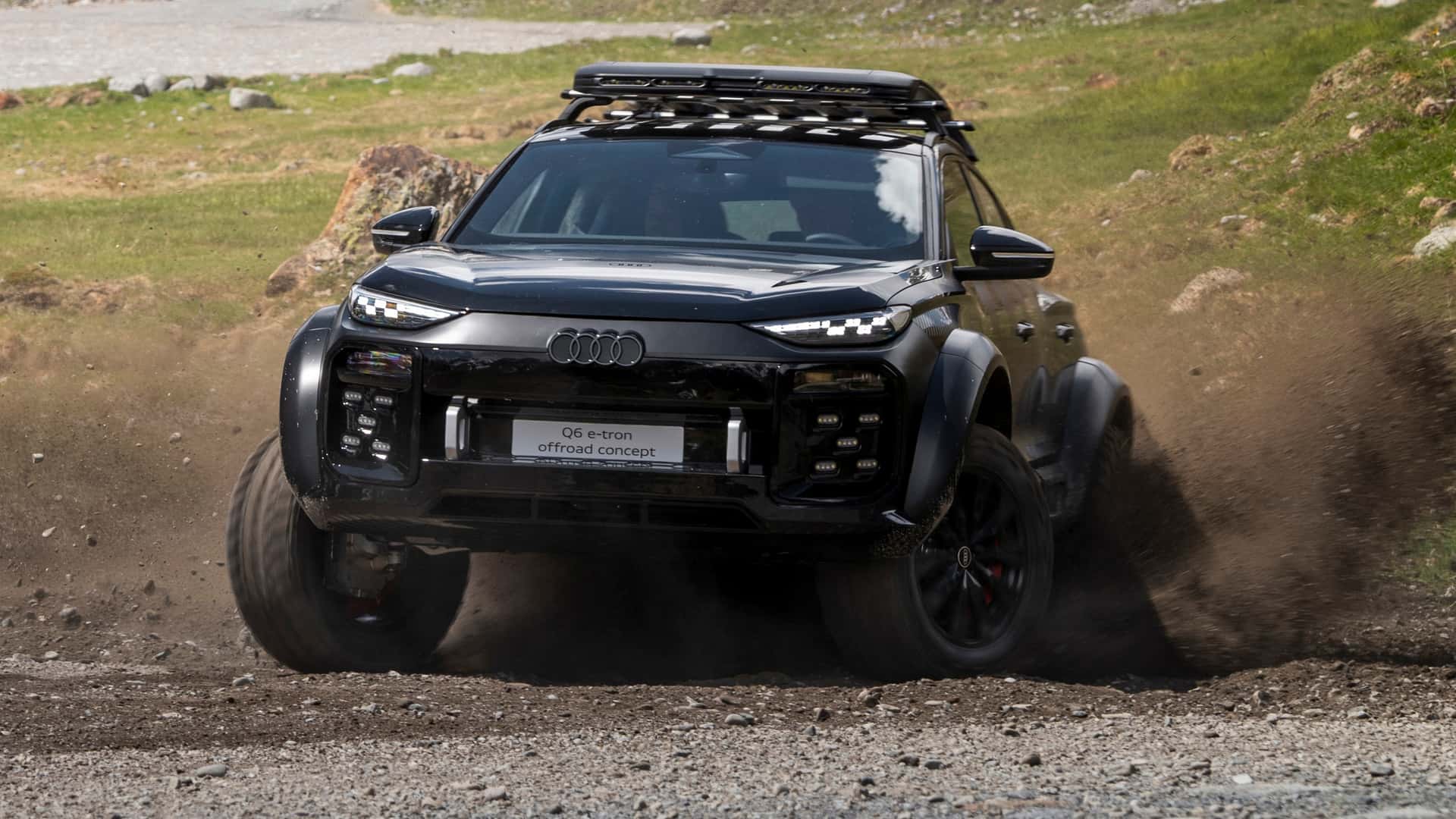
Audi hasn’t totally ignored the rugged space. Last year’s Q6 E-Tron Offroad concept, complete with portal axles, signaled interest. But that show car rode on the unibody Premium Platform Electric architecture, exactly the kind of setup Döllner now says won’t cut it for a serious off-road contender.
The competitive landscape explains the urgency. The Mercedes G-Class prints money. Land Rover can’t build Defenders fast enough. Lexus has rejuvenated its GX and LX lines, and BMW is reportedly targeting a rugged SUV by decade’s end. Audi currently brings a crossover knife to a body-on-frame gunfight.
Döllner frames the brand’s flexibility as an asset. The positive about the Audi brand is that almost every segment is thinkable,” he said. Quattro heritage gives the pitch some credibility. Audi’s all-wheel-drive roots trace back to Group B rally stages, not mall parking lots.
But the brand has more immediate fires to tend. The Q9 three-row SUV arrives this year to finally answer the BMW X7 and Mercedes GLS, and a next-generation Q7 is locked in for 2026. Audi is entering Formula One and just launched the new RS 5. A body-on-frame off-roader, however tantalizing, sits behind a long queue of commitments already straining engineering bandwidth and marketing budgets.
The real question isn’t whether Audi can build this truck. Scout’s platform makes that mechanically straightforward. The question is whether Volkswagen Group leadership will allocate the plant capacity, the capital, and the organizational focus to let it happen while simultaneously nursing Scout through its own launch phase. Two brands sharing one skeleton sounds efficient on a whiteboard. In practice, it’s a resource allocation knife fight.


Share this Story