


The resurrection of the Scout brand, Volkswagen’s ambitious bid to crack the American truck market, is reportedly sliding off the rails. Germany’s Der Spiegel claims the launch has been pushed back a full year to mid-2028, citing technical headaches, software snags, and mounting financial pressure within the VW empire.
Scout’s official response? Deny, deny, deny — but don’t actually explain anything.
A Scout representative told MotorTrend the company is still targeting initial production in 2027 with customer deliveries to follow. “As with any ambitious project of this scale, there will be changes, but we are focused on delivering for the American consumer,” the spokesperson said. That’s the kind of non-denial denial that should make anyone paying attention nervous.
The core of the problem is the Harvester range-extended models. When Scout unveiled the Terra pickup and Traveler SUV in late 2024, the plan was to lead with pure EVs. Then over 80 percent of pre-orders came in for the gas-engine-equipped extended-range versions. Scout pivoted to prioritize those models, and that’s where things apparently went sideways.
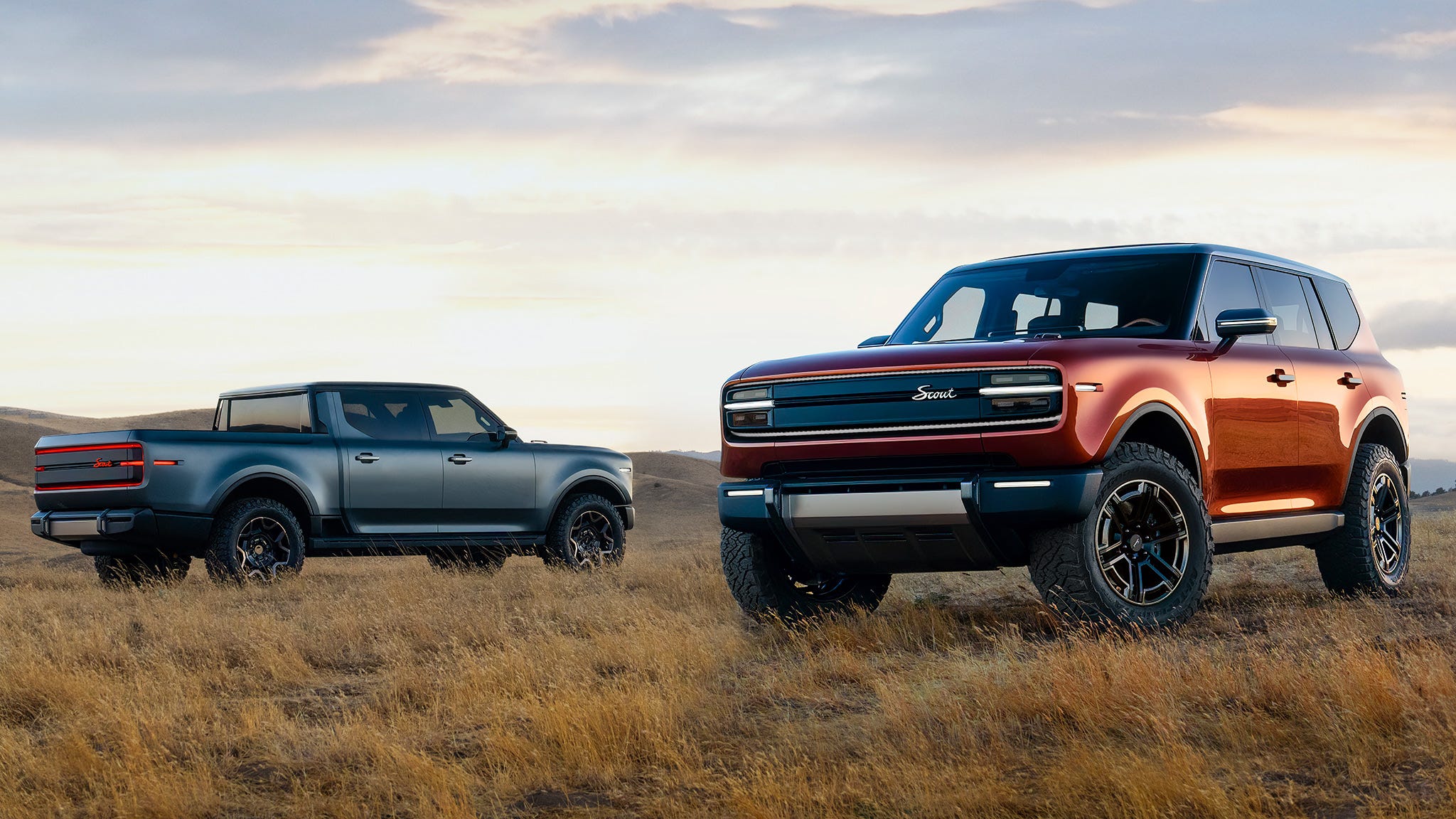
The Terra and Traveler were designed from the ground up as electric vehicles. Nobody planned for a gasoline engine. Engineers reportedly had to wedge a four-cylinder on its side beneath the rear cargo area, behind the rear axle, then somehow find room for cooling, exhaust, and a fuel tank.
It’s a packaging nightmare that’s creating real-world consequences. Scout CEO Scott Keogh has already admitted the EREV models will tow just 5,000 pounds, half what the EV versions can handle.
Sources say the rear-mounted engine weight is destroying payload capacity and tongue weight ratings, two specs that truck buyers obsess over. Heat management is another issue, with engineers struggling to insulate the cabin and truck bed from the engine’s thermal output. For a brand trying to sell rugged adventure capability, these are make-or-break problems.
The software situation isn’t any prettier. VW’s joint venture with Rivian was built around pure EV architecture. Adapting it for range-extended powertrains apparently isn’t Rivian’s priority, forcing VW’s much-maligned Cariad software division to pick up the slack. Porsche engineers who adapted Rivian tech for the 911 T-Hybrid have already confirmed what a heavy lift that integration is.
Then there’s the money. VW Group CEO Oliver Blume is slashing budgets across the company, imposing 20 percent cost cuts as tariffs hammer Audi and Porsche sales in the U.S. The billions sinking into Scout’s South Carolina factory — built with 250,000-unit annual capacity the brand doesn’t remotely need — is reportedly generating serious boardroom friction. There’s talk of stuffing Audi production into the plant just to justify its existence.
The competition has also shifted dramatically since 2024. The Ram REV is expected on sale this year. Ford killed the pure-electric F-150 Lightning and is pivoting to an EREV replacement. Every month Scout slips gives established players more runway.
VW appears too committed to kill Scout outright, partly because $1.3 billion in South Carolina public subsidies are on the line. But being too deep to quit and being positioned to succeed are very different things. The clock is ticking, the competition is closing in, and the technical problems Scout won’t even acknowledge aren’t going away on their own.
Share this Story