
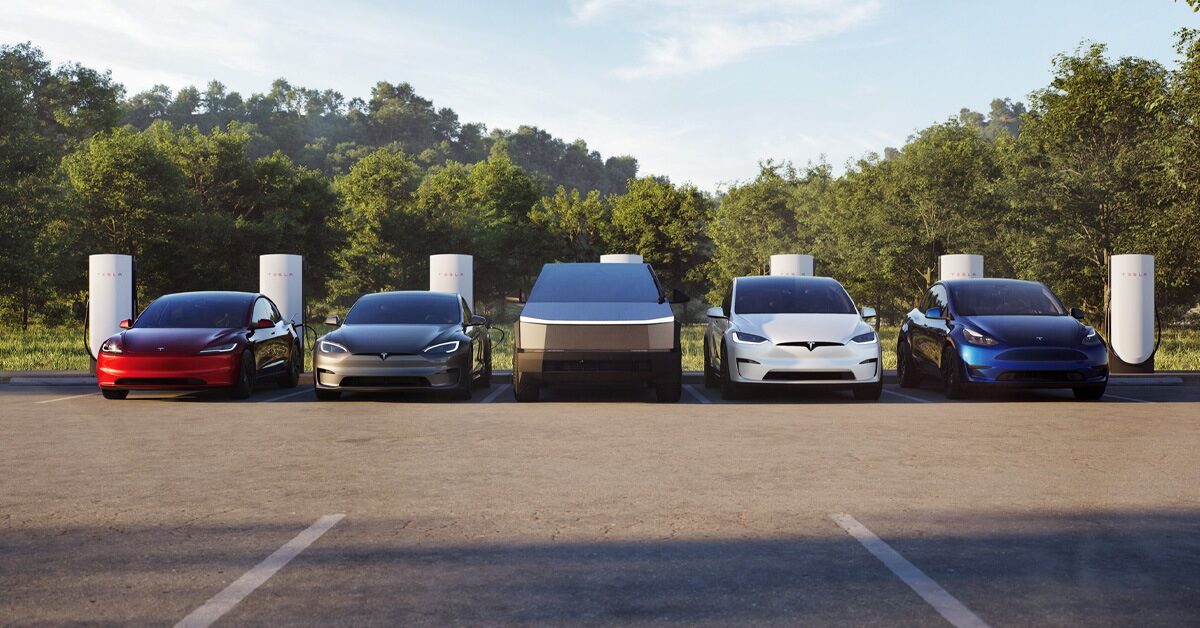


Tesla delivered 358,023 vehicles in the first quarter of 2026. It produced 408,386. That 50,363-unit gap between what rolled off the line and what rolled into driveways is one of the largest in the company’s history, and it tells a story the top-line numbers try to hide.
Year over year, deliveries rose 6.3 percent. Production climbed 13 percent. On the surface, growth. Underneath, a company building cars faster than people are buying them.
Wall Street expected 365,645 deliveries, per Bloomberg consensus. Tesla missed by more than 7,600 units. The stock slid immediately.
The Model 3 and Model Y still carry the weight, accounting for 341,893 of the quarter’s deliveries and 394,611 of its production. The “Other Models” category — Cybertruck, Model S, Model X — contributed just 16,130 deliveries against 13,775 produced. That suggests older inventory is being flushed while fresh demand stays thin.
Energy storage deployments hit 8.8 GWh, a bright spot Tesla will lean on when it reports full financials on April 22. But batteries don’t move the needle the way vehicles do. Not yet.
The geography underneath these numbers matters. China remains Tesla’s lifeline. The Shanghai Gigafactory is running at capacity, and the brand is holding its own against BYD, NIO, and the rest of the domestic pack. Without China’s contribution, this quarter looks considerably bleaker.
Europe is the wound that won’t close. Registrations have dropped in France and Germany. Tesla’s Full Self-Driving system still isn’t approved on the continent.
There’s no affordable entry-level model tuned to European tastes. And Elon Musk’s political entanglements — his deepening involvement in U.S. government operations, his polarizing public statements — have turned brand perception toxic in markets where consumers vote with their wallets. That’s three headwinds at once: no product, no software, no goodwill.
HSBC issued a note predicting Tesla’s share price could fall 65 percent over the next twelve months. Wedbush, perpetually in the other corner, maintains a $2 trillion market cap target built on Cybercab dreams and AI potential. The spread between those two outlooks is vast enough to drive a fleet of unsold Model Ys through.
The production-delivery gap is the number that should keep Tesla executives up at night. Inventory accumulation at this scale means either deliberate pre-positioning for a demand surge that hasn’t materialized, or a misread of the market. Neither explanation is comforting.
Vehicles sitting on lots depreciate, tie up capital, and eventually require price cuts to move. Tesla has played the incentive game before, and it erodes margins every time.
Cybercab production reportedly begins this month at Giga Texas. European FSD approval could come as soon as April 10. A more affordable vehicle is supposedly in the pipeline. Tesla’s answer to its demand problem is always the next thing — the next product, the next software unlock, the next market opening.
But this quarter’s results are about the current thing. And right now, Tesla is a company producing vehicles at a pace its customers can’t or won’t match. A 6.3 percent delivery increase sounds like progress until you notice it came alongside a 13 percent production increase and a miss on analyst expectations.
Tesla’s financial results on April 22 will reveal whether margins held or whether the company discounted its way to even these numbers. Average selling price, cost of sales, and foreign exchange impacts will fill in the picture that delivery counts alone cannot.
The factory knows how to build. The question is whether the world still wants to buy at the rate Tesla needs it to.



Share this Story