
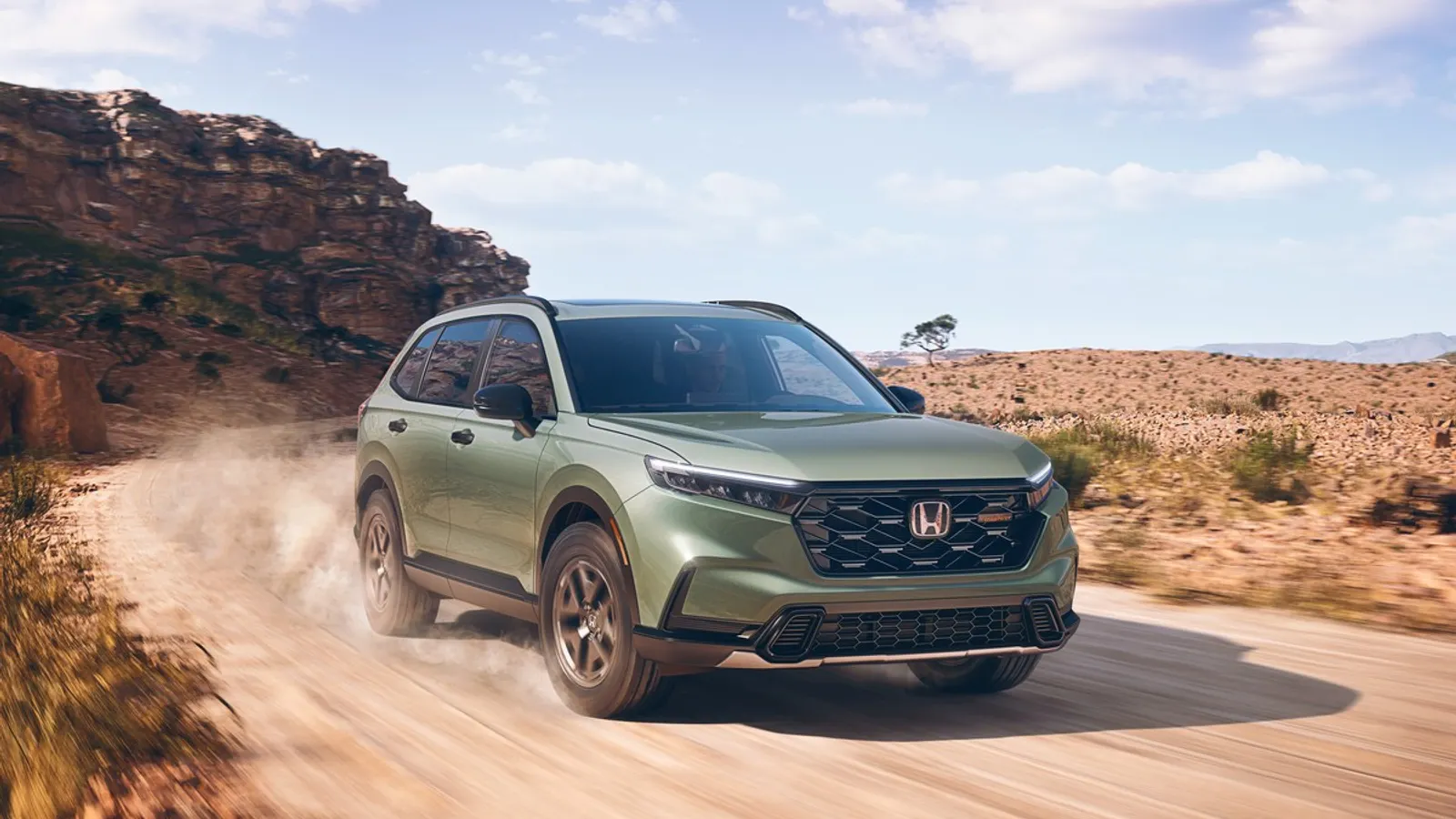


Honda Motor Co. just turned in the most profitable quarter in its history, and the recipe was simple: stop losing money on electric vehicles.
The automaker’s operating profit hit 530.7 billion yen, roughly $3.36 billion, in the first quarter of fiscal year 2027. That’s a 117% jump from the same period a year ago, when EV-related losses were bleeding the balance sheet dry.
The turnaround number that matters most is zero. That’s how much Honda lost on EVs in Q1, compared to 122 billion yen in the year-ago quarter. Last year, Honda absorbed a $1.7 billion write-off on its electrification efforts between April and December 2025, driven by weak demand and a market that simply wasn’t buying what Honda was selling.
The company canceled three EVs destined for the U.S. market in March. It killed the Afeela 1 sedan and a second model from its joint venture with Sony. Those were supposed to be the future, but instead they became the write-off.
Honda’s present is hybrids, and the numbers back the pivot. American Honda reported record hybrid sales in July, clearing 36,000 units. Total U.S. sales hit 136,549 vehicles that month, the brand’s best July since 2019.
North American volume rose 4% in Q1 to 461,000 units. Operating margin nearly doubled, climbing to 8.8% from 4.6% a year earlier. Sales revenue rose 13.5% to 6 trillion yen.
Honda revised its full-year operating profit forecast upward by 150 billion yen to 650 billion yen, targeting a margin of 2.7%. Even with the revision, Honda is being cautious. The company flagged Middle East instability as a risk factor and left its global sales target unchanged at 2.82 million vehicles, with 1.7 million of those in North America.
The caution is warranted because Honda’s global picture is far from uniformly rosy. Asia sales collapsed 37% year over year in Q1 to just 127,000 units, dragged down almost entirely by China. Consolidated global vehicle sales actually fell 6.3% to 786,000 units from 839,000 a year earlier.
Strip out North America, and Honda’s volume story looks far less healthy. China has become the sinkhole that offsets gains everywhere else. The market that once powered Japanese automaker profits is now dominated by BYD and a wave of domestic competitors offering EVs and plug-in hybrids at prices Honda cannot match.
Honda’s retreat from that battlefield is accelerating whether it wants to admit it or not. So the paradox is this: Honda is more profitable than ever while selling fewer cars globally. The math works because the cars it is selling, particularly hybrids in North America, carry healthy margins, and the ones it stopped trying to sell were destroying value.
Honda’s revised forecast still anticipates a small 500 million-yen EV loss for the full fiscal year as it reshapes its electrification strategy around hybrids. That is a rounding error compared to last year’s hemorrhaging.
The question hanging over all of this is whether Honda’s hybrid surge is a durable business or a bridge to somewhere it has not yet defined. Three canceled EVs and a dead Sony partnership suggest the destination remains unclear.

Share this Story