
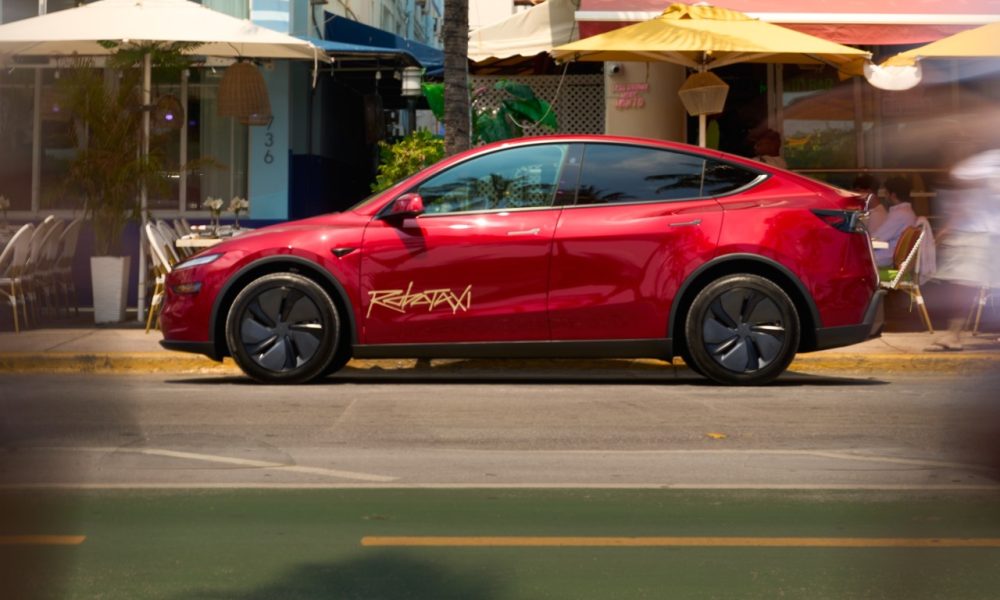


Tesla has driven its Robotaxi fleet more than 380,000 unsupervised miles without a single reported incident. That number sounds impressive until you realize it amounts to what a mid-size trucking company logs in a slow week.
During Tesla’s Q2 2026 earnings call Tuesday night, Elon Musk addressed growing investor frustration over the robotaxi program’s glacial expansion. His explanation was familiar: one injury, one dead pet, and regulators shut everything down. “If we injure even one person, it’ll be worldwide headline news,” Musk said.
He’s not wrong about that. But a year into the program, Tesla is still scattering dozens of vehicles across multiple cities rather than concentrating hundreds in one market.
Bank of America analyst Colin Langan pressed executives on exactly that point. VP of AI Ashok Elluswamy defended the strategy as deliberate, arguing that spreading thin across geographies proves the software stack generalizes rather than overfitting to a single city’s quirks. “We want to make sure that our stack is a very general one,” Elluswamy said.
It’s a defensible engineering argument. It’s also a convenient one when you don’t have enough vehicles to flood a single market anyway.
The contrast with the rest of Tesla’s Q2 report is striking. While Robotaxi inches forward, the company’s Full Self-Driving subscription business is sprinting. Active FSD subscriptions hit 1.48 million globally by the end of June, up 56 percent year-over-year and 200,000 in the quarter alone, the largest single-quarter gain ever.
More than 55 percent of new North American deliveries now include an FSD subscription at purchase. That shift traces back to February, when Tesla killed the one-time FSD purchase option and went subscription-only at $99 a month. Critics called it a money grab.
The math says otherwise. At current subscriber counts, FSD generates roughly $146.5 million in monthly recurring revenue, nearly $1.76 billion annualized. Pure software margin, no factory floor required.
The broader Q2 picture was mixed. Tesla delivered 489,126 vehicles, crushing Wall Street’s roughly 400,000 estimate, and revenue hit $28.2 billion against expectations of $26.4 billion. But non-GAAP earnings came in at $0.33 per share, badly missing the $0.53 consensus.
Free cash flow went negative at minus $1.09 billion. Tesla is spending heavily, and the returns on its biggest bets haven’t arrived yet.
Musk also set a new timeline for autonomy on the Tesla Semi, pegging internal validation for “around the end of this year or early next year.” He framed it as a sequencing decision, saying the AI team is consumed with Model 3, Model Y, and Cybercab, and the Semi fleet is simply too small to justify pulling resources. Spotted Semi prototypes wearing full sensor validation rigs in Sunnyvale and Fremont suggest the hardware side isn’t waiting.
Battery cell production remains the bottleneck constraining both Cybercab and Semi volumes. Tesla quietly dropped language from its shareholder letter promising Semi volume production this year. That’s a tell.
So here sits Tesla in mid-2026: a subscription software business throwing off nearly $1.8 billion a year, a robotaxi program still measuring its ambitions in tens of thousands of miles rather than millions, and a Semi autonomy timeline that conveniently lands right when the factory might be ready to build them in quantity.
The FSD subscription pivot has been a genuine strategic win, converting a lumpy, one-time revenue line into a compounding annuity. The robotaxi program remains a promissory note. Musk’s caution about safety is real and rational, but caution and capability constraints look identical from the outside.
Investors are funding the vision of a fully autonomous fleet generating billions. What they got this quarter was a software subscription service subsidizing the patience required to get there.
Tesla shares closed at $374.01, down about one percent before the call. The stock has taught everyone that post-earnings moves follow their own logic. But the tension between what Tesla sells today and what it promises tomorrow has never been sharper.
Share this Story