
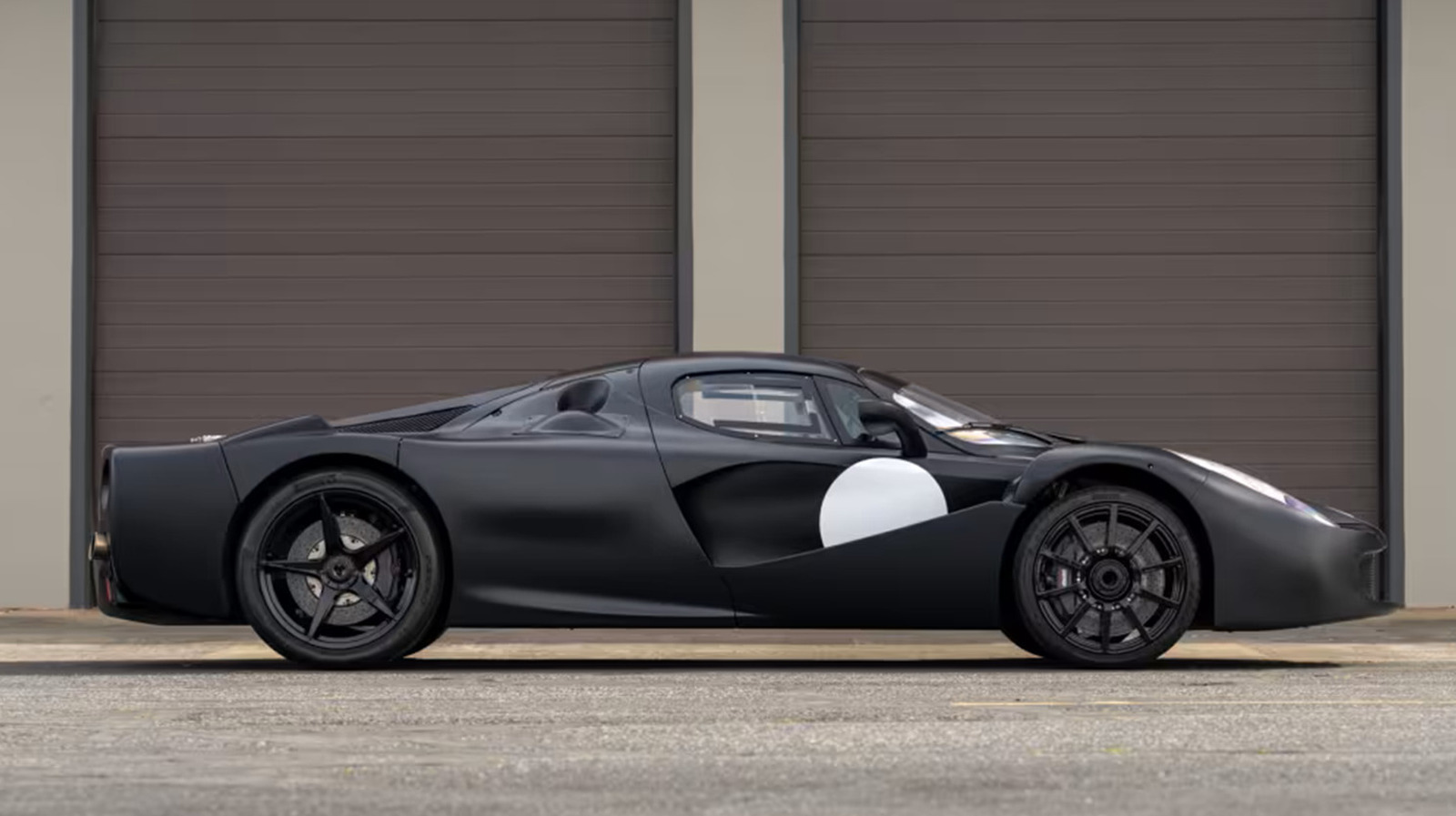


The last Ferrari 250 GT SWB California Spyder ever built, an F40 with 1,771 miles, an F50 showing 1,357 kilometers, and a LaFerrari prototype that looks like it was assembled in a wind tunnel fever dream — all from a single collection, all crossing the block at Mecum Indianapolis in May.
The M Group Collection is the kind of consignment that makes auction houses salivate. It spans nearly 60 years of Maranello production, from a 1963 California Spyder through that raw, matte-black LaFerrari development mule designated “F150 Mulotipo MP1.” Between those bookends sit a 275 GTS with a rare Chinetti hardtop, a 275 GTB/4 in original Giallo over Nero, the F40, the F50, and a Daytona Spyder. This isn’t a collection assembled by an algorithm. Someone with taste and patience built this.
The LaFerrari prototype is the flashpoint. Internally coded MP1, it was the first mule built on the actual carbon fiber chassis that would underpin the production car. Ferrari’s engineers racked up roughly 22,000 miles on it between March 2012 and August 2013, validating the 6.3-liter V12 and the F1-derived HY-KERS hybrid system before a single customer car was delivered.
It looks nothing like the finished product. The bodywork is rough, purposeful, almost brutal — exposed carbon fiber, mismatched panel gaps, 458 Italia headlamp assemblies borrowed from the parts bin. There’s a long-tail rear treatment that gives it a stance the production LaFerrari never achieved. Where the street car ended up overwrought and awkward, this thing has the honest ugliness of a car built to do a job.
MP1 sold once before, bringing $1,595,000 at Mecum Monterey in 2022. Two other LaFerrari prototypes have since fetched more — a 2014 PS1 prototype went for $2.5 million, and a dazzle-camo P2 mule brought $2.45 million at RM Sotheby’s Arizona earlier this year. A street-legal, low-mile LaFerrari sold for $6.88 million at RM’s Miami auction in February. The prototype market is climbing on a parallel track.
But the California Spyder is the real gravity well here. Chassis 4137, the 55th and final SWB California Spyder built, completed on February 9, 1963, with covered headlights. It retains its original chassis, body, Colombo V12, and four-speed manual. The ownership chain is documented from day one — imported by Luigi Chinetti Motors, sold new through Charles Rezzaghi Motors in San Francisco, later restored by Patrick Ottis in Berkeley. Ferrari Classiche certified, Massini documented, tool roll included. Cars like this don’t just set prices. They set the tone for an entire auction week.
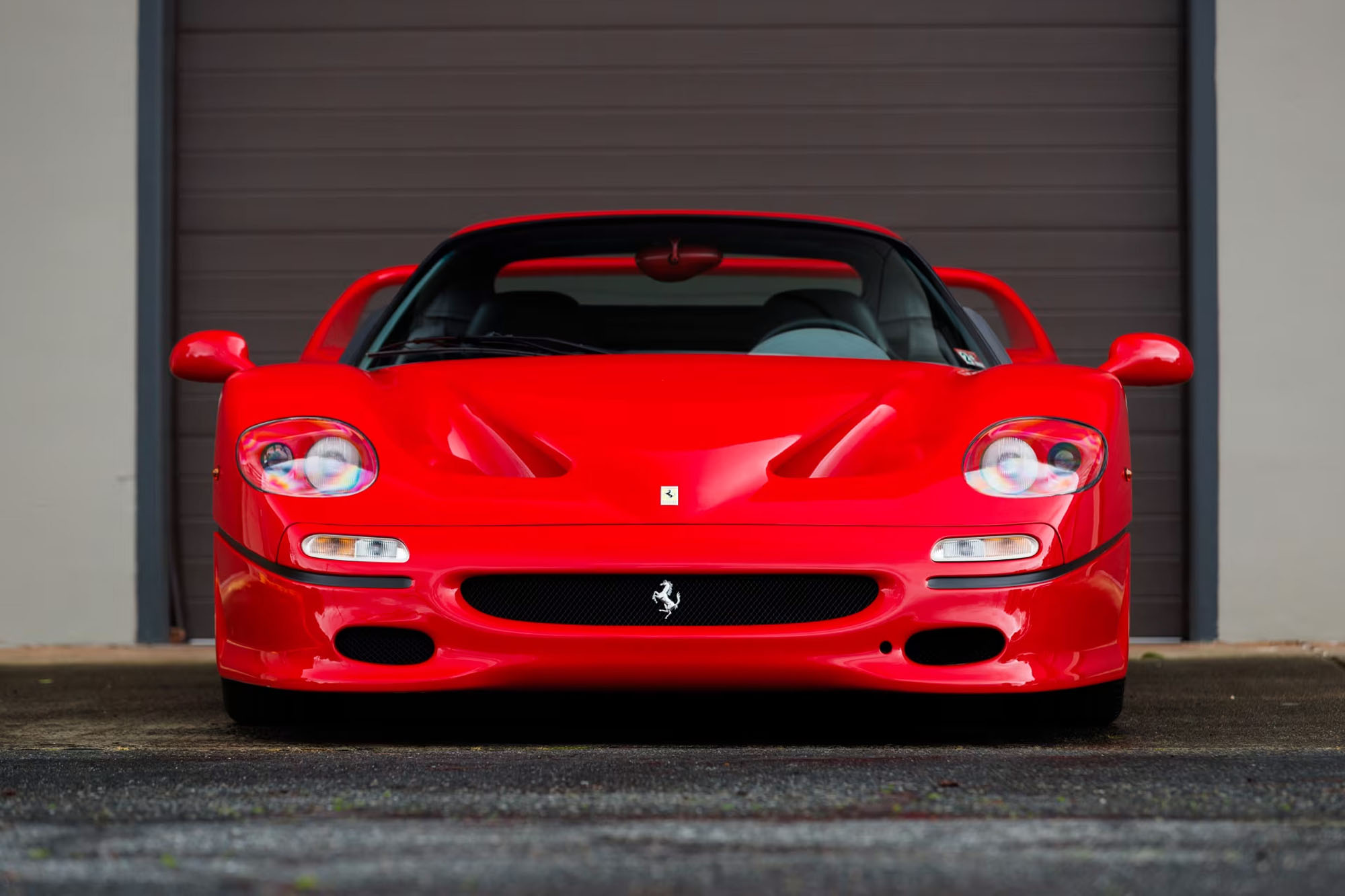
The F40 is a U.S.-spec example, one of 213, retrofitted with the European-market variable-height suspension — a modification so rare it practically makes this a unicorn variant. It won Platinum at Cavallino in 2000. The F50, number 36 of 349, got a thorough refresh from DK Engineering in late 2022, including a proper Lorica interior retrim.
Then there’s the 275 GTS, number 137 of 200, wearing Blu Ferrari paint over Tobacco leather and carrying that impossibly rare Chinetti “horizontal streaked” hardtop. And the 275 GTB/4, one of 330, still in its factory Giallo livery with nearly 30,000 miles showing — a car that’s actually been driven.
Collections like this surface once, maybe twice a decade. They tend to reset market benchmarks because the provenance is deep, the condition is verified, and the breadth tells a story no individual lot can match. Mecum’s Indianapolis sale has always been its flagship. The M Group Collection is the kind of consignment that justifies the whole circus — lot S140 and friends, Saturday, May 16th, no reserve on the prototype.
Bring a trailer. And a banker.



Share this Story