
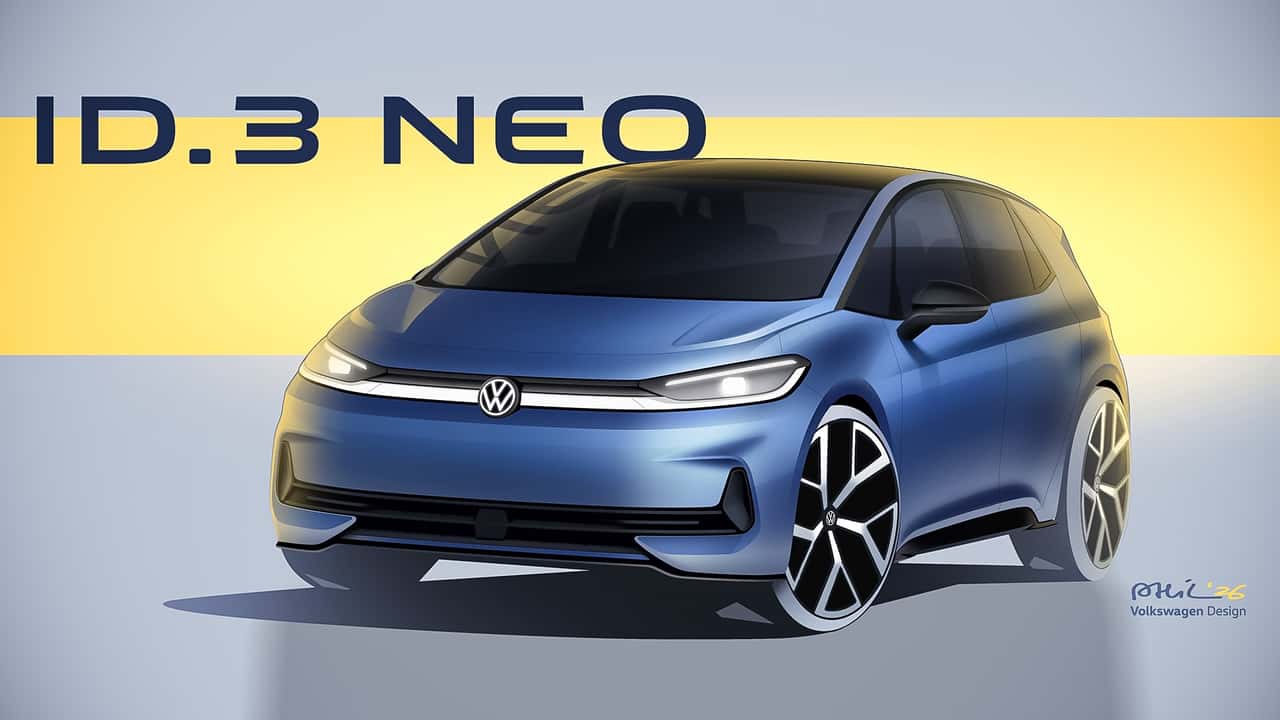


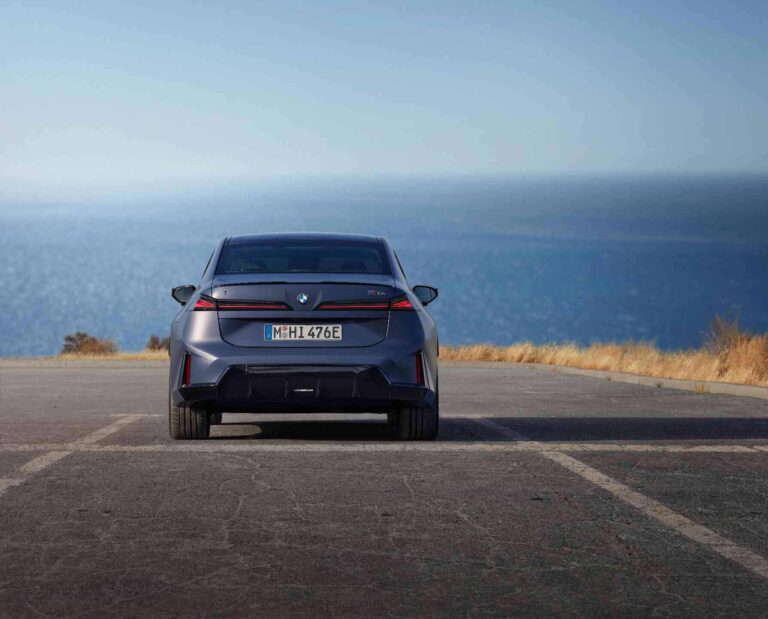
Volkswagen just dropped teaser images of the ID.3 Neo, a heavily facelifted electric hatchback due in mid-April 2026 that replaces the current ID.3. The name is new. The platform is not.
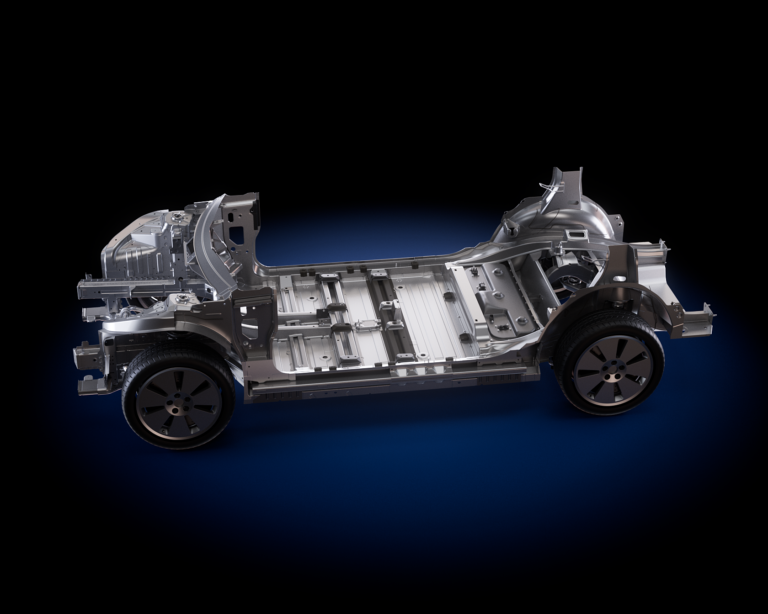
That distinction matters because the ID.3 has been on sale for roughly seven years, an eternity in the EV world. Wolfsburg is dressing it up, giving it a fresh identity and some overdue fixes, but the bones underneath remain the same MEB architecture that launched in 2019.
The most telling change isn’t the name or the styling. It’s the buttons.
Physical controls are returning to the steering wheel, a quiet admission that the capacitive touch strips VW championed on the current ID. lineup were a mistake. Owners hated them. Reviewers savaged them. Euro NCAP even penalized cars for ditching real buttons.
VW’s upcoming ID. Polo cockpit appears to be the template, and the ID.3 Neo will follow suit.
Beyond the tactile retreat, VW is rolling out a broad digital overhaul across the ID. family. The updated software brings traffic-light recognition to the Travel Assist system, genuine one-pedal driving that decelerates all the way to a standstill, and a new Innovision infotainment system. An optional digital vehicle key lets owners unlock and start the car with a smartphone or smartwatch, no dedicated app required.
Powertrain changes are coming too, though specifics for the ID.3 Neo itself remain thin. Across the ID.4 and ID.5 range, VW is swapping in a new APP 350 electric motor producing 188 horsepower with higher torque and lower energy consumption than the outgoing APP 310 unit. Paired with a 58-kWh lithium iron phosphate battery, the ID.4 picks up roughly 25 miles of WLTP range.
Whether the ID.3 Neo gets identical hardware hasn’t been confirmed, but the direction is clear: more efficiency from cheaper battery chemistry.
LFP cells are the industry’s current darling for affordable EVs. They sacrifice some energy density compared to nickel-based packs but cost less, tolerate more charge cycles, and don’t catch fire as easily. VW leaning into LFP for its volume models tracks with what BYD, Tesla, and others have been doing for years.
Still, none of this changes the fundamental reality. The ID.3 Neo is a placeholder.
VW has already teased the ninth-generation Golf, expected no earlier than 2028, which will ride on an entirely new platform developed with Rivian. That car promises meaningful leaps in range, charging speed, and software sophistication. That’s the kind of generational improvement a facelift simply cannot deliver.
Two to three years is a long time to hold the line with refreshed sheet metal and a software update. VW is betting the Neo can bridge that gap in a European market where Chinese competitors are flooding the affordable EV segment with newer, cheaper, and often better-equipped alternatives.
The ID.3 was supposed to be Volkswagen’s people’s electric car, a spiritual successor to the Golf for the battery age. It sold reasonably well in Germany but never captured imaginations the way the original Golf did in 1974. Reliability complaints, software glitches, and that miserable touch-sensitive interior eroded goodwill faster than VW could patch it.
Bringing back physical buttons and bolting on better software is the right move. It’s also an implicit confession that the original vision was flawed.
The Neo name suggests a fresh start, but underneath, this is still the same car VW launched when the EV market looked very different. The real test comes in 2028 with the Golf 9. Until then, the ID.3 Neo has to hold a line that’s getting harder to defend every quarter.
Share this Story